Michigan
Federal DHS Noncitizen Voting Investigation Uncovers Millions of Records and Scrutiny of Nonprofits
The Department of Homeland Security obtained tens of millions of unspecified records as part of a sweeping nationwide effort to find voter fraud, according to internal DHS reports, and weighed using undercover agents to investigate voter registration efforts by nonprofit…

Last updated:
Key points
- Federal investigators analyzed nearly 100 million records from independent and Justice Department sources to identify potential noncitizen voters.
- Internal documents show Homeland Security Investigations weighed the use of undercover agents to monitor nonprofit voter registration drives.
- While dozens of civic organizations cleared federal reviews, investigators flagged several groups, including CAIR Pennsylvania, for further investigation.
NewsWK — Federal investigators have launched a massive effort to protect American elections from unlawful voting. Internal documents reveal that Homeland Security Investigations recently analyzed nearly 100 million records. In addition, the agency evaluated undercover operations to monitor voter registration drives.
What did the DHS noncitizen voting investigation uncover?
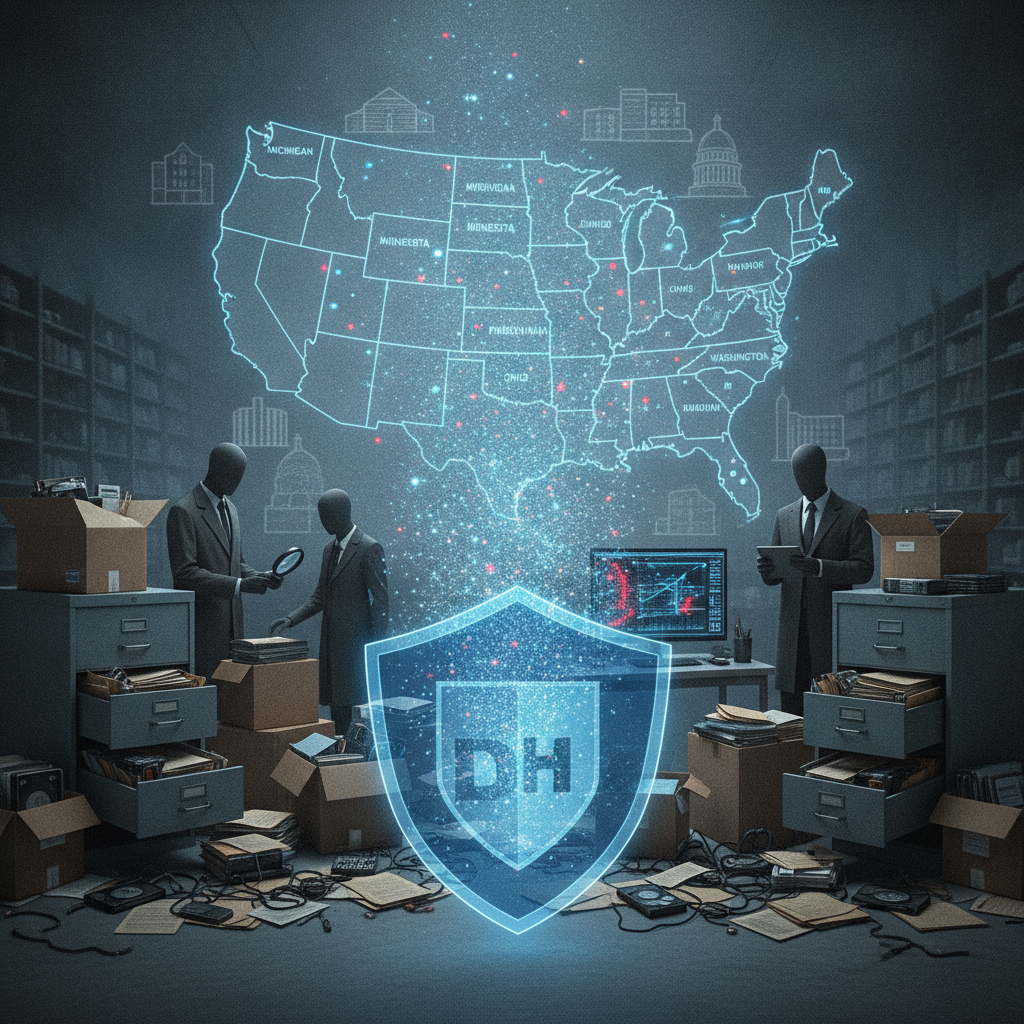
The DHS noncitizen voting investigation uncovered a massive federal initiative across multiple states. Federal agents analyzed over 99 million public and Department of Justice records. Furthermore, investigators reviewed dozens of nonprofit groups in key battleground states. Internal documents reveal that officials even weighed undercover operations to detect voter fraud.
Newly released Democracy Forward ICE documents detail this expansive federal push. Specifically, the initiative aims to ensure that only eligible citizens vote. According to agency reports from May and June, investigators gathered 48.4 million records through independent sources. They also integrated another 50.6 million records from the Department of Justice.
Federal officials focused their analysis on several key states. These states included Michigan, Minnesota, New Jersey, Ohio, and Pennsylvania. Analysts sent the files to an innovation lab to detect high-value targets. Consequently, this data-driven strategy seeks to stop unlawful voter registrations before people cast ballots.
Beyond data analysis, federal authorities explored more direct tactics. Internal records show that officials discussed using undercover agents. These agents would investigate organizations suspected of encouraging illegal aliens to register and vote.
What does the ICE voter registration probe mean for local community groups?
The ICE voter registration probe places local civic groups and advocacy organizations under intense scrutiny. Federal agents reviewed dozens of groups to verify their legal compliance. Consequently, while investigators cleared many organizations, other groups now face continued federal monitoring regarding their ongoing registration drives.
In Pennsylvania alone, federal investigators reviewed 82 different non-governmental organizations. This intensive Pennsylvania probe demonstrates the scale of federal oversight in critical swing states. For example, investigators flagged the state chapter of the Council on American-Islamic Relations for further scrutiny.
How does the Homeland Security nonprofit voter fraud investigation target specific groups?
The Homeland Security nonprofit voter fraud investigation targets organizations in high-population areas with large immigrant communities. Investigators review these groups to see if outreach efforts crossed legal boundaries. Therefore, the probe aims to ensure that local registration drives comply fully with state and federal laws.
Federal reports reveal that investigators also scrutinized Education Minnesota, a prominent teachers union. In contrast, other reviews concluded without finding any wrongdoing. For instance, investigators cleared 41 organizations in New Jersey. They also cleared 20 funds linked to a Washington, D.C. foundation.
This selective scrutiny highlights rising tensions between election security and civic participation. Federal officials want to prevent unlawful voting. Meanwhile, community organizations defend their work as standard voter outreach. Ahmet Selim Tekelioglu, executive director of the Pennsylvania chapter of the Council on American-Islamic Relations, defended the group’s outreach. Tekelioglu stated, “Our voter registration program follows all applicable voter registration rules and requirements.”
How does this federal effort fit into broader election security measures?
This federal initiative reflects a broader national push to enforce strict citizenship rules for voting. While the administration faced legislative hurdles in Congress, executive agencies deployed existing databases and enforcement tools instead. These coordinated actions aim to reassure the American public that only qualified citizens participate in federal elections.
Indeed, the federal campaign for election integrity has gained rapid momentum. Federal prosecutors recently indicted 10 noncitizens in Minnesota for allegedly voting unlawfully. During a recent press conference, Homeland Security Secretary Markwayne Mullin affirmed the administration’s strict policy. Specifically, Mullin insisted that unlawful ballots will not dilute legal American votes. He also warned violators of severe consequences.
“Our message to aliens who vote in American elections is clear: We will find you, arrest you, and you will face the consequences, including criminal charges and deportation,” Mullin said.
In addition, the administration relies on the Systematic Alien Verification for Entitlements program. The U.S. Supreme Court ruled in September that states may use this database to confirm eligibility. However, voting rights advocates had challenged the tool, arguing it contained outdated data.
Meanwhile, legal battles over voter registration records continue across the nation. The Department of Justice previously sued several states to obtain voter files. These requests sought sensitive driver’s license numbers and Social Security records. Therefore, at least 16 states voluntarily shared their information, building the massive database for Homeland Security.
This article was produced with the assistance of AI and reviewed by our editorial team.
Sources
Related: How the Noncitizen Voter Purge Supreme Court Decision Impacts Local Election Security
Related: New Voting Laws Midterm Elections: More States Tighten Voting Rules
Related: Democrats aim to emulate Republicans in building state power
Related: House Legislation Introduced to Strengthen Homeland Security Accountability
See a typo? Report it here.