California
Local Towns Fight Back With Battery Farm Moratoriums Over Safety Concerns
SNOQUALMIE, Wash. — In the race to meet the nation’s growing power demands, states and utilities are rapidly building new “battery farms” that can store energy for when customers need it most. But as the facilities grow, so too does…

Last updated:
Key points
- Nearly 200 communities nationwide have enacted or proposed moratoriums against industrial battery storage projects due to safety and land-use concerns.
- High-profile incidents like the Moss Landing fire raised alarms over thermal runaway risks and toxic smoke emissions near residential areas and schools.
- Developers frequently turn to state siting boards to bypass municipal bans, creating sharp policy friction over local control versus state energy mandates.
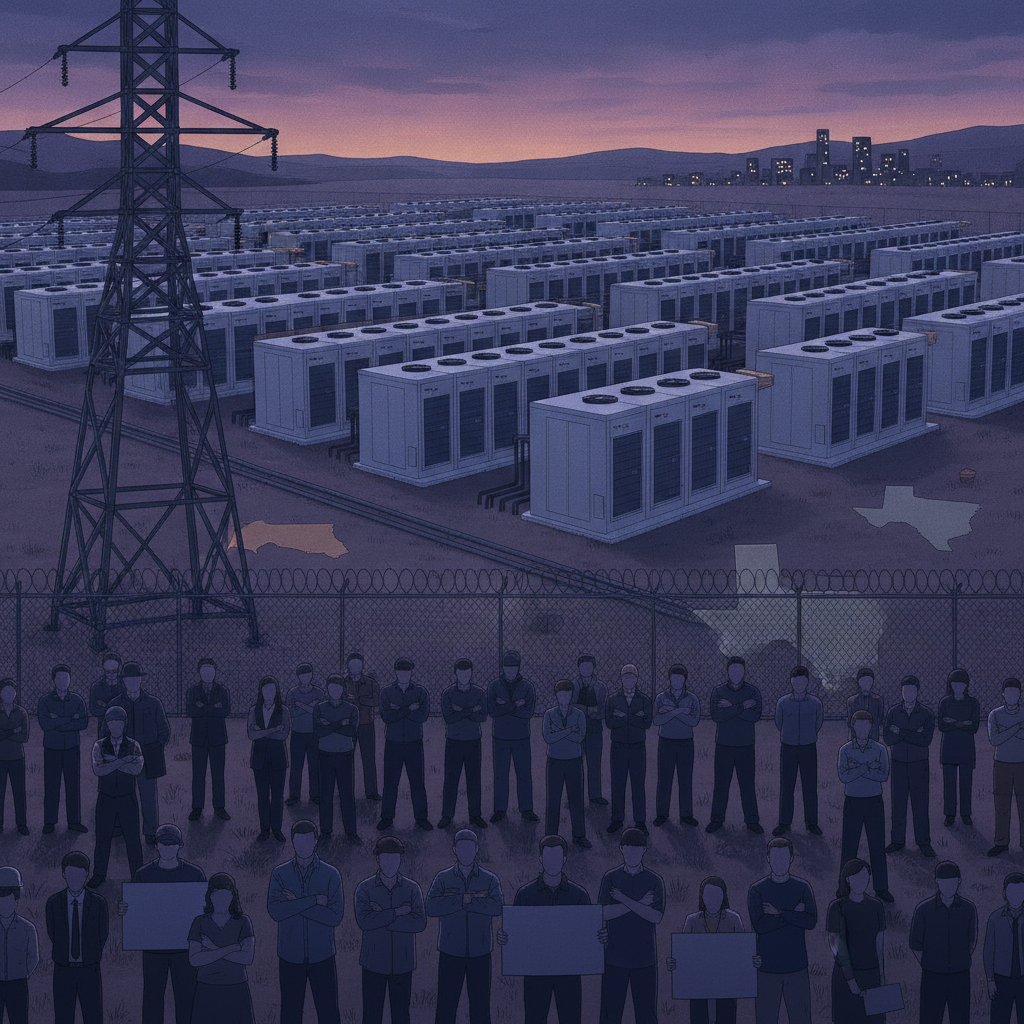
SNOQUALMIE, Wash. NewsWK — Across the United States, small communities and county boards are halting industrial energy storage projects. State mandates and utility companies are pushing rapid grid expansion. However, grassroots resistance is growing fast among local property owners. Specifically, residents worry about safety hazards, toxic smoke, and lost local control.
since 2022 Furthermore, official projections show capacity reaching more than 100 gigawatts by 2028. That volume could supply power to roughly 75 million homes for short bursts. However, the rapid buildout has created friction between state energy goals and neighborhood priorities.
What does battery storage facility opposition mean for local communities?
Rising battery storage facility opposition reflects deep community anxieties over public safety, land use, and local authority. Towns face large industrial installations near homes, schools, and critical infrastructure. When local boards pass temporary bans, developers frequently turn to state regulatory boards. Consequently, they bypass local zoning restrictions and escalate disputes over self-governance.
Local governments across the country are taking action to protect their neighborhoods. In fact, industry analysts have tracked nearly 200 temporary bans or restrictive proposals nationwide. For example, residents near Snoqualmie in King County, Washington, strongly protested a proposed installation. The planned site sat near homes, waterways, and an evacuation route. Consequently, local leaders enacted temporary bans on new projects.
Similarly, conflicts have erupted in California. In Watsonville, community members organized aggressive protests against a proposed commercial battery plant. Activists noted that 12 schools sat within two miles of the planned development site. Phoenix Artemisia, a local activist opposing the site, expressed sharp frustration with the process. “They’re making us collateral damage,” Artemisia stated. “We have 12 schools within two miles of us here, but these out-of-state developers are telling us what we’re going to do in our backyard.”
How are BESS fire risk concerns driving municipal bans?
Severe BESS fire risk concerns stem from thermal runaway events. During these incidents, ignited lithium-ion units burn uncontrollably and emit dangerous toxic fumes. High-profile blazes, such as a major 2025 industrial fire in California, demonstrated how battery failures release heavy metals. Moreover, these fires overwhelm emergency responders, prompting neighboring towns to act quickly.
Fire hazard remains the primary argument for local bans. When lithium-ion batteries ignite, chemical reactions can trigger thermal runaway. As a result, emergency responders find these chemical fires nearly impossible to extinguish quickly. For instance, a major fire struck the Moss Landing facility in Monterey County, California, in early 2025. The blaze burned for days. Ultimately, officials reported that it released approximately 55,000 pounds of toxic metals into surrounding wetlands.
Because of these events, residents worry about facility locations near sensitive sites. Dan Murphy, a city council member in Snoqualmie, emphasized caution. “We need to think more carefully about what the worst-case scenario is, not just what’s typical,” Murphy noted. He pointed out that science shows modern systems are getting safer. Nevertheless, the technology remains relatively new.
How are industry leaders addressing renewable energy grid battery storage safety?
Developers and industry groups emphasize that renewable energy grid battery storage safety has improved dramatically under newer engineering standards. In fact, research shows industrial battery failures dropped significantly in recent years. Thus, modern installations are far safer than early-generation facilities.
Energy companies argue that public fears stem from outdated facility designs. Today, newer installations must comply with strict National Fire Protection Association standards. Developers now house batteries in isolated, modular shipping containers. This structural isolation prevents fires from spreading between separate battery units. In addition, newer battery chemistries operate at lower thermal thresholds.
Furthermore, an independent report from the Electric Power Research Institute supported these safety claims. The analysis reviewed utility-scale battery failures dating back to 2011. Notably, failure rates declined by 97 percent after 2018 when accounting for total grid capacity. Therefore, industry experts compare the risk profile of modern battery banks to standard electrical transformers.
Still, location constraints complicate developer plans. Battery energy storage system safety protocols require systems to connect directly to electrical substations. In King County, Washington, for example, 157 suitable grid substations exist. However, all 157 sit within a quarter-mile of schools, daycares, hospitals, or natural reserves. Therefore, developers argue that isolated rural siting is often technically unfeasible.
Why are battery farm moratoriums spreading across the nation?
Growing battery farm moratoriums reflect a fundamental conflict between state top-down mandates and local home-rule control. State policies force utilities to build massive energy storage capacity. to block battery farms from being built near them Additionally, these pauses help prevent state boards from overruling municipal land-use decisions.
State Policy Decisions Actively Drive the rapid expansion of battery facilities. Currently, 13 states mandate specific energy storage targets for regional utilities. For example, Maryland passed legislation requiring regulators to procure 1,600 megawatts of storage capacity. Furthermore, federal tax policies grant a 30 percent tax credit for utility battery projects. Consequently, this incentive encourages private capital investment.
Meanwhile, utilities depend on battery storage to balance fluctuating energy supplies. Solar installations generate excess electricity during afternoon hours, but power demand peaks in the evening. Storing afternoon electricity reduces the need to fire up expensive natural gas peaker plants later. For instance, states like Texas and California already rely heavily on battery banks. These systems protect their electrical grids from summer blackouts.
However, local leaders view the rapid buildout as government overreach when state boards override local authority. When communities raise objections, developers often petition state siting councils to bypass city and county zoning boards. This practice strips authority from local elected officials. As a result, towns enact moratoriums to pause development. Ultimately, this strategy helps them gain bargaining leverage and establish strict local safety guidelines.
This article was produced with the assistance of AI and reviewed by our editorial team.
Sources
Related: House Lawmakers Introduce Grid Modernization Bill Aimed at Lowering Household Energy Costs
Related: Fighting Fire with Fire: How One Small Town Is Shielding Itself from Catastrophic Wildfire
See a typo? Report it here.