Alaska
DOJ Election Monitors 2026: Federal Observers Deploy to All 50 States for Midterms
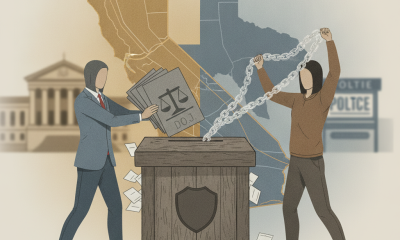
The U.S. Department of Justice plans to send election monitors to every state ahead of Election Day, expanding a long-standing practice that’s spurred concern this year among Democrats and voting rights advocates because of President Donald Trump’s push to influence…

Last updated:
Key points
- The U.S. Department of Justice plans to send roughly 1,000 federal observers to polling sites across all 50 states for the 2026 midterm elections.
- Monitors are strictly tasked with observing precinct operations and reporting potential federal voting law violations for post-election review.
- With more than 95,000 polling places nationwide, federal observers will be present at approximately one percent of voting locations.
NewsWK — Voters across the United States will see an expanded federal presence at polling locations this November. Specifically, the U.S. Department of Justice plans to deploy roughly 1,000 observers across all 50 states. Officials confirmed the strategy ahead of the upcoming 2026 midterm elections. However, federal officials will keep specific precinct locations confidential until Election Day on November 3.
How will federal election monitors 50 states wide operate on Election Day?
Department of Justice voting monitors will serve strictly as observers during the upcoming election cycle. Officials confirm that monitors will evaluate precinct operations for compliance with federal voting statutes. Meanwhile, observers will collect field facts without stepping between voters and local election workers. Therefore, all formal legal evaluations will wait for post-election review inside the department.
The federal monitoring strategy builds on long-standing statutory authority. This authority ensures fair access and statutory compliance. Furthermore, DOJ spokesperson Kiersten Pels explained the official mandate for observers in a statement regarding the operation.
“Every monitor will merely observe and report any potential violations of federal law to the Department, which will be reviewed after Election Day,” Pels said.
Additionally, she added that every observer must meet identical legal and ethical requirements while on site.
What rules govern Trump DOJ election monitors at local polling places?
Federal standards require observers to maintain a non-intrusive footprint inside voting centers across the nation. Consequently, monitors must adhere to strict legal and ethical parameters throughout their assignments. Because strict rules govern federal observers, they will not interact directly with voters. Moreover, they will refrain from wearing badges or political insignia inside precinct spaces.
Local officials in several states confirmed receiving operational guidance regarding federal monitors. Accordingly, federal guidelines establish explicit operational boundaries for all field personnel:
- Observers must remain stationed in designated public areas inside or near polling locations.
- Personnel cannot challenge voter eligibility, demand identification, or interrupt election workers.
- Monitors submit formal observations directly to federal supervisors for post-election evaluation.
What do the 2026 midterm election monitoring plans mean for local voters?
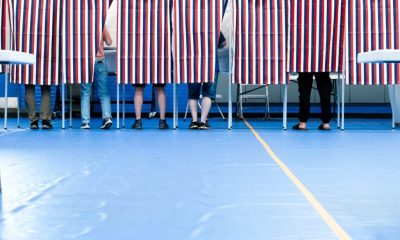
For millions of citizens, local voting procedures will remain entirely unchanged on Election Day. County election administrators continue to run polling places under state laws. Meanwhile, the presence of federal personnel in select jurisdictions simply adds federal oversight to document statutory compliance. Thus, local precinct staff will manage daily poll operations as usual.
In several states, local officials have already announced where observers will deploy. For example, Washington state officials expect monitors in King County, which includes Seattle. In Oregon, observers will cover polling places around the Portland metropolitan area. Similarly, Utah election leaders confirmed that Salt Lake County will host at least one federal observer. Utah Lieutenant Governor Deidre Henderson noted that federal officials offered clear operational assurances.
“They won’t be approaching voters,” Henderson said regarding the federal deployment assurances.
In Maine, federal observers plan to visit precinct locations in Portland and Lewiston. Consequently, Maine Secretary of State Shenna Bellows stated that state authorities will closely track monitor activities. She stated that her office wants to ensure observers do not cross statutory boundaries. Still, federal officials stress that monitors have no authority to stop voters or manage election equipment.
Why is the Department of Justice expanding its monitoring scope this year?
The Department of Justice expanded its reach from previous election cycles to establish nationwide coverage. During the 2022 midterm elections, federal authorities deployed observers to 64 local jurisdictions across 24 states. The expansion has spurred concern among Democrats and voting rights advocates because of President Donald Trump’s push to influence elections. Yet, the core duties of field observers remain unchanged.
Election experts emphasize that the federal monitoring presence remains small relative to the national voting scale. Nationwide, voters will cast ballots at more than 95,000 polling places on Election Day. However, only 1,000 observers are deploying nationwide. Therefore, federal monitors will cover roughly one percent of polling locations. Thus, local election staff will handle virtually all voting administration without a federal presence.
Meanwhile, legal disputes regarding federal oversight continue in federal courts. For instance, the NAACP filed a lawsuit in Washington, D.C. The group seeks immediate access to DOJ deployment records. However, U.S. District Judge Sparkle Sooknanan denied an emergency request to force immediate document disclosure. Consequently, the broader lawsuit remains Pending While Standard Court proceedings continue.
The Justice Department has sued dozens of states in an attempt to force election officials to turn over voter lists that contain sensitive personal data. In California, federal lawyers sued to challenge roughly 20,000 ballots from potential noncitizens. In Alaska, federal officials filed suit over certification rules for candidates sharing similar names. Overall, these legal actions highlight ongoing federal efforts to enforce statutory election standards nationwide.
This article was produced with the assistance of AI and reviewed by our editorial team.
Sources
Related: Can Trump Send Troops to Polling Places? Legal Limits and State Authority Explained
Related: Trump Election Investigations Raise Midterm Election Meddling Fears
See a typo? Report it here.