Alabama
State Officials and Legal Experts Battle Over USPS Mail Ballot Rule Ahead of 2028
The U.S. Postal Service faces renewed calls to drop restrictions ordered by President Donald Trump on mail ballots, setting up a major clash between states and the federal government ahead of the 2028 election. Postal worker unions, civic groups and…

Last updated:
Key points
- State officials and postal leaders remain locked in a legal battle over administrative mail ballot notification rules ahead of future national elections.
- The Supreme Court temporarily paused the policy for the recent midterms, though Justice Brett Kavanaugh noted the Postal Service likely holds authority to implement it.
- Supporters in 11 states argue the notification requirements enhance election security, while opponents argue the rules infringe on state administration.
NewsWK — State election directors across the nation are preparing for renewed legal debates over federal postal regulations. However, the outcome could reshape how state agencies process mail-in ballots before upcoming national elections. Consequently, civic groups and state leaders are watching federal courts closely.
How Will the USPS Mail Ballot Rule Impact Local Voters and State Election Offices?
The policy establishes specific notice deadlines for state election directors who send ballots through federal mail. Therefore, local election offices must coordinate delivery timelines directly with postal authorities. States retain full authority over voter registration rolls. Meanwhile, federal postal guidelines create structured administrative reporting requirements for local election officials.
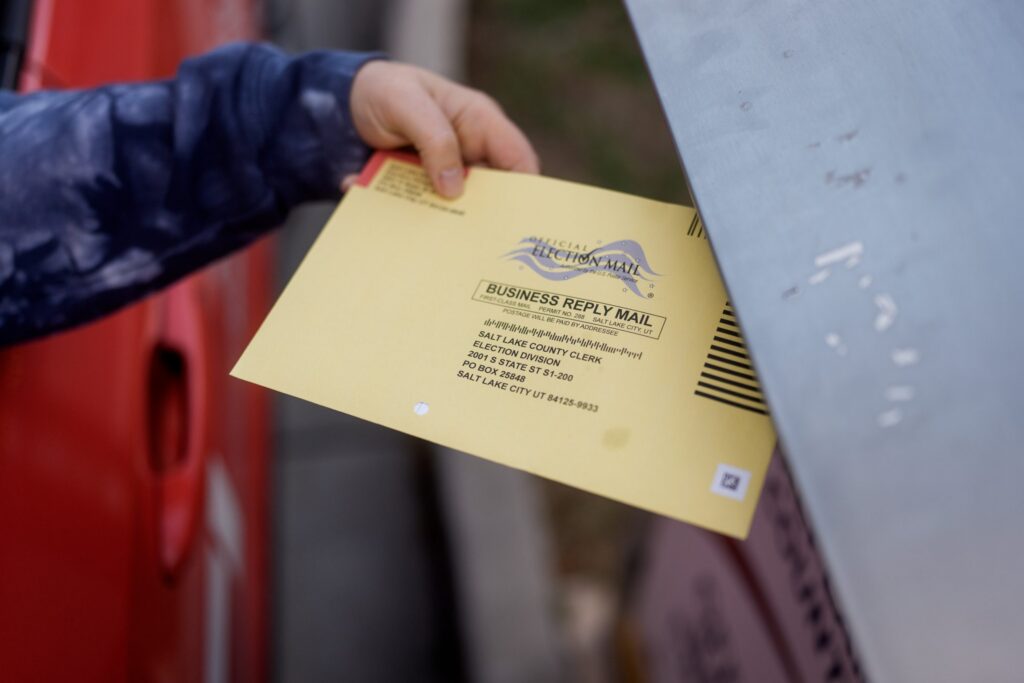
Currently, eight states conduct all-mail elections by default. These states include California, Colorado, Hawaii, Nevada, Oregon, Utah, Vermont, and Washington. Furthermore, voters across the country cast over 33.9 million mail ballots during the recent general election. Because millions of citizens rely on postal delivery, administrative changes draw intense public attention. Local election clerks must balance federal postal logistics with state election laws.
Meanwhile, conservative leaders emphasize that uniform standards protect public confidence in vote counting. Clear administrative deadlines allow postal facilities to plan operational capacity effectively during busy election cycles. However, opponents argue that mandatory federal reporting places unnecessary friction on state systems. Therefore, county clerks are assessing potential Workflow Adjustments While Court challenges proceed.
What Spurred the Legal Battle Over the Trump Mail Ballot Executive Order?
Former President Donald Trump issued an executive order directing federal officials to implement mandatory postal notification rules. Specifically, the order requires states to notify postal officials 90 days before federal elections regarding mail ballot usage. Furthermore, states must submit lists of expected mail voters 60 days before election day.
Additionally, the executive measure tasked federal agencies with cross-referencing voter data. Under the order, the Department of Homeland Security and the Social Security Administration compile citizen verification records. Officials then share those lists with state election administrators.
Indeed, conservative state leaders strongly supported the federal policy in court filings. Republican officials from 11 states urged federal judges to preserve the security requirements. Specifically, Missouri Secretary of State Denny Hoskins defended the Measure During Federal Court proceedings. Hoskins stated in a court filing that “The Rule — if implemented — would help bolster the security of mail voting in Missouri and reduce the risk of fraud.”
Furthermore, ten other states joined Missouri in supporting the safeguards. These states include Alabama, Florida, Indiana, Kansas, Louisiana, Montana, Nebraska, Oklahoma, South Carolina, and South Dakota. These leaders argue that secure reporting timelines protect overall election integrity.
What Did the Supreme Court Mail Ballot Ruling Decide for Future Contests?
Federal judges temporarily paused the postal rule prior to the midterm elections. Later, the Supreme Court allowed that temporary pause to remain in place for the recent election cycle. However, the High Court did not resolve the long-term legal validity of the policy for future contests.
Initially, U.S. District Judge Indira Talwani issued a preliminary injunction halting the postal regulations. Nevertheless, Key Supreme Court justices indicated potential legal support for the federal position. Specifically, Justice Brett Kavanaugh wrote a concurring opinion on the matter. He noted that the rule likely falls within official federal authority. Therefore, legal experts expect further proceedings regarding mail-in voting rules for 2028 as cases advance.
The High Court only addressed the immediate midterm timeline. Consequently, the broader legal question remains active. Meanwhile, state officials must prepare for multiple legal outcomes before the next major national election cycle.
Why Are Federal Powers and Postal Service Mail In Ballots Facing Court Scrutiny?
State officials and postal authorities disagree over federal administrative management and state constitutional authority. The United States Constitution explicitly assigns election administration responsibilities to the states. Therefore, courts must decide whether postal reporting mandates cross into the state regulatory domain.
For its part, the Postal Service maintains that the regulation stays well within legal boundaries. Agency officials confirmed that the rule does not dictate state voting policies. Instead, the policy ensures operational readiness for handling millions of ballots efficiently. Furthermore, postal representatives clarified that states maintain absolute control over voter rolls and election procedures.
Conversely, labor unions and Democratic state secretaries voiced strong opposition to the rule. American Postal Workers Union President Jonathan Smith urged federal officials to drop the measure entirely. Smith stated, “We should not allow a policy that threatens public confidence in the Postal Service neutrality to remain in place while its long-term status is debated in court.”
Despite these disagreements, postal workers delivered ballots effectively across the country during the midterms. Postmaster General David Steiner praised postal employees for managing heavy election workloads reliably. Now, court challenges are moving forward. Therefore, state election officials and postal leadership must navigate evolving federal guidelines together.
This article was produced with the assistance of AI and reviewed by our editorial team.
Sources
Related: Supreme Court Lifts Injunction on Federal Mail-In Ballot Security Standards Ahead of Midterms
Related: Supreme Court mail in ballot ruling allows states to accept votes arriving after Election Day
See a typo? Report it here.