National News
Russian Ship Explosion Benghazi Libya: Warship Sinks Following Suspected Drone Attack
Libya’s eastern government suspects drone attack caused explosion on Russian ship Russian ship hit in Benghazi by suspected Ukrainian drone attack, say Libyan officials Explosion on Russian ship at Libya port caused by suspected drone attack, officials say Russian vessel…


Last updated:
Key points
- An explosion severely damaged and sank the Russian corvette Merkury while docked at the port of Benghazi in eastern Libya on November 22, 2026.
- Eastern Libyan military officials attributed the blast to multiple unmanned sea drones launched from bases in western Libya.
- A second sea drone targeted a commercial vessel off Benghazi the same evening, raising broader concerns over Mediterranean maritime security.
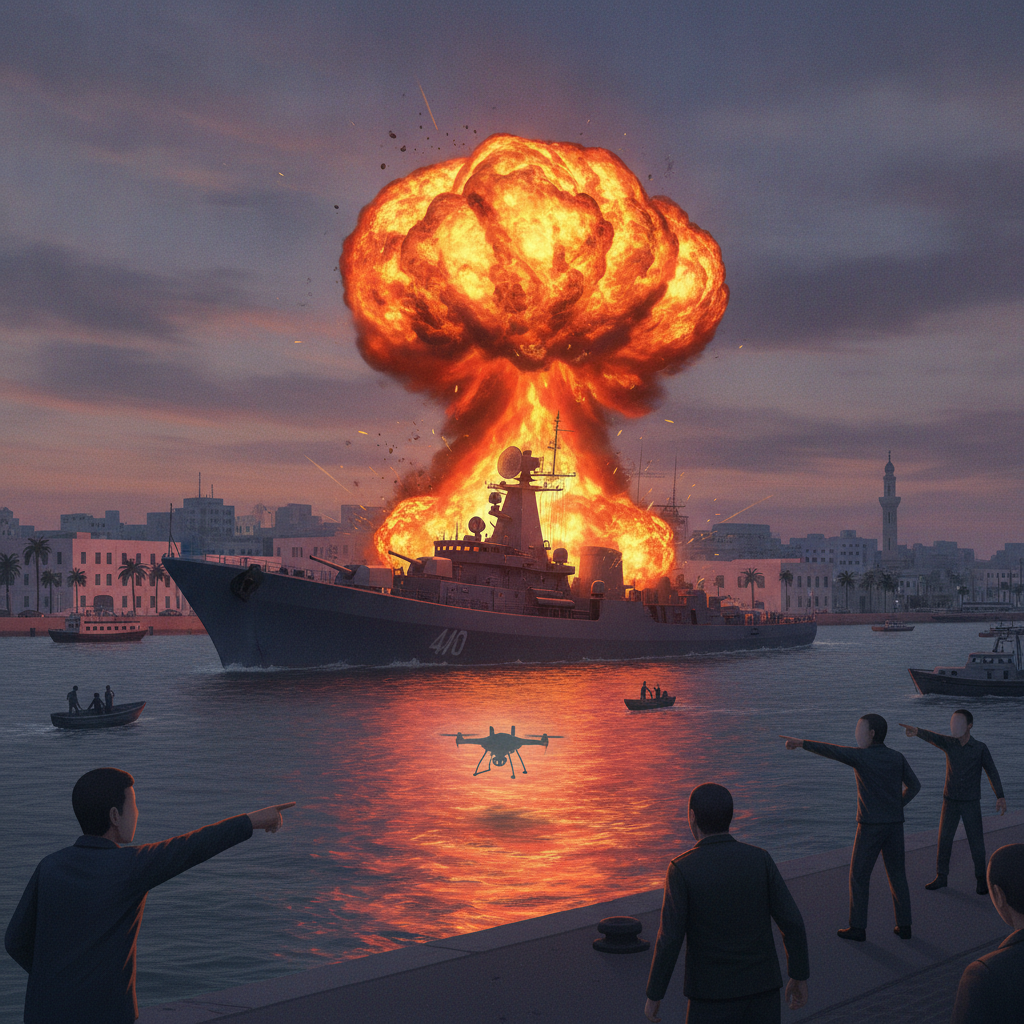
NewsWK — A violent explosion rocked a naval facility in eastern Libya on Sunday, November 22, 2026. The blast targeted a docked Russian naval vessel inside the strategic port of Benghazi. Eastern Libyan military officials suspect an unannounced sea drone attack caused the sudden explosion. The strike severely damaged the warship. Local fire crews then battled intense flames before securing the surrounding harbor.
How Did the Russian Ship Explosion Benghazi Libya Occur?
A major blast struck a Russian naval vessel in eastern Libya on November 22, 2026. Following the blast, preliminary investigations by eastern Libyan authorities pointed to a sea drone strike. The attack targeted the warship while it refueled in the port of Benghazi. Furthermore, the explosion severely damaged the vessel and caused it to capsize.
Libyan National Army forces control eastern and southern parts of the country. Military officials stated that multiple sea drones launched from western Libyan territory toward Benghazi. Next, air defense systems and naval personnel intercepted at least four incoming unmanned vessels. However, two drones breached defenses and struck the warship directly at dawn.
The warship had docked at Benghazi to refuel and resupply under bilateral maritime agreements. Additionally, it was returning to Russia after completing routine operations in the region. Meanwhile, local emergency services brought the resulting harbor fires under control by Sunday afternoon. Officials confirmed that port warehouses and critical shore infrastructure suffered no permanent structural damage.
Still, reports regarding casualties remain varied among local medical personnel and security sources. Two local medical workers reported several crew injuries without confirming any fatalities. Yet, other local security sources indicated that multiple foreign and domestic personnel died. Russian authorities have not yet issued an official public statement regarding the casualties.
What Does the Benghazi Port Explosion Mean for Global Maritime Security?
The Benghazi port explosion highlights growing instability along vital Mediterranean trade routes. Moreover, the event demonstrates how regional conflicts can rapidly spill across international borders. For American national security observers, the incident underscores mounting risks to foreign trade lanes. It also highlights threats to international law and regional stability across North Africa.
Security experts view the attack as a dangerous escalation of regional conflict. In addition, unmanned surface vessels represent a growing hazard to naval and commercial ships worldwide. For example, a second sea drone attacked a commercial vessel off Benghazi late Sunday evening. Next, Libyan naval forces deployed quickly. They successfully rescued the commercial crew from the water.
The health ministry confirmed that several crew members received medical treatment for minor injuries. However, these combined attacks raise immediate concerns regarding commercial shipping safety in North Africa. American taxpayers invest heavily in global maritime security and counter-terrorism measures across the Mediterranean. Therefore, instability near African ports directly impacts freedom of navigation and global market stability.
The eastern Libyan government strongly condemned the attack in an official public declaration. Because of the aggression, government leaders declared that they will not tolerate foreign conflict on Libyan territory.
“We will not allow Libyan ports to become an arena for settling scores,” officials stated.
Then, they promised to pursue diplomatic and legal measures against all responsible parties.
What Are the Key Details Behind the Russian Warship Merkury Drone Attack?
Intelligence sources indicated that multiple sea drones approached the naval facility at dawn. Libyan forces intercepted several incoming craft during the early morning attack. However, two unmanned vessels struck the corvette, triggering heavy fires and catastrophic flooding.
Commercial satellite imagery captured by Vantor on November 22 confirmed the damage extent. Specifically, the imagery showed that the warship capsized and largely sank at its moorings. Still, only the forward bow remained visible above the waterline by Sunday afternoon.
Key facts surrounding the strike on the naval vessel include:
- The corvette Merkury served as a frontline surface combatant for Russian naval operations.
- The vessel docked in Benghazi under a bilateral logistics and refueling arrangement.
- Multiple drone impacts caused catastrophic hull breaches and rapid internal flooding.
- Libyan authorities reported no permanent damage to nearby commercial cargo berths.
What Context Explains the Russian Corvette Merkury Sunk in Eastern Libya?
Eastern Libya serves as a strategic operational hub for naval vessels in the Mediterranean. Russia previously negotiated maritime agreements with eastern Libyan authorities to secure port access. However, the sinking of the corvette Merkury disrupts Russian naval logistics throughout the region. Also, the event marks a sharp expansion of remote sea drone warfare into North Africa.
Libya remains divided between political factions controlling the east and west of the country. The Libyan National Army maintains firm control over Benghazi and surrounding oil infrastructure. Meanwhile, western Libya hosts rival administration forces and foreign military elements. Officials investigated a potential Ukrainian Drone Strike Libya link involving western launch points. Furthermore, they claimed foreign personnel operated the launching facilities that directed the drones eastward.
Still, no foreign government or militant group has formally claimed responsibility for the strike. Yet, Russian government officials in Moscow refrained from issuing an immediate public comment. The event underscores the complex web of foreign interventions affecting Libyan sovereignty. Consequently, strict enforcement of maritime sovereignty remains essential for protecting international shipping lanes. As investigations continue, local authorities maintain heightened readiness across all eastern Libyan ports.
This article was produced with the assistance of AI and reviewed by our editorial team.
Related: Drone Safety Statement Modernization Act: Congress Weighs Updates to Drone Retail Rules
Related: Vessel Identification Protection Act of 2026 Introduced