Environment
2026 Ozone Hole Measurements Show Weather Spurred Growth, but Recovery Stays on Track
NOAA, NASA release measurements of 2026 ozone hole While weather caused a greater loss of ozone this year, long-term recovery still on track November 4, 2026 NOAA Corps LT Michael Doneghey, the South Pole observatory station lead, holds a weather…



Last updated:
Key points
- Cold weather and a strong polar vortex expanded the Antarctic ozone hole to an average of 9.6 million square miles in autumn 2026.
- Despite seasonal growth, atmospheric scientists confirm the protective ozone layer remains on track for full recovery by the 2070s.
- International phase-outs of chlorofluorocarbons prevented the 2026 hole from growing an additional 1 to 2 million square miles.
NewsWK — Federal atmospheric scientists recently released their annual monitoring data. The report shows that cold polar weather expanded the Antarctic atmospheric gap in 2026. However, long-term trends confirm that historical environmental policies continue to restore the protective atmosphere. Earth relies on stratospheric ozone to filter harmful solar radiation before ultraviolet rays reach the surface.
What do the 2026 ozone hole measurements reveal about atmospheric health?
The latest 2026 ozone hole measurements show significant seasonal depletion. Atmospheric loss covered an average of 9.6 million square miles between September 7 and October 13. That area spans more than twice the size of the continental United States. However, overall atmospheric recovery remains firmly on schedule despite this year’s weather-driven expansion.
Additionally, researchers recorded the peak size for the year on September 18, 2026. On that day, the Antarctic atmospheric gap expanded to 10.5 million square miles. That measurement reaches roughly 90 percent of the record size set in September 2000. Still, researchers noted that historical chemical reductions prevented even worse atmospheric thinning this autumn. Without global reductions in banned industrial compounds, the gap would have expanded further. In fact, atmospheric loss could have grown by another 1 million to 2 million square miles.
Researchers monitor stratospheric health through multiple complementary ground and space tools. Key monitoring assets include:
- High-altitude weather balloons: Technicians launch instrument packages called ozonesondes from the South Pole Baseline Atmospheric Observatory.
- Ground spectrophotometers: Specialists measure vertical ozone columns overhead using the optical Dobson Ozone Spectrophotometer.
- Polar-orbiting satellites: Also, space instruments aboard NASA‘s Aura satellite, NOAA-20, NOAA-21, and Suomi NPP track daily spatial coverage.
On October 17, ground instruments measured a minimum atmospheric density of 105 Dobson units directly above the South Pole. By comparison, the all-time recorded low reached 92 Dobson units in October 2006. Scientists define one hundred Dobson units as a compressed ozone layer one millimeter thick at sea level.
How does polar vortex ozone depletion Antarctic behavior expand the seasonal gap?
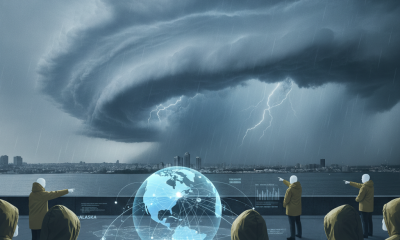
Strong upper-atmosphere winds created an unusually large stratospheric polar vortex around Antarctica during the southern hemisphere winter. This isolated frigid polar air allowed specialized stratospheric clouds to form earlier and linger longer. Consequently, chemical reactions on those cloud particles accelerated ozone destruction. This process eroded protective stratospheric molecules across a wider geographic footprint.
Amy Butler works as a research scientist at the NOAA Chemical Sciences Laboratory. She explained the weather dynamics behind the expansion. “The polar vortex was unusually large this year in part because planetary-scale weather systems that typically well up from the lower atmosphere and break up the vortex were especially weak in August and September,” Butler said. Because those lower-atmosphere weather waves remained weak, strong polar winds expanded several degrees of latitude further from the pole.
This weather alignment demonstrates how seasonal polar vortex ozone depletion Antarctic patterns can temporarily disrupt steady atmospheric gains. First, sunlight breaks down legacy industrial compounds into active chlorine and bromine atoms. Then, those chemical elements react with polar clouds under extreme cold to destroy ozone rapidly.
What does the NOAA NASA ozone hole report 2026 signal for long-term policy?
The joint NOAA NASA ozone hole report 2026 confirms that international restrictions on manufactured chemicals remain effective over multi-decade timelines. Today, global bans have reduced stratospheric chlorine levels by nearly one-third compared to peak levels in the 1980s.
Paul Newman serves as a senior scientist at the University of Maryland and a NASA ozone research leader. “The annual ozone hole has been forming later in the season in recent years, which tells us the ozone layer is healing,” Newman said. “But an unusually powerful polar vortex has extended ozone depletion in the Antarctic this season, allowing the hole to grow to proportions we haven’t seen in a decade.”
Scientists project a full atmospheric recovery by the 2070s as old compounds continue breaking down naturally. Therefore, annual fluctuations highlight weather variability rather than structural policy failure. Ultimately, this ongoing progress offers an encouraging Antarctic ozone hole recovery update for environmental scientists and policymakers nationwide.
What do these atmospheric findings mean for American families and businesses?
Stratospheric ozone serves as natural sunscreen for the planet by blocking hazardous solar ultraviolet rays.
Ground-level ozone acts as a harmful respiratory pollutant near cities. Conversely, stratospheric ozone high above Earth preserves planetary habitability. In addition, federal agencies track stratospheric trends to ensure public health safeguards remain effective. Thus, the ongoing ozone layer healing 2026 reports validate decades of responsible industrial transitions and steady regulatory enforcement.
This article was produced with the assistance of AI and reviewed by our editorial team.
Sources
Related: House Resolution 1499 Clears Way for Critical Votes on Mining, Higher Education, and Maritime Rules
Related: Study Examines Women on Parole Mental Health and Reentry Crises Across the US