Local Business
Nvidia China Chip Exports Lobbying Sparks Regulatory Overhaul After Executive Resignation
How Nvidia fought for years in Washington to sell its prized chips to China We shopped 147 early Black Friday sales to find the 98 best deals worth shopping now How We Broke Open the Nvidia Investigation Experts warn: Nearly…


Last updated:
Key points
- Former Nvidia CEO Jensen Huang resigned in November 2026 following an investigation into security risks and black-market chip sales.
- Interim CEO Colette Kress halted H200 chip sales to China while Nvidia created a dedicated national security oversight committee.
- Congress and federal regulators are tightening export controls and closing data center loopholes to protect sensitive domestic technology.
NewsWK — Federal lawmakers and national security officials are accelerating efforts to tighten trade controls on advanced technology. This push follows years of corporate pressure in Washington. Recently, key leadership suddenly departed semiconductor giant Nvidia. Consequently, this departure renewed intense scrutiny over how American artificial intelligence hardware reaches foreign competitors.
What does the tech fallout mean for American technology security?
The shifting regulatory environment forces American tech companies to make a tough choice. They must balance lucrative overseas revenue against national security priorities. Federal agencies now scrutinize hardware shipments more strictly to stop advanced technology from empowering foreign adversaries. Consequently, domestic businesses face stricter compliance burdens and unprecedented government oversight over dual-use technology.
For years, technology leaders balanced massive global demand with increasingly strict federal regulations. For example, Silicon Valley executives argued that overseas sales generated vital revenue. They needed these funds to support domestic research and development. However, national security leaders warned that selling cutting-edge microchips overseas poses severe risks to national defense.
Currently, Congress is reviewing license applications that previously permitted shipments to foreign firms with military ties. Lawmakers are also introducing new legislation. It requires congressional approval before agencies grant export licenses for high-performance computing hardware. Additionally, new tracking requirements will monitor artificial intelligence hardware across the global supply chain to stop unauthorized redirection.
How Did Nvidia Washington Lobbying China Impact Federal Policy?
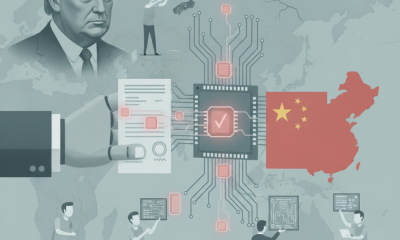
For years, Nvidia Washington lobbying China focused on preserving access to massive overseas commercial opportunities. At the same time, the company worked to adhere to evolving federal rules. Specifically, the semiconductor giant sought export approvals by modifying hardware specifications. These changes kept chips just below the restricted performance levels set by federal regulators.
The policy struggle began in late 2022. At that time, federal authorities enacted sweeping restrictions on top-tier artificial intelligence hardware shipments to China. In response, engineering teams adjusted chip performance to remain within legal boundaries. Former chief executive Jensen Huang defended the re-engineered products. Furthermore, he maintained that the design adjustments complied with both the letter and spirit of federal regulations.
Despite strict export thresholds, commercial activity remained substantial. For instance, the Commerce Department approved applications covering almost 580,000 units for foreign firms. During one recent quarter alone, the company reported $2.4 billion in sales under those government-issued licenses. Moreover, former leadership estimated that foreign demand represented a $50 billion annual commercial market.
Why Were Nvidia AI Chip Export Controls Targeted by Regulators?
Nvidia AI chip export controls serve as the primary legal mechanism governing foreign sales of high-performance microprocessors. These strict federal rules dictate which computational hardware companies can sell overseas. Ultimately, they establish clear benchmarks to safeguard national security while maintaining economic stability.
In May 2025, congressional leaders proposed new measures for domestic chipmakers. The rules required them to prioritize domestic clients over foreign competitors. However, company representatives opposed the proposal, arguing that global sales strengthened American technological leadership. By December 2025, federal authorities approved export licenses for H200 class hardware to foreign buyers.
However, federal officials soon identified significant loopholes in existing rules. Specifically, foreign entities accessed restricted computing power through foreign data centers outside restricted jurisdictions. Consequently, federal agencies updated export guidelines to eliminate these regulatory gaps. This action prevents unauthorized access to domestic computational networks.
What led to the sudden leadership change at Nvidia?
A major corporate restructuring occurred in November 2026 after former Chief Executive Officer Jensen Huang resigned. Board members immediately appointed interim chief executive officer Colette Kress to take charge. Subsequently, she prompted swift operational changes to align corporate governance with federal national security expectations.
Huang stepped down after acknowledging an unauthorized relationship. The individual involved faced suspicion of operating on behalf of foreign intelligence. Furthermore, that person managed a third-party firm under federal investigation. Authorities suspected the firm of operating an illicit secondary market for restricted microprocessors.
Following the executive departure, interim CEO Colette Kress immediately suspended all H200 class hardware sales to restricted markets. Additionally, board chairman Harvey Jones announced the creation of a specialized internal oversight committee. This new board committee focuses exclusively on national security compliance, legal adherence, and export regulation alignment.
Meanwhile, federal agencies continue to refine US China chip trade regulations to close remaining policy loopholes. Finally, lawmakers are working closely with international allies to establish uniform export policies across global markets.
This article was produced with the assistance of AI and reviewed by our editorial team.
Sources
Related: Trump AI Chip Export China Approvals Face Scrutiny as Commerce Discloses Licensing Records
Related: Alice Huang Nvidia China Spy Agency Investigation Triggers Federal Probes Over AI Technology