Nebraska
Donald Trump Jensen Huang Nvidia Intervention Sparks Tech and Security Debates
Jimmy Kimmel Clocks Trump’s Personal Investment in Jensen Huang Live Updates: Nvidia Reinstates Jensen Huang as CEO as Trump Praises the Decision Jensen Huang is a walking moral hazard Trump sealed deal for Nvidia to rehire Jensen Huang as CEO …


Last updated:
Key points
- Nvidia’s Board of Directors unanimously reinstated Jensen Huang as CEO following direct advocacy from President Donald Trump and federal review confirming no security risks.
- Nvidia stock surged nearly 30% following Huang’s reinstatement, recovering major market value lost after his initial resignation.
- Senate Banking Committee Chair Tim Scott scheduled a December 3 oversight hearing on AI export controls, while the Commerce Department blacklisted foreign firm Megaspeed.
NewsWK — Executive governance, market stability, and federal oversight intersected directly in Silicon Valley this week. President Donald Trump publicly advocated for corporate stability at Nvidia. Meanwhile, corporate directors acted quickly to restore executive leadership during a pivotal moment for global artificial intelligence competition.
What Does the Nvidia Leadership Decision Mean for American High-Tech Policy? Donald Trump Jensen Huang Nvidia
The corporate decision directly affects American economic leadership, domestic manufacturing confidence, and national artificial intelligence development. Tech infrastructure remains vital for national defense and economic dominance. Therefore, executive stability at key microchip suppliers safeguards vital supply chains across the United States. This stability reassures financial markets while protecting domestic innovation against foreign competition.
Leadership stability at major chip designers remains vital to national competitiveness. Indeed, this matters for millions of American investors and tech workers. Nvidia supplies the computing power driving artificial intelligence systems across the country. However, sudden executive crises can destabilize domestic tech progress quickly.
When executive disruption hits a semiconductor manufacturer, supply chain confidence drops. Consequently, federal officials monitor executive security closely. President Donald Trump took an active stance regarding Nvidia’s executive boardroom. Specifically, Trump argued that strong corporate leadership ensures American technological dominance over foreign rivals.
Why Did Donald Trump Back the Jensen Huang Nvidia Return?
President Donald Trump actively supported the Jensen Huang Nvidia return. He sought to restore market stability and protect American technology momentum. Trump confirmed speaking directly with corporate directors. Consequently, federal authorities reviewed the situation carefully. They determined that bringing back the company co-founder posed no risk to national security interests.
The corporate governance turmoil began on November 12, 2026, when 63-year-old Nvidia co-founder Jensen Huang resigned. Huang stepped down following disclosures involving an extramarital relationship with Alice Huang. She served as an executive at Singapore-based Megaspeed. However, federal intelligence officials suspected Megaspeed of maintaining ties to China’s Ministry of State Security. Subsequently, Chief Financial Officer Colette Kress took over temporary duties as interim chief executive officer.
The sudden leadership departure caused immediate market instability. In fact, Nvidia lost approximately $1.5 trillion in market valuation during the leadership vacuum. Then President Trump stepped forward on November 22 with public statements supporting Huang.
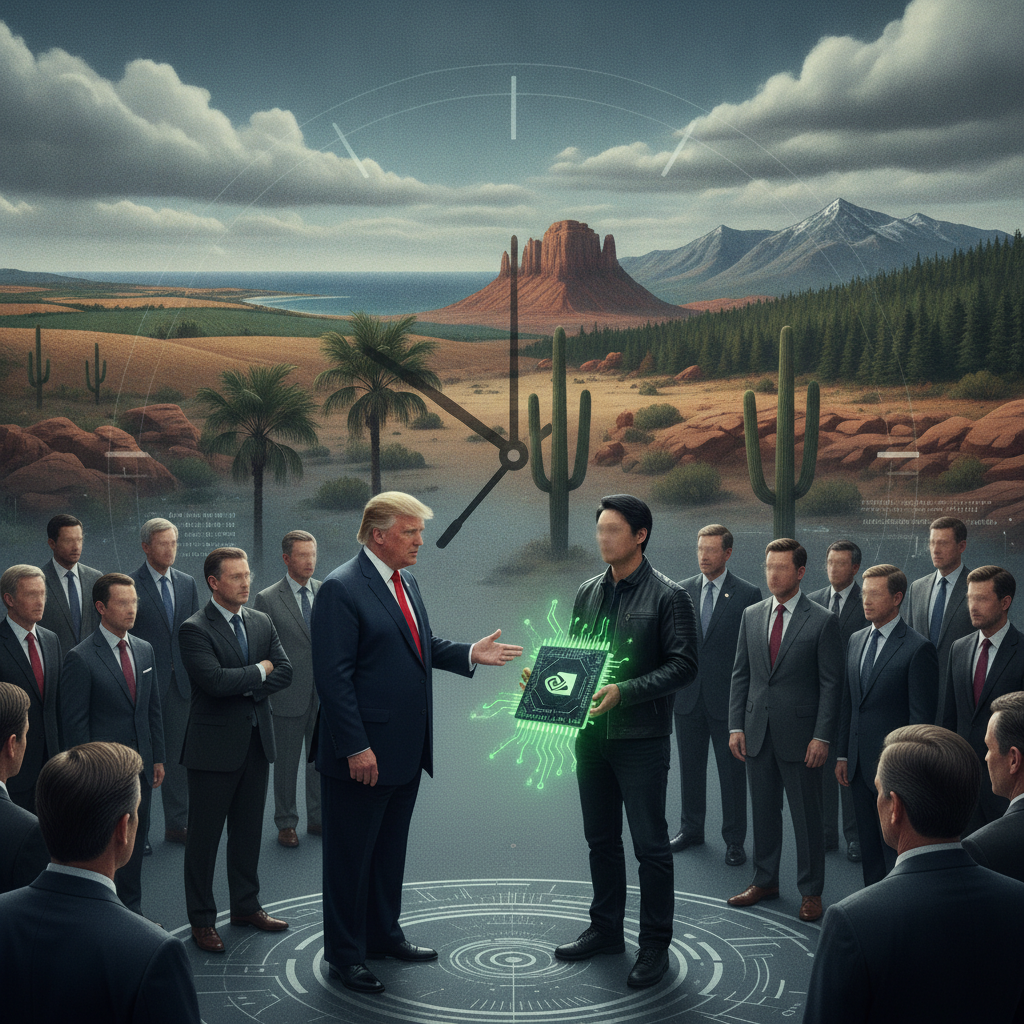
Trump described Huang on Truth Social as a “Great Patriot and National Treasure.” In addition, Trump conducted a 50-minute phone interview with national broadcast media. He confirmed speaking directly and indirectly with company board members. Trump assured executives that Huang presented no national security threat. Trump stated
On November 23, Nvidia’s Board of Directors voted unanimously. They reinstated Huang as President, Chief Executive Officer, and board director. Board Chair Harvey C. Jones indicated that directors felt satisfied with Huang’s candor. Also, official statements confirmed that federal agencies provided input before the board made its decision.
How Did Markets React to the Nvidia CEO Jensen Huang Reinstated Decision?
Financial markets responded immediately once the Nvidia CEO Jensen Huang reinstated decision became public on November 23. Company shares surged nearly 30% in single-day trading. As a result, investors recovered major financial losses.
Wall Street rallied strongly behind the board’s decision. Investors viewed Huang’s return as essential for maintaining executive momentum in the global AI race. However, the high-profile presidential intervention also drew media attention and political commentary.
Late-night host Jimmy Kimmel addressed the political drama during his television broadcast. He discussed the Jimmy Kimmel Trump Jensen Huang fallout. Kimmel highlighted the Trump Nvidia stock investment disclosures while questioning the swift presidential intervention. Specifically, Kimmel joked on air, “And if you think that sounds fishy, it’s not — it’s called being a good friend.”
Meanwhile, political commentators debated the intersection between private enterprise, executive wealth, and presidential advocacy. Democratic lawmakers pointed to personal stock disclosures and political donations. Conversely, conservative supporters emphasized a different priority. They argued that protecting America’s top technological assets remains a primary duty of federal leadership.
How Are Lawmakers Responding to Security and Market Concerns?
Lawmakers on Capitol Hill are opening formal congressional inquiries into semiconductor export controls and foreign intelligence threats. Bipartisan leaders plan to examine executive security protocols thoroughly. Therefore, Congress will review supply chain safety. Lawmakers want to guarantee that foreign intelligence agencies cannot compromise vital American tech developers.
Congressional leaders from both major political parties expressed concern over potential foreign influence risks. For instance, Republican Senators John Cornyn of Texas, Pete Ricketts of Nebraska, and John Curtis of Utah raised questions. They focused on national security implications. Simultaneously, Democratic Senators Elizabeth Warren and Ruben Gallego voiced concerns about executive ethics standards.
Senate Banking Committee Chairman Tim Scott, a South Carolina Republican, scheduled a formal hearing for December 3, 2026. The hearing title is “Protecting America’s AI Advantage: Oversight of US Export Controls.” It focuses directly on supply chain security. Accordingly, Senator Scott called Huang as the sole witness to testify before lawmakers.
Parallel to congressional actions, the executive branch moved forcefully against potential foreign security threats. On November 23, 2026, the U.S. Commerce Department formally placed Megaspeed onto the U.S. trade blacklist. Moreover, the trade action covered Megaspeed’s corporate subsidiaries in Thailand and Malaysia. Consequently, American companies cannot export sensitive technology to those entities without strict federal permits.
What Historical Context Surrounds Federal Tech Oversight?
Federal intervention in critical technology sectors reflects long-standing national security priorities. Washington officials routinely monitor foreign intelligence targeting of American high-tech firms. Because microchips power modern national defense systems, federal agencies strictly enforce export controls and corporate governance safeguards.
The semiconductor industry has increasingly become the primary battleground for global technological supremacy. Furthermore, intelligence agencies frequently issue warnings about foreign adversaries. They note that rivals attempt to infiltrate high-tech firms through corporate access, strategic investments, and personal relationships.
Therefore, federal oversight of microchip manufacturing remains standard practice across presidential administrations. Federal regulators took decisive action against Megaspeed while clearing corporate executives of illegal conduct. Through this approach, they aimed to strike a balance. Ultimately, officials sought to safeguard technological intellectual property without disrupting vital domestic companies.
Moving forward, American technology firms face heightened scrutiny regarding foreign partnerships and executive security protocols. Congress now prepares for formal oversight hearings in December. Meanwhile, domestic tech leaders must navigate stricter regulatory expectations while maintaining fast-paced innovation.
This article was produced with the assistance of AI and reviewed by our editorial team.
Related: Jensen Huang Reinstated Nvidia CEO as Donald Trump Backs Tech Chief
Related: Jensen Huang Reinstated Nvidia CEO Following Board Vote and Federal Consultation
Related: Stock Market Today: Tech Futures Decline as Nvidia Pulls Back