Washington
US Iran Naval Blockade Escalates as Gulf Shipping Faces Mines and Cyber Threats
Live Updates: Iran says it will use all means to end U.S. blockade as Trump plays down escalating attacks Iran war live: Land blockade ‘virtually impossible’, says Iran’s Araghchi Iran’s oil leverage is weakening. That could push it toward escalation …


Last updated:
Key points
- The U.S. maintains strict enforcement of the US Iran naval blockade to protect international shipping and cut off illicit Iranian revenue.
- Satellite analysts exposed a fake tanker signal near the Strait of Hormuz created by automated identification system spoofing.
- President Donald Trump stated that recent Iranian missile and drone strikes caused no military damage to American forces.
NewsWK — American naval forces continue to enforce maritime restrictions off the Middle Eastern coast. Tensions remain high near key global shipping lanes. Iranian leaders recently threatened military responses. They want to push back against Washington’s economic pressure. However, U.S. commanders maintain a firm stance across regional waterways.
How is the US Iran naval blockade impacting global shipping and fuel prices?
The U.S. Iran naval blockade directly affects global trade, domestic fuel stability, and international maritime security. American consumers rely on stable energy markets. However, persistent military friction near key choke points creates uncertainty. Therefore, military analysts monitor regional commercial routes closely. They aim to prevent major supply disruptions for domestic businesses and household budgets.
Washington initially established maritime restrictions in April. Then, officials reimposed strict sea controls in July 2026. Therefore, naval patrols active near the Arabian Gulf strictly inspect international vessel movements. American defense officials aim to deny illicit trade revenue to hostiles in Tehran. However, prolonged naval operations require significant military resources and constant surveillance. Meanwhile, U.S. energy producers continue to provide domestic stability despite volatile overseas transit corridors.
What are the latest Iran Strait of Hormuz attacks and maritime incidents?
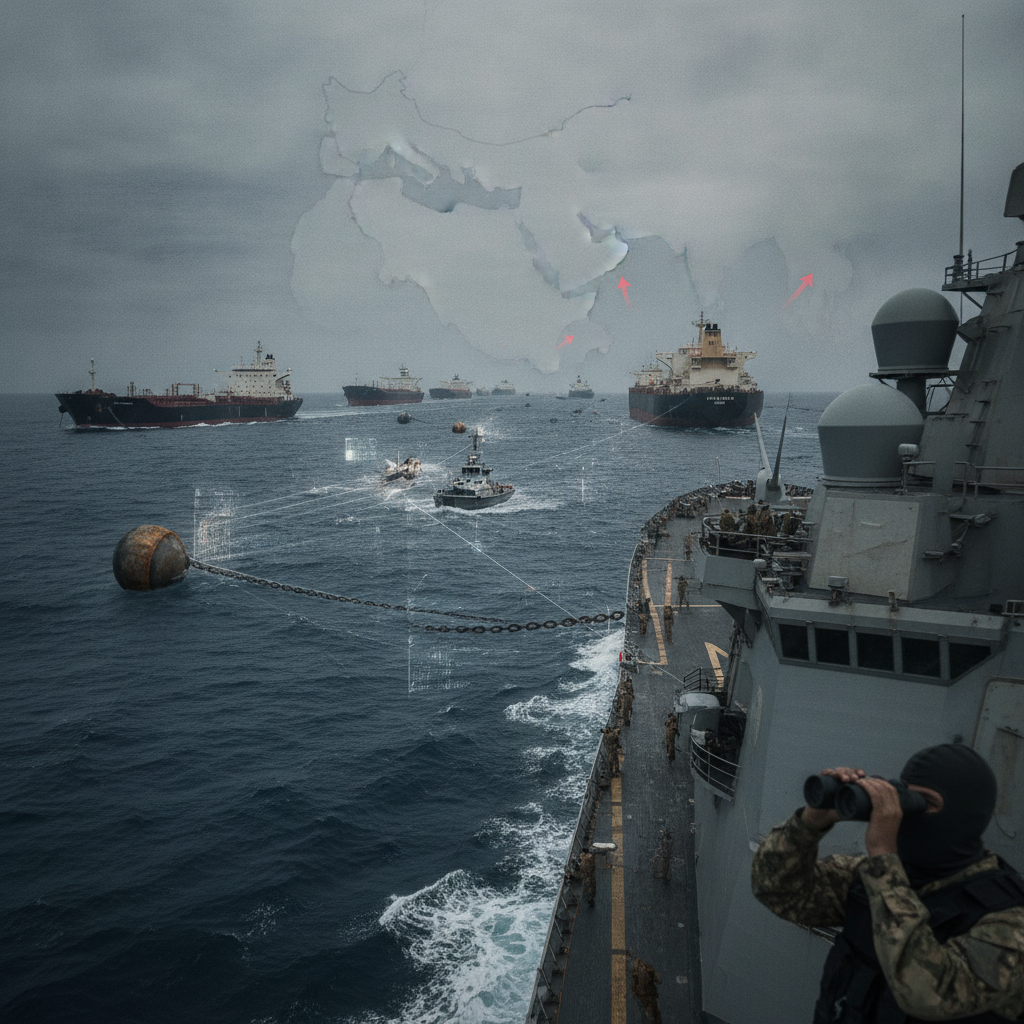
Recent Iran Strait of Hormuz attacks show growing instability across critical Middle Eastern sea lanes. Unflagged mines, drone strikes, and digital sabotage threaten commercial vessels navigating near the United Arab Emirates. As a result, coalition forces have increased patrol frequencies and intelligence sharing. These efforts safeguard peaceful international commerce.
On November 23, 2026, the United Kingdom Maritime Trade Operations confirmed a strike on an anchored tanker. The attack occurred near the United Arab Emirates. , and officials reported no human casualties. However, the Iranian Navy claimed two oil tankers caught fire on November 24 after striking sea mines. Iranian officials stated the ships disabled their navigation systems before entering restricted waters.
Furthermore, American intelligence agencies are investigating potential cyberattacks targeting commercial ships. Federal investigators believe adversary hackers tried to disrupt navigation data for tankers carrying volatile fuel cargoes. Regional hostiles also launched strikes elsewhere across the Arabian Peninsula. For example, local sources reported an explosion at a fuel facility in Hodeida, Yemen, on November 23. That blast killed four people and injured 18 others. Meanwhile, Saudi defense forces intercepted a hostile ballistic missile over the western Red Sea coast on November 22.
Key maritime developments include:
- Tanker strike: A commercial vessel caught fire off the United Arab Emirates coast on November 23, 2026.
- Mine detonations: Iranian naval units reported two ships struck underwater mines near the strategic strait on November 24.
- Cyber threats: U.S. agencies opened inquiries into malicious code targeting digital marine navigation systems.
Why did fake ship signals disrupt Strait of Hormuz oil tankers?
Digital deception tactics recently targeted maritime tracking networks that monitor Strait of Hormuz oil tankers. False navigation signals created phantom ship movements designed to confuse international monitoring agencies. However, satellite analysts quickly verified the physical absence of the vessel and exposed the sophisticated digital scheme.
On November 22 and November 23, commercial ship-tracking platforms detected signals from a non-existent supertanker. The vessel broadcast the Persian name Khat Shekan, which translates to Line Breaker. Transponder data showed the phantom ship traveling at 8.5 knots out of the Persian Gulf. The signal made it appear as if a vessel successfully breached American naval positions. No ship had done so since July. However, satellite imagery firm TankerTrackers.com confirmed no such ship existed in the area. Maritime databases confirmed the vessel lacked an official identification number. Instead, perpetrators paired an Iranian maritime registration code with a Liberian-flagged vessel’s call sign. Consequently, marine security experts warned that signal spoofing adds unnecessary risk to congested maritime trade lanes.
How do Donald Trump Iran comments explain the strategic deadlock?
Recent Donald Trump Iran comments highlight the political debate surrounding Washington’s military posture overseas. The president emphasized that heavy enemy missile launches failed to inflict meaningful damage on U.S. assets. Moreover, federal officials maintain that strong deterrence remains the most effective policy for protecting American national interests.
President Donald Trump addressed the escalating regional conflict in a public statement on November 22, 2026. He acknowledged that Tehran launched a massive wave of drones and missiles over the prior week. Those launches exceeded any seven-day period in the previous nine months. However, Trump asserted that these attacks achieved no military effect. He also linked the timing of foreign aggression to domestic political dynamics after the November 3 midterm elections.
Meanwhile, Iranian Foreign Ministry spokesperson Esmaeil Baghaei strongly condemned the economic controls on November 23. Baghaei labeled the U.S. naval operations “an act of military aggression.” He stated Tehran would exercise self-defense under Article 51 of the United Nations Charter using all available means. Baghaei added that commercial traffic could resume within two days under certain conditions. Specifically, he demanded Washington stop hostile actions and lift trade sanctions. Still, U.S. officials insist that sanctions will remain until Tehran halts dangerous actions across international waters.
What led to the current phase of the US Iran conflict?
The US Iran conflict intensified after months of diplomatic gridlock and maritime enforcement. Washington established multi-domain operations to stop illegal arms shipments across regional land borders and sea routes. Consequently, Tehran attempted legal maneuvers and border trade adjustments to counter American diplomatic and economic pressure.
In early November 2026, U.S. Central Command launched Task Force Iron Gate. This specialized unit disrupts hostile supply networks across land borders and the Caspian Sea. American diplomats also pressed neighboring countries to seal border crossings. Iranian Foreign Minister Seyed Abbas Araghchi responded on November 23. He declared that a U.S. land blockade of Iran is “virtually impossible.” He cited Iran’s seven shared land borders. Furthermore, he noted extensive regional trade ties with neighbors like Iraq, Turkey, and Pakistan.
Meanwhile, Iranian courts issued a symbolic $290 billion judgment against the United States on November 23. Tehran judiciary official Hassan Abdolianpour announced the award over historic grievances spanning several decades. Iranian state media subsequently reported that local authorities enforced the judgment. They seized several commercial ships linked to American interests. Nevertheless, U.S. leaders remain resolute. They continue to protect international freedom of navigation and defend American citizens worldwide.
This article was produced with the assistance of AI and reviewed by our editorial team.
Related: US Blockade of Iran Triggers Tensions as Tehran Threatens Maritime Countermeasures
Related: Bahrain Iran Attack Escalates Tension Near US Military Bases