US News
Pentagon Criticism of Canada Defense Spending Signals Demand for Allied Burden Sharing
Pentagon sharply rebukes Canada over defense spending and the F-35 fighter jet review In secret memo, Hegseth restricts U.S.-Canada defense relationship Pentagon Issued Memo Limiting ‘Social Activities’ With Canadian Military Scoop: The Pentagon’s case for Canada to “get serious” on…


Last updated:
Key points
- The Pentagon released a document highlighting operational readiness shortfalls across Canada’s air force, navy, and army.
- Defense Secretary Pete Hegseth issued a policy directive limiting non-essential social and academic engagements while preserving core NORAD and NATO operations.
- U.S. officials criticized delays in Canadian defense spending targets and Ottawa’s ongoing review of its F-35 fighter jet acquisition.
NewsWK — American defense leaders are demanding greater accountability from northern allies regarding joint continental defense. The U.S. Department of Defense recently outlined significant gaps in Canadian military readiness. Officials stressed that American taxpayers have carried an unequal financial burden for decades. Therefore, Washington expects Ottawa to fulfill its commitments to North American security promptly.
What drove the recent Pentagon criticism of Canada defense spending?
The U.S. Department of Defense publicly released a detailed document outlining major readiness shortfalls across Canadian military branches. Pentagon leaders warned that decades of underinvestment left Canada unprepared. Therefore, Washington urged Ottawa to accelerate military modernization efforts and fulfill its solemn defense promises to North American allies.
On November 23, 2026, the Department of Defense published a two-page assessment on bilateral military readiness. Defense Secretary Pete Hegseth remains focused on encouraging Canadian military upgrades. The report highlighted severe readiness challenges across several military branches during the 2025–2026 fiscal year. For example, official figures revealed that only 41.9% of Canada’s air force fleet was ready for service. Meanwhile, the naval fleet maintained just 53.9% serviceability, and army readiness stood at 48%.
The Pentagon document summarized the situation clearly:
“Canada’s defense shortfalls speak for themselves. Canada must get serious and focused.”
How does the Canada F-35 fighter jet review impact joint security?
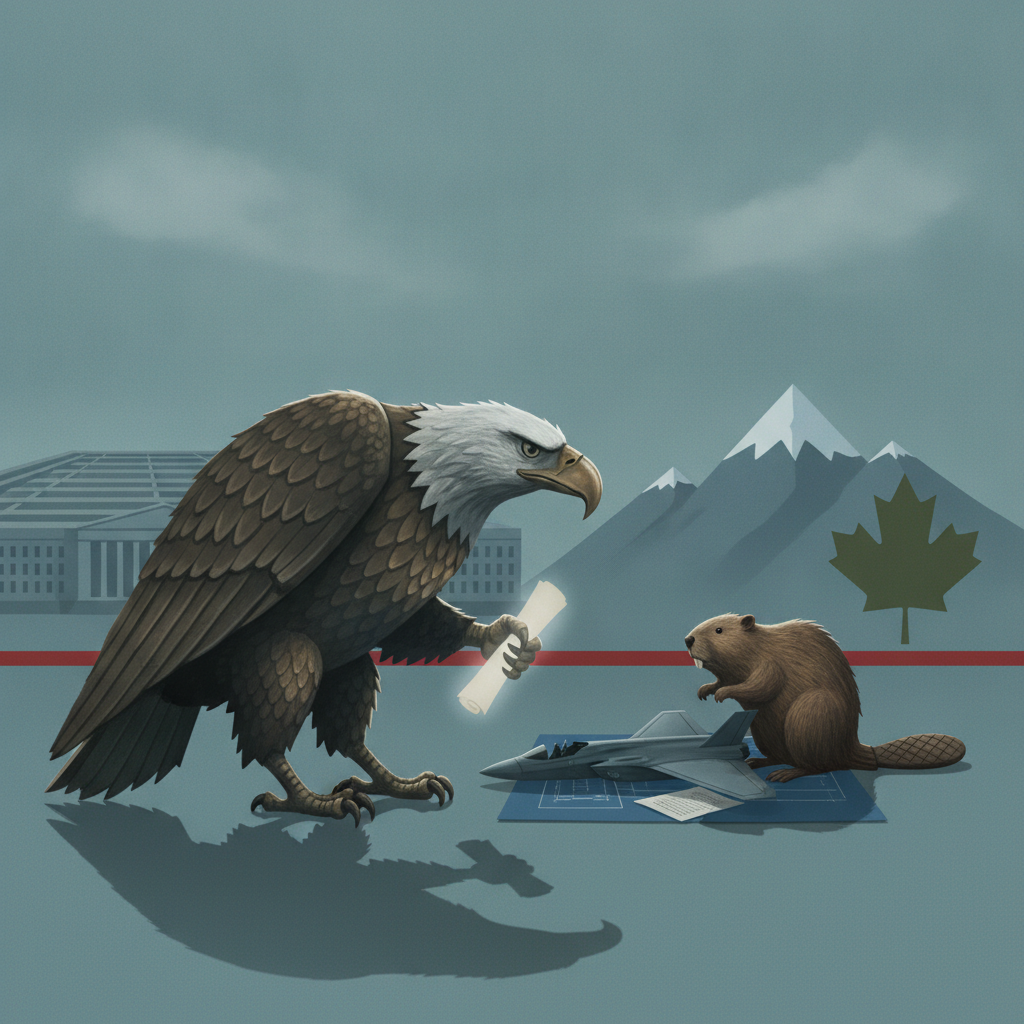
The Pentagon expressed strong concern over Ottawa‘s decision to re-evaluate its planned purchase of 88 F-35 fighter jets. U.S. officials warned that running a mixed aircraft fleet complicates maintenance and worsens staffing shortages. Also, American leaders cautioned against prioritizing domestic commercial advantages over military effectiveness.
Reconsidering aircraft purchases creates friction because common defense systems ensure seamless cooperation during joint combat missions. The Canada F-35 fighter jet review raises questions about fleet integration between neighboring air forces. , American officials view the aircraft program as essential for North American defense.
Why is the Pete Hegseth Canada defense memo creating new boundaries in U.S. Canada defense relations?
An internal directive from Defense Secretary Pete Hegseth established clear restrictions on non-essential military interactions with Canadian counterparts. Core NORAD and NATO operations remain completely unchanged. However, U.S. personnel must now seek formal authorization before attending Canadian think-tank forums or social gatherings.
News of the classified directive emerged on November 20, 2026. U.S. Senator Mike Rounds later confirmed the policy details during an international conference. Pentagon spokesperson Sean Parnell emphasized that all bilateral engagements must advance clear American strategic goals. However, official intelligence sharing and joint NORAD defense operations will continue without disruption. Canadian Defense Minister David McGuinty noted that routine military operations remain “business as usual.”
What does this mean for American taxpayers and national defense?
For American citizens, low military spending by allies shifts an extra burden onto U.S. taxpayers. Therefore, Washington continues to push all alliance members to meet their agreed security obligations.
Defense readiness depends heavily on sustained funding across several key areas to meet the Canada NATO defense spending target:
- Baseline NATO targets set military spending at 2% of national GDP, with broader alliance goals targeting 5% by 2035.
- Canada projects spending 4.1% of GDP on overall security by fiscal year 2027–2028, with 2.6% dedicated to core military forces.
- But U.S. analysts noted that major Canadian spending increases remain scheduled for after the 2029 national election.
- Canadian defense spokesperson Simon Lafortune highlighted a commitment of 81.8 billion Canadian dollars ($56.9 billion USD) over five years to rebuild military capabilities.
How have historical U.S.-Canada defense relations evolved?
Bilateral security ties have entered a period of recalibration after decades of close cooperation. U.S. officials previously paused the bilateral Permanent Joint Board on Defense in May 2026 over spending delays. These actions reflect growing insistence from Washington that defense partners maintain operational readiness.
The Permanent Joint Board on Defense has guided continental security since 1940. However, persistent delays in military spending have strained working relationships. American policymakers insist that modern threat environments require immediate investments rather than distant promises. Meanwhile, Canadian leaders argue that recent budget allocations demonstrate a firm long-term commitment to continental protection.
Discussions regarding alliance defense contributions come during broader diplomatic and trade conversations between both countries. At the Halifax International Security Forum, security experts discussed evolving geopolitical challenges across the Northern Hemisphere. Still, American defense planners emphasize that basic alliance military standards must remain non-negotiable. Washington maintains that equitable financial contributions strengthen global security alliances.
This article was produced with the assistance of AI and reviewed by our editorial team.
Sources
Related: U.S. House Advances National Defense Authorization Act for Fiscal Year 2027