New Mexico
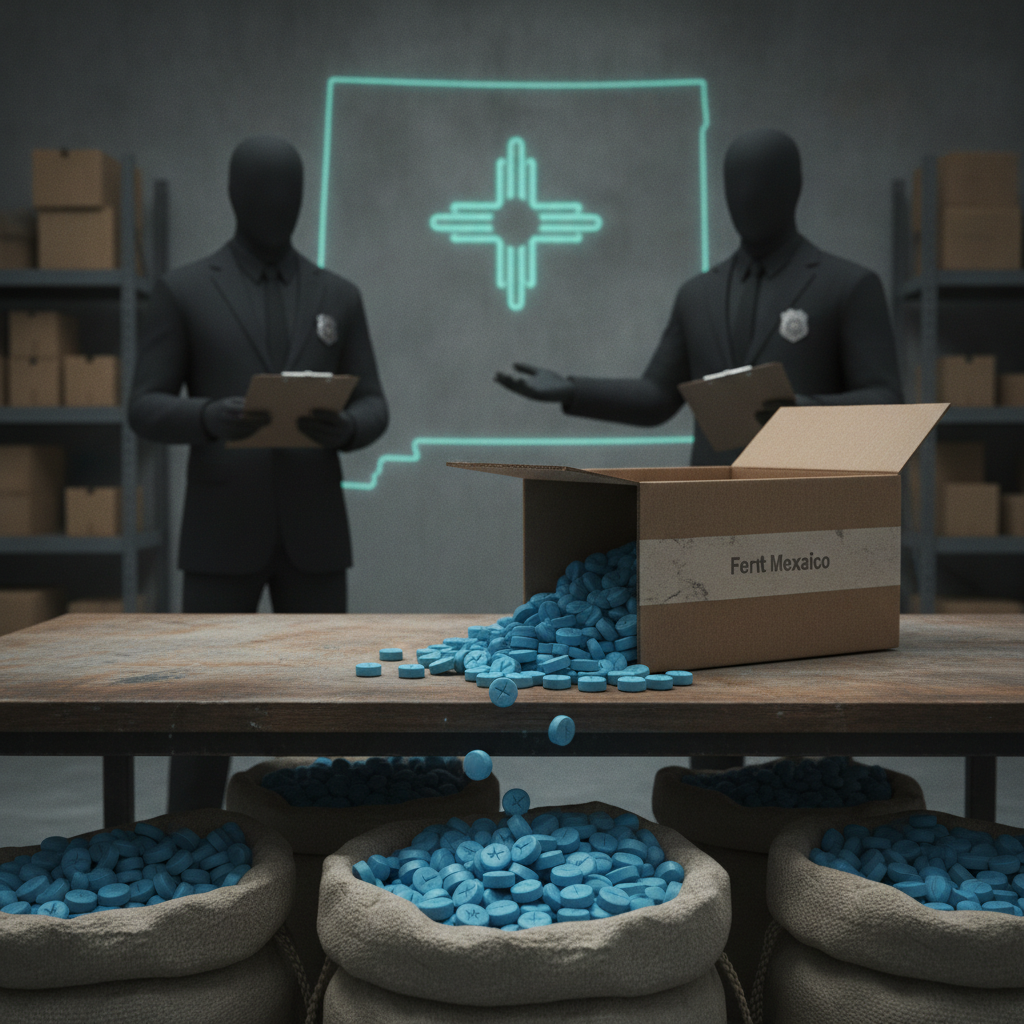
DEA Unseized Fentanyl Investigation New Mexico: Agency Allowed 1.4 Million Pills Onto Streets
AP investigation: The DEA allowed 1.4 million fentanyl pills to go unseized in major probe In Pursuit of Huge Fentanyl Bust, DEA Walked 1.4M Pills City Demands DEA to Pay More Than $150 Million of Damages in Fentanyl Pill Scandal …


Last updated:
Key points
- Federal agents permitted more than 1.4 million counterfeit fentanyl pills to flow into communities unseized while monitoring traffickers between 2024 and 2025.
- The City of Albuquerque filed a legal demand seeking over $153 million in damages from federal agencies following a 44% spike in fentanyl overdose deaths.
- New Mexico state officials launched an official state investigation to determine whether federal agents violated state laws during the undercover operation.
NewsWK — Federal law enforcement operations face intense scrutiny. Recently, federal agents allowed 1.4 million illicit fentanyl pills onto Southwest streets. This controversial strategy enabled dangerous narcotics to move across state lines. Meanwhile, surveillance teams watched from above. Because of these actions, state and local officials are demanding full federal accountability.
How does the DEA fentanyl scandal Albuquerque impact local taxpayers and safety?
Albuquerque municipal leaders filed a formal legal demand seeking over $153 million from federal authorities. This demand came after illicit drugs flooded local streets. the state experienced a 44 percent surge in deadly fentanyl overdoses during the previous year Consequently, officials are holding the federal government accountable for mounting public costs.
Mayor Tim Keller and city representatives issued a formal legal demand. Specifically, they are seeking $153,483,915.24 in damages from federal agencies. Local officials noted that the addiction crisis placed heavy burdens on municipal resources, first responders, and healthcare systems. Meanwhile, community members faced rising violent crime and tragic loss of life. Counterfeit pills spread rapidly through residential areas. Therefore, city leaders argued that federal choices directly undermined local police efforts to keep neighborhoods safe.
What did the DEA unseized fentanyl investigation New Mexico reveal about undercover surveillance?
Official Court records and surveillance files reveal the operation’s massive scale. Federal agents tracked narcotics shipments across six states between August 2024 and April 2025. Surveillance aircraft recorded transactions while couriers moved plastic bins and duffel bags through public spaces. However, law enforcement repeatedly chose not to seize the dangerous contraband.
Court filings cited in the AP investigation DEA fentanyl documentation detail these movements. Couriers transported packages through hotels, apartments, Airbnb rentals, and self-storage units. For example, agents observed a major drug exchange on a Sunday afternoon in August 2024 at an Albuquerque hotel. A federal plane circled overhead while officers watched the lobby and parking lot from below. At 2:24 p.m., a buyer arrived in a white pickup truck and met a courier. Then, eight minutes later, the buyer walked away with a backpack. It held roughly 100,000 counterfeit pain pills. Still, federal agents did not intercept the truck or confiscate the lethal shipment.
What role did whistleblowers play in exposing DEA walked fentanyl pills?
Internal disclosures from agency personnel first exposed the policy of allowing unseized narcotics onto public streets. Special Agent David Howell brought the strategy to light. In doing so, he revealed that hundreds of thousands of additional pills had entered New Mexico neighborhoods earlier.
Whistleblower reports showed that drug walking occurred repeatedly between 2023 and 2025. Because of these disclosures, state officials launched formal inquiries into federal law enforcement practices. New Mexico Governor Michelle Lujan Grisham sent a formal letter to federal authorities on June 24, 2026. Next, State Attorney General Raúl Torrez opened an official investigation on June 26, 2026. Currently, his office is evaluating whether federal agents violated state laws during their operations.
Why did federal prosecutors allow shipments in the DEA drug walking investigation?
major Ultimately, the extensive investigation targeted an alleged ringleader who generated millions in monthly revenue. However, law enforcement experts remain sharply divided over the severe public safety risks involved.
The federal operation targeted Heriberto Salazar Amaya. He allegedly managed an organization generating $2 million in monthly sales. Investigators revealed that Salazar Amaya used 14 mobile phones and multiple aliases to direct couriers across six states. Federal agents arrested Salazar Amaya in April 2025, and prosecutors set his trial for 2027. Also, grand juries indicted 15 co-defendants on July 16, 2025, for drug trafficking and firearms offenses.
The trafficking ring relied on regional managers, including Bruce Sedillo and Alex Anthony Martinez. These managers directed pill distribution across Albuquerque, Santa Fe, and Hobbs. In November 2024, officers searched a northeast Albuquerque stash house linked to the ring. Agents Later, federal agents arrested Martinez on May 2, 2025. A federal jury subsequently convicted Martinez following a six-day trial.
How are law enforcement officials responding to the unseized pill tactics?
Former federal executives expressed deep concern over allowing dangerous synthetic opioids to circulate through American communities. Agency leadership insisted the operation was lawful and coordinated. Nevertheless, experienced critics called the strategy an unacceptable gamble with human life.
Federal spokesperson Amanda Wozniak defended the agency’s actions. She called them “lawful and coordinated” with federal prosecutors. Similarly, former U.S. Attorney Alex Uballez stated that agents sometimes delay seizures to gather intelligence on major criminal rings. However, former federal official Kevin Small and former senior executive Brian Besser sharply criticized the policy. Besser previously directed the Rocky Mountain division. He warned that leaving high-potency fentanyl unseized risks innocent lives.
This article was produced with the assistance of AI and reviewed by our editorial team.
Sources
Related: State Lawmakers Across Nation Push Nearly 250 Bills to Limit Federal Immigration Enforcement
Related: Local Impact of H.R. 8535: Measuring Illicit Fentanyl Trafficking Act