Colorado
Iowa Lead Azide Detonation: Army Set to Destroy Stockpile in Middletown
Iowa town shelters in place as army prepares to detonate entire US stockpile of lead azide Feds have added mitigation strategies, local aid ahead of lead azide detonation Iowa Detonation Live Updates: Army Set to Blow Up Chemicals at Ammunition…



Last updated:
Key points
- The U.S. Army is executing a controlled detonation of nearly five tons of degraded lead azide at the Iowa Army Ammunition Plant.
- Federal agencies issued shelter-in-place warnings and offered relocation assistance for nearby residents facing potential toxic exposure.
- The operation proceeded after a Federal Appeals Court lifted a temporary stay requested by environmental groups.
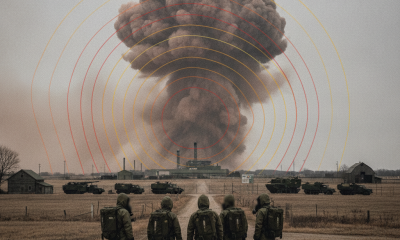
NewsWK — Military officials stand ready in southeastern Iowa to execute a massive controlled explosion of unstable chemical stockpiles. Explosive ordnance disposal teams plan to detonate nearly five tons of hazardous compounds on Wednesday morning. This operation will take place inside the Iowa Army Ammunition Plant. The planned destruction follows days of safety preparations, legal battles, and weather delays.
What caused the urgency behind the Iowa lead azide detonation?
Military inspectors discovered in March 2026 that 68 drums of aging lead azide had severely degraded inside storage facilities. This change created an extreme risk of spontaneous explosion. Therefore, Army leadership determined that immediate destruction was necessary to prevent a catastrophic accident on site.
The material originally arrived in Iowa from a Texas military facility in 2009. Over time, the chemical compound became highly volatile inside its storage containers. Lead azide serves as an initiating explosive in military munitions. However, physical friction, minor vibrations, or dropping temperatures can trigger degraded batches without warning.
Earlier in 2026, military officials explored alternative cleanup options. Specifically, Army specialists evaluated chemical neutralization methods with contractor MuniRem Environmental in May 2026. However, technicians abandoned that plan. They determined that handling the crystallized chemical posed unacceptable risks to workers.
Consequently, commanders selected on-site demolition as the safest remaining path. Explosive ordnance disposal specialists from the 71st Ordnance Group out of Fort Carson, Colorado will lead the blast. Technicians will detonate C-4 explosive charges and diesel fuel inside earth-covered magazines. Ultimately, this process will consume the 68 drums completely.
How does the blast affect Middletown Iowa shelter in place directives?
Public safety officials issued shelter-in-place warnings and evacuation assistance for nearby residents facing potential toxic exposure. Specifically, FEMA provides temporary lodging for families within five miles of the plant. Meanwhile, health authorities urge vulnerable individuals across a broader area to remain indoors during the operation.
Middletown is a small community of roughly 400 residents located near the Mississippi River. The town sits directly adjacent to the federal ammunition facility. Because the blast could release hazardous particles, emergency managers designated a five-mile evacuation zone southwest of the plant.
Starting November 24, federal emergency workers assisted local families with voluntary relocation. For instance, FEMA provided temporary hotel lodging, food, and transportation support.
Beyond the immediate evacuation zone, dispersion models project a wider reach. In fact, the Defense Threat Reduction Agency mapped potential airborne lead particle movement up to 100 miles southwest into northern Missouri. Therefore, health agencies advised pregnant women, infants, and young children to stay inside. Additionally, residents with respiratory conditions should avoid all outdoor activities.
What legal and political hurdles delayed the Army lead azide blast Iowa operation?
Legal challenges and weather delays postponed the destruction process multiple times following its initial announcement. First, environmental groups filed lawsuits to halt the operation and temporarily obtained a court stay. However, federal appellate judges ultimately cleared the military to proceed after leadership weighed public safety risks.
The Army originally announced the demolition plan on November 15. Initially, military leaders scheduled the blast for November 20. However, shifting weather patterns and community concerns forced three separate schedule changes.
Meanwhile, environmental advocacy groups filed emergency lawsuits in Federal Court to block the operation. Consequently, judges briefly paused the demolition while reviewing safety protocols. On November 23, President Donald Trump addressed the issue publicly. He directed military officials to await judicial rulings and coordinate with incoming Democratic Governor-elect Rob Sand.
Later that same day, a Federal Appeals Court lifted the stay. As a result, the court ruling allowed the Pentagon to move forward with disposal operations. Army leaders stressed that further delay increased the likelihood of an accidental detonation.
Maj. Gen. Eric Shirley emphasized the necessity of the operation. He stated that “inaction is no longer an option” for military safety teams. Furthermore, Acting Secretary of the U.S. Army Adam Telle shared his assessment. He added that expert consensus favored a controlled burn over an unpredictable workplace explosion.
What agencies are monitoring the Iowa lead azide toxic plume?
Multiple federal agencies deployed specialized equipment to monitor air and soil quality during the blast. For example, the Environmental Protection Agency granted emergency permits and dispatched mobile laboratories to track heavy metal dispersion. Together, these combined federal resources aim to protect public health and ensure environmental accountability.
A broad coalition of federal officials oversaw safety plans for the Wednesday morning detonation. Specifically, leaders from HHS, ATF, USDA, and FEMA coordinated emergency logistics across state lines. Meanwhile, environmental monitors prepared continuous air sampling networks around the site boundary.
How will federal teams measure the Iowa Army Ammunition Plant lead azide fallout?
Testing teams positioned specialized monitoring vehicles surrounding the site to capture real-time environmental data. Specifically, three mobile laboratories and one air toxics lab will collect air, soil, and water samples. Ultimately, these monitoring units will analyze lead contamination levels throughout the regional dispersion area.
The EPA authorized the emergency disposal permit only after establishing strict monitoring criteria. Next, officials stationed mobile testing units along projected wind corridors downwind of the plant. Consequently, these labs will provide rapid analysis of airborne lead concentrations.
Key emergency response assets on location include:
- Three EPA mobile testing laboratories for real-time air sampling.
- One specialized air toxics laboratory for detailed heavy metal analysis.
- Advanced atmospheric dispersion modeling provided by the Defense Threat Reduction Agency.
- Dedicated hazardous material response teams from federal and state agencies.
Federal officials promised full transparency regarding environmental test results following the blast. Looking ahead, local leaders expect federal agencies to maintain long-term monitoring across nearby communities. This ongoing effort will safeguard public health and local agricultural land.
This article was produced with the assistance of AI and reviewed by our editorial team.
Related: Army Prepares Iowa Army Ammunition Plant Lead Azide Detonation in Middletown
Related: Iowa Army Ammunition Plant Lead Azide Detonation Rescheduled for Wednesday in Middletown