
Health News
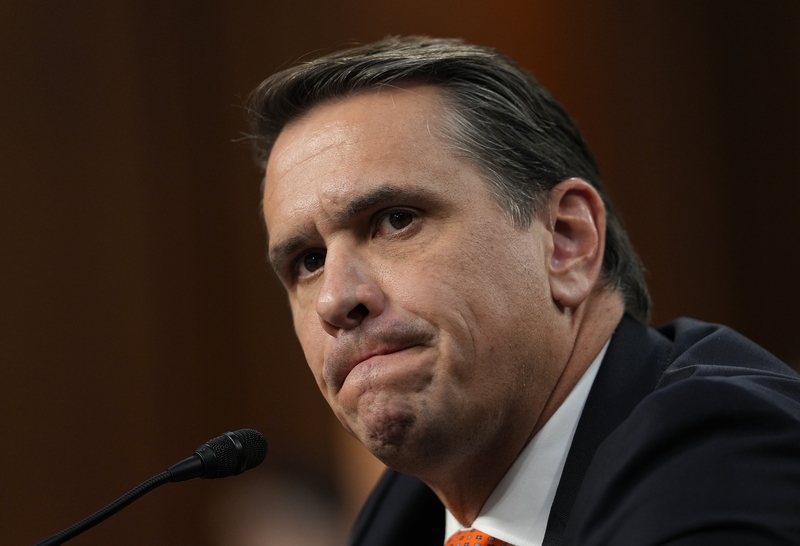
Pro-Life Coalition Calls on Attorney General Todd Blanche to Enforce Federal Law on Mail-Order Abortion Drugs
A group of leading anti-abortion organizations sent a letter to newly confirmed U.S. Attorney General Todd Blanche urging him to review the U.S. Department of Justice’s authority to use a 150-year-old anti-obscenity law to prevent people from obtaining abortion medication…

Last updated:
Key points
Pro-Life Coalition Calls on Attorney General Todd
- A coalition of conservative and pro-life organizations requested that Attorney General Todd Blanche rescind Biden-era guidance limiting the enforcement of federal laws restricting mail-order abortion supplies.
- Advocates argue that federal statutes like the Comstock Act prohibit mailing chemical abortion drugs and that current executive guidance undermines state laws protecting unborn life.
- Mail-delivered chemical abortions surged to 27 percent of all U.S. abortions in early 2025 following FDA regulatory changes allowing mail distribution without in-person doctor visits.
NewsWK — A broad coalition of conservative policy organizations and pro-life advocacy groups is pressing newly confirmed U.S. Attorney General Todd Blanche to re-examine federal law enforcement standards governing the interstate shipment of chemical abortion drugs.
In an August 7 letter led by Advancing American Freedom—an advocacy group established by former Vice President Mike Pence—coalition leaders asked the Department of Justice to revoke a Biden administration legal interpretation that largely suspended enforcement of long-standing federal statutes restricting the mailing of abortion-inducing items. The effort drew backing from major national groups, including Susan B. Anthony Pro-Life America, Americans United for Life, and Students for Life of America, alongside state lawmakers and policy institutes such as the Oklahoma Council of Public Affairs and the North Carolina House of Representatives.
Why it matters here
The outcome of the Department of Justice review carries major implications for federalism, state sovereignty, and public health across the United States. Following the Supreme Court’s landmark 2022 decision in Dobbs v. Jackson Women’s Health Organization, more than a dozen states enacted strict limits or prohibitions on elective abortion. However, the rapid expansion of mail-order chemical abortion protocols has increasingly undercut state-level statutory protections, allowing out-of-state suppliers to deliver abortion pills directly to residential mailboxes regardless of local laws.
For communities nationwide, the federal government’s approach to interstate mail shipping defines whether state laws can be effectively enforced. Conservative legal scholars emphasize that maintaining strict federal mail rules ensures that state legislatures retain the constitutional authority to safeguard human life and uphold medical standards within their jurisdictions without being bypassed by mail-order suppliers operating from outside their borders.
Statutory Interpretation and Executive Enforcement
At the center of the policy debate is the Comstock Act, a statutory framework enacted by Congress in 1873. The law expressly prohibits the use of the U.S. Postal Service or common carriers to transport any “article or thing designed, adapted, or intended for producing abortion.” Although the law remains active on the federal statute books, its broad application was limited by administrative policy and court rulings during the era of Roe v. Wade.
In late 2022, the Department of Justice’s Office of Legal Counsel under the Biden administration issued a legal memorandum asserting that the Comstock Act does not bar the mailing of abortion drugs unless the sender specifically intends for the recipient to use them illegally. Pro-life advocates strongly challenge that reasoning, contending that the executive branch overstepped its authority by imposing a subjective intent requirement not present in the text of the statute.
In their letter to Attorney General Blanche, the coalition asserted that “a sender’s subjective intent and a recipient’s intended use are unknowable, making the Comstock Act a dead letter.” The signatories argued that restoring a faithful, textual reading of federal law is necessary to uphold the rule of law and close administrative loopholes created by previous executive actions.
Gavin Oxley, a spokesperson for Americans United for Life, emphasized that federal statutes must be enforced according to their clear terms. “Any drug or instrument mailed with the intention of abortion falls under the law’s authority, proactively protecting women from new or adapted abortion methods, including misoprostol-only abortions,” Oxley noted, adding that addressing the prior administration’s legal guidance remains an urgent priority for the Department of Justice.
Attorney General Blanche previously indicated openness to reviewing the issue. During a July 30 conference call with religious and community leaders, Blanche reiterated his commitment to evaluating existing Department of Justice opinions and advancing federal policies that protect unborn human life.
The Expansion of Mail-Order Chemical Abortions
The demand for statutory enforcement comes amid a sharp increase in remote chemical abortions nationwide. In 2023, the U.S. Food and Drug Administration altered its safety regulations for mifepristone—the first drug in a two-step chemical abortion regimen—eliminating requirements for in-person medical consultations and enabling remote prescribing via telehealth and delivery by mail.
Data compiled by the #WeCount research initiative indicates that telehealth and mail-delivered abortions surged in the first half of 2025, accounting for 27 percent of all abortions nationwide and totaling more than 162,000 cases. Pro-life leaders maintain that mail-order distribution deprives women of necessary in-person medical evaluations, such as screening for ectopic pregnancies or advanced gestational age, while undermining state laws designed to protect public safety.
As the Department of Justice reviews its internal guidance, federal law enforcement decisions will determine whether federal statutory provisions governing interstate commerce and the postal system are fully restored to curb the direct-to-consumer distribution of chemical abortion supplies.
This article was produced with the assistance of AI and reviewed by our editorial team.