Florida
Mifepristone Lawsuit Texas: Federal Judge Halts Case Pending Agency Review
A federal judge in Texas on Sunday paused a lawsuit seeking to revoke nationwide approval of the abortion drug mifepristone, saying the case won’t be heard until at least Dec. 1 and granting the U.S. Food and Drug Administration’s request…

Last updated:
Key points
- Chief U.S. District Judge Reed O’Connor paused a major Texas lawsuit challenging FDA approval of mifepristone until at least December 1.
- The pause allows the FDA to conclude an ongoing six-month safety review of the medication, while drug manufacturers’ motions to dismiss were denied.
- A ruling in favor of the plaintiff states (Texas and Florida) would permanently revoke approval and eliminate nationwide distribution of the drug.
NewsWK — A federal district court in Texas has placed a temporary hold on a high-stakes legal challenge seeking to revoke federal approval and distribution guidelines for mifepristone, the primary pharmaceutical used in medication abortions and miscarriage management across the country. The order ensures that no further judicial decisions will be rendered in the case until at least December 1.
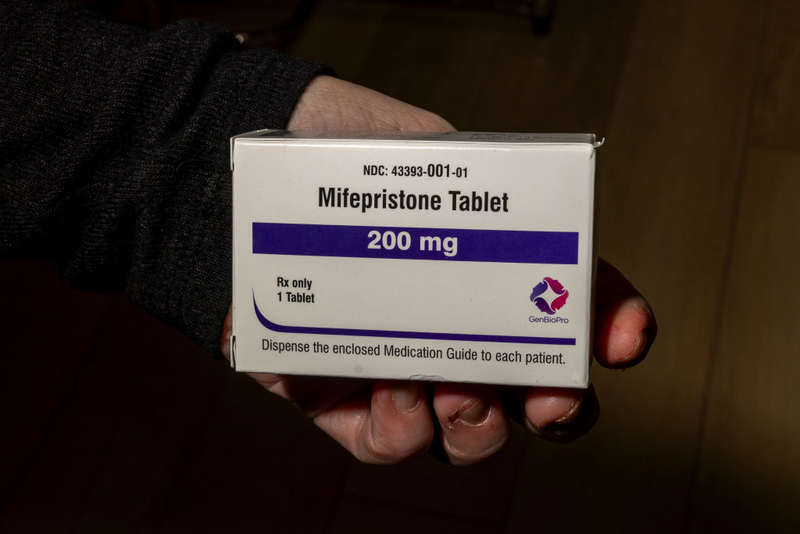
Chief U.S. District Judge Reed O’Connor issued the order granting a request by the U.S. Food and Drug Administration (FDA) to stay the proceedings while the agency finishes an internal assessment of the medication. The attorneys general of Texas and Florida, who jointly brought the lawsuit against the federal regulatory body, agreed to the temporary halt. Concurrently, the court denied motions filed by drug distributor Danco Laboratories and generic manufacturer GenBioPro seeking to dismiss the lawsuit outright.
Why it matters here
The outcome of the legal battle in Texas holds nationwide implications for federal administrative authority, pharmaceutical regulation, and state healthcare policy. Because the lawsuit targets the FDA’s baseline national approval rather than state-level restrictions, any final ruling invalidating the agency’s decisions would eliminate access to mifepristone in all fifty states, overriding varying state laws.
For healthcare providers, medical institutions, and patients across the nation, the ongoing litigation underscores legal uncertainty surrounding mail-order distribution and telemedicine prescriptions. Legal analysts and state lawmakers are monitoring the proceedings closely, as the case addresses fundamental questions about the limits of executive agency rulemaking and the enforcement of statutory limits established by Congress.
Federal Judge Pauses Mifepristone Case During Regulatory Assessment
The lawsuit brought by Florida and Texas seeks to overturn the FDA’s original approval of mifepristone, granted in 2000, as well as subsequent regulatory changes that gradually relaxed dispensing rules over the past decade. The plaintiffs argue that the agency exceeded its statutory authority and failed to uphold necessary health and safety safeguards when it eased prescribing standards and authorized mail delivery.
In response to ongoing legal and medical scrutiny, the FDA initiated a comprehensive safety study in June, estimating that the review would require roughly six months to finish. The administrative pause granted by Judge O’Connor aligns the court docket with the anticipated completion of that agency review.
FDA Mifepristone Safety Review and Regulatory Timeline
Pharmaceutical manufacturers that intervened in the Texas abortion pill lawsuit maintain that the medication has a thoroughly documented record of safety. Following the court’s decision to stay the proceedings while denying the motion to dismiss, manufacturing representatives emphasized their intent to defend the drug’s regulatory standing.
“We expect the FDA’s review of mifepristone to not contradict the decision they made in 2023 that reaffirmed our product is safe and effective,” said GenBioPro CEO Evan Masingill. “GenBioPro will continue to use all legal and regulatory tools available to ensure Americans’ access to reproductive care.”
Broader Legal Challenges and the Comstock Act
The litigation in northern Texas is part of a wider legal effort scrutinizing federal oversight of chemical abortion protocols. The complaints filed by state officials cite, among other legal authorities, the Comstock Act—a long-standing federal statute prohibiting the mailing and interstate carriage of abortion-inducing substances. While the law went largely unenforced for decades following previous judicial precedents, state attorneys general and constitutional scholars have argued that its plain statutory text remains binding on federal agencies.
Examining the Mifepristone Court Ruling in National Context
Beyond the Texas docket, federal appellate and district courts are weighing related challenges that could significantly alter how the drug is prescribed and dispensed nationwide:
- Fifth Circuit Court of Appeals: Oral arguments are scheduled regarding a Louisiana challenge focused on eliminating provisions that permit the medication to be prescribed and dispensed without an in-person medical evaluation.
- Missouri Federal District Court: A multi-state coalition comprising the attorneys general of Missouri, Idaho, and Kansas has requested an order returning federal standards to pre-2016 safety rules, which restricted the drug’s use to the first seven weeks of pregnancy and required three separate in-person clinical visits.
With the Texas proceedings paused through late autumn, the focus shifts to these parallel court battles and the forthcoming administrative findings from the FDA. The resolution of these interrelated challenges will ultimately determine whether federal regulatory standards or state-level statutory protections govern the distribution of chemical abortion medications nationwide.
This article was produced with the assistance of AI and reviewed by our editorial team.
Sources
Related: Democrats aim to emulate Republicans in building state power
Related: New Bill Pushes for Lipan Apache Tribe of Texas Federal Recognition
Related: How the Texas Public Defender Shortage Threatens Justice and County Budgets
See a typo? Report it here.