
Health News
Federal Court Filing Reveals Timeline for FDA Abortion Pill Safety Review
The U.S. Food and Drug Administration said late Wednesday that it expects to complete its long-awaited safety review of abortion pills by mid-December and issue a report evaluating the results by March 2027. The agency disclosed the information in a…

Last updated:
Key points
- The FDA expects to complete its safety review of chemical abortion pills by mid-December, with a final report due in March 2027.
- The timeline was disclosed in a court-mandated update for the Louisiana v. FDA lawsuit, which remains paused pending the review’s outcome.
- Pro-life advocates have criticized the delayed timeline, calling for immediate action to reinstate safety standards and restrict telehealth prescriptions by-mail distribution.
NewsWK — The federal government has established a clear timeline for its review of chemical abortion safety. This development directly impacts how states protect maternal health and enforce local laws. In a court-mandated status report, federal officials announced a target finish date. They expect to finish the scientific review by mid-December. Furthermore, the agency plans to release its final report by March 2027.
How will the federal timeline affect state-level safety regulations?
The delayed federal timeline forces states like Louisiana and Texas to wait until spring 2027 for updated regulations. Consequently, local officials must continue managing mail-order distribution and telehealth services that bypass state laws. In addition, this delay leaves local authorities with the full burden of enforcement without new federal guidance.
This legal and regulatory pause stems directly from the ongoing Louisiana v FDA lawsuit. In this case, several states argue that current federal policies undermine state-level protections. The states leading this legal challenge include:
Specifically, these states challenge rules allowing mifepristone prescriptions via telehealth and mail delivery. Six months ago, a Federal District Court in Louisiana paused lawsuit proceedings. The court chose to wait until the government completed its safety evaluation.
Meanwhile, local clinics and state attorneys general operate in regulatory limbo. Many conservative states have enacted strict protections for unborn life. However, federal policies on mifepristone telehealth restrictions have created a loophole. Out-of-state providers frequently use mail delivery to bypass local laws. Therefore, state leaders are watching the federal timeline closely to plan future legal steps.
Why did the federal government launch the Robert F Kennedy Jr abortion pill review?
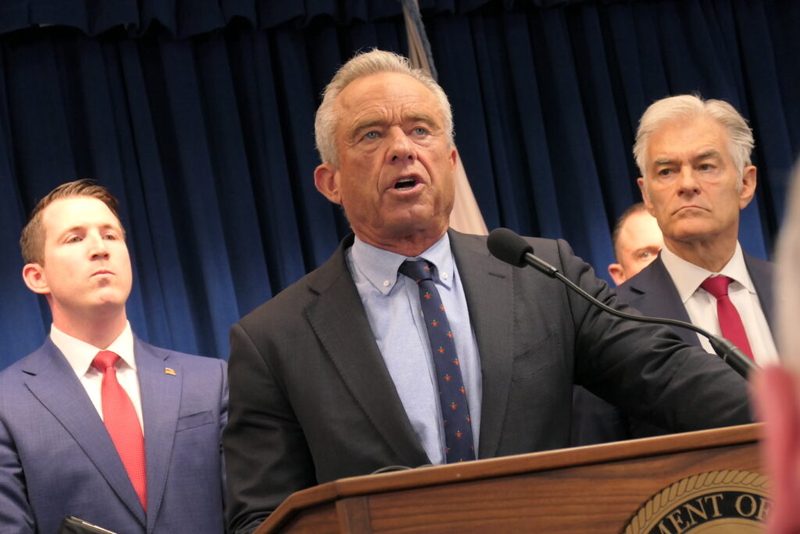
The federal safety review began after intense advocacy from medical professionals and pro-life organizations. Specifically, Health and Human Services Secretary Robert F. Kennedy Jr. initiated the evaluation. He aimed to address oversight gaps in mail-order chemical abortion drugs. Ultimately, the review seeks to determine if current safety protocols adequately protect women.
The decision to launch the Robert F Kennedy Jr abortion pill review marked a major policy shift. Previously, the Biden administration relaxed safety standards for abortion pills. These rules allowed patients to obtain the medication without an in-person medical visit. In response, pro-life groups strongly opposed the regulatory changes.
They argued that removing in-person screenings increases risks of undetected ectopic pregnancies. Moreover, patients could face severe medical complications without direct physician oversight. Furthermore, the timing of the review has sparked significant political debate. Some analysts suggest that the Trump administration abortion pill policy delays controversial decisions until after upcoming elections.
However, pro-life advocates argue that maternal safety should never depend on political calculations. Thus, they demand immediate action to restore safety protocols. These protocols would protect women from high-risk, unmonitored drug regimens.
What safety data is the FDA abortion pill safety review evaluating?
The safety review compares complication rates between chemical abortions and surgical procedures. To do this, federal scientists are analyzing the Sentinel database. They are also reviewing protocols known as the Risk Evaluation and Mitigation Strategy. Consequently, this evaluation will determine whether officials should reinstate mail-order restrictions.
During the review, researchers are examining various data sources to assess patient risks. Pro-life medical organizations have also presented their own research to federal officials. For example, independent analyses of Medicaid claims data suggest higher complication rates than drug labels report.
However, some medical professionals argue that FDA internal databases miss many complications. Dr. Christina Francis, CEO of the American Association of Pro-Life Obstetricians and Gynecologists, called the review “long overdue.” She noted that her clinical practice encounters complications “at least on a monthly basis.” Therefore, advocacy groups are urging the FDA to use broader datasets.
Meanwhile, other pro-life leaders have expressed deep skepticism about the prolonged timeline. Marjorie Dannenfelser, president of Susan B. Anthony Pro-Life America, voiced sharp concern. She stated, “Instead of the promised gold-standard study, the FDA is trying to peddle fool’s gold.”
Ultimately, the final report in March 2027 will decide the future of chemical abortion regulations. Until then, state lawmakers must rely on local enforcement to protect women and unborn children from unmonitored medical procedures.
This article was produced with the assistance of AI and reviewed by our editorial team.
Sources
Related: Louisiana Telehealth Abortion Lawsuit Heads to Federal Appeals Court
Related: Supreme Court Lifts Injunction on Federal Mail-In Ballot Security Standards Ahead of Midterms
See a typo? Report it here.