Maine
Can Trump Send Troops to Polling Places? Legal Limits and State Authority Explained
WASHINGTON — President Donald Trump said earlier this year he’d “do anything necessary to make sure we have honest elections” this fall, declining to rule out sending the National Guard or federal law enforcement officers to polling locations throughout the…

Last updated:
Key points
- Federal statutes and constitutional provisions explicitly bar armed federal troops from polling places during elections.
- The Department of Justice plans to send about 1,000 civilian observers nationwide, but state officials control local precinct access.
- Joint Chiefs of Staff Chairman Gen. Dan Caine confirmed the military has no plans to deploy troops or seize election materials.
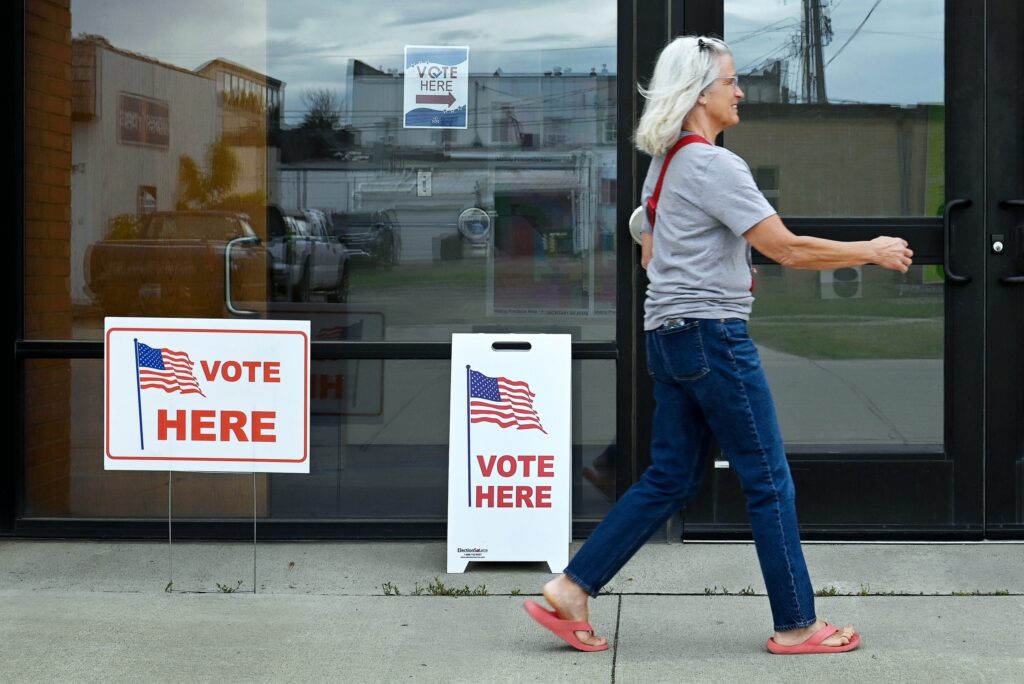
WASHINGTON NewsWK — Voter confidence remains a cornerstone of American self-governance as the nation prepares for the November midterm elections. Across the United States, citizens and local officials are examining the legal boundaries surrounding election security. In recent months, political debate has stirred questions about whether armed personnel could appear at local precincts.
President Donald Trump stated earlier this year that he would do anything necessary to ensure honest elections. However, constitutional scholars and election directors confirm that strict statutes govern the polling booth. In fact, the administration’s only established federal presence involves civilian monitors from the Department of Justice.
Why it matters here
Constitutional federalism grants states and local counties primary authority over casting and counting ballots. For everyday voters across the country, local precinct workers and county clerks maintain polling place order. Therefore, federal overreach or unnecessary interventions would disrupt established civic routines and impose heavy litigation costs on taxpayers.
What is presidential authority over elections under federal law?
A president holds no unilateral legal power to deploy troops to polling places or alter voting procedures. Under the U.S. Constitution, state legislatures and Congress possess sole authority to regulate elections. Longstanding federal laws explicitly bar armed personnel from voting sites. Thus, presidential authority over election administration remains strictly secondary to statutory rules.
Federal law dating back to the Reconstruction era makes sending armed officers to polls a crime. Specifically, the only narrow exception involves repelling foreign armed enemies. Consequently, the legal threshold for deploying federal armed forces remains insurmountable during peacetime.
In addition, states enforce protected buffer zones around voting sites. These zones typically extend 100 feet from precinct entrances. Within this boundary, state laws strictly bar electioneering, voter disruption, and armed intimidation. Therefore, election law experts confirm that presidential power remains subordinate to state statutory frameworks.
Can federal law enforcement at polling places intervene during voting?
Federal law enforcement cannot intervene in voting or patrol polling places on Election Day. Instead, federal agencies possess only narrow investigative roles. Department of Justice civilian observers may monitor voting rights compliance, but they must follow local guidelines. Furthermore, federal agents cannot question voters, inspect identification cards, or disrupt precinct operations without violating federal and state statutes.
Role of DOJ election monitors during voting
For the upcoming cycle, the Department of Justice plans to deploy roughly 1,000 civilian observers across several states. However, state election chiefs emphasize that these federal observers enjoy no special privileges above regular citizens. In Michigan and Washington, election officials noted that DOJ personnel may only observe. As a result, monitors must leave immediately if they intimidate voters.
Meanwhile, some state leaders have expressed concern about federal conduct. Wyoming Gov. Mark Gordon recently asked his state attorney general to examine Justice Department visits after primary activities seemed irregular. Indeed, his inquiry highlights the continuous friction between state sovereignty and federal monitoring.
Questions have also emerged regarding Immigration and Customs Enforcement agents. In response, Department of Homeland Security Secretary Markwayne Mullin clarified the agency’s lawful mandate during a recent press conference. “ICE isn’t there to patrol the polling places. We’re there to enforce specific threats,” he said.
These safeguards reflect key statutory principles established across the country:
- State legislatures retain primary constitutional responsibility for regulating the administration of voting.
- Federal criminal codes explicitly ban armed federal personnel from entering polling places.
- Civilian monitors from the Justice Department must follow county facility rules and avoid questioning voters.
- Local law enforcement and state election judges manage precinct security under clear state codes.
Can Trump send troops to polling places using the National Guard?
Any executive attempt to post military or federalized Guard members at polling stations would face immediate federal court injunctions. Governors ordinarily control National Guard forces within their home states. Therefore, using federalized military assets for local voting administration would breach the Posse Comitatus Act. Such actions would also prompt fierce opposition from state leaders.
Meanwhile, congressional lawmakers have pressed the Pentagon for assurances regarding the midterms. For example, Michigan Sen. Elissa Slotkin contacted defense leaders in August to clarify military policy. In response, Chairman of the Joint Chiefs of Staff Gen. Dan Caine reaffirmed military neutrality. He also emphasized respect for local election administration.
“The Joint Force has no plans to send Federal military personnel or Federalized members of the National Guard to polling places during the 2026 elections,” Caine wrote.
State election leaders also maintain readiness plans. In Maine and Washington, officials confirmed that state courts and local prosecutors stand ready to challenge unlawful interference. Ultimately, American election security rests on state authority, statutory checks, and constitutional limits designed to protect voter integrity nationwide.
This article was produced with the assistance of AI and reviewed by our editorial team.
Sources
Related: Trump Election Investigations Raise Midterm Election Meddling Fears
Related: Sanctuary Policies Block Federal Jail Transfers as ICE Ramps Up Enforcement Across U.S. Communities
Related: ICE at Polling Places Lawsuit Challenges Federal Security Measures Ahead of Midterms
Related: Federal Lawsuit Aims to Block ICE Agents from Polling Places Ahead of Midterms
See a typo? Report it here.