Washington
Congress Weighs ‘Earn to Learn Act’ to Promote Student Savings and Career Pathways Across the Nation
Content Files PDF XML TEXT Metadata download Descriptive Metadata (MODS) Preservation Metadata (PREMIS) All Content and Metadata files, including granules ZIP

Last updated:
Key points
earn to learn act
- H.R. 10097, titled the Earn to Learn Act, has been introduced in the U.S. House of Representatives to encourage student savings and workforce preparation.
- The legislation focuses on matched-savings accounts and financial literacy, providing an alternative to heavy student debt and broad loan forgiveness.
- The bill has been referred to congressional committees for further evaluation and debate on federal education and workforce funding.
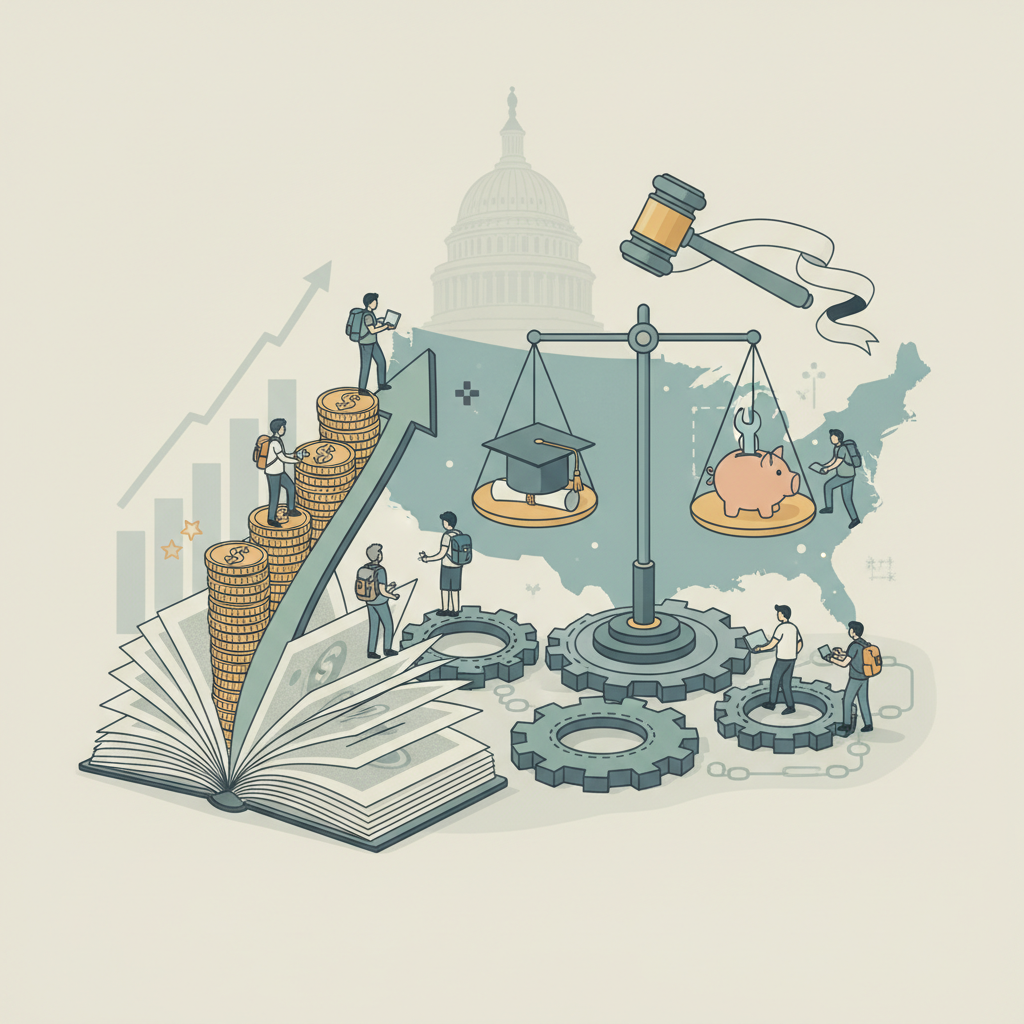
NewsWK — Lawmakers in Washington have formally introduced new federal legislation titled the Earn to Learn Act (H.R. 10097), aimed at addressing the nation’s higher education affordability challenge by fostering personal savings, financial literacy, and career readiness among students across the United States.
The bill, recently filed in the U.S. House of Representatives, enters the congressional docket at a critical time as families, employers, and policymakers continue to seek sustainable alternatives to rising tuition costs and accumulating student loan debt. Rather than relying on retroactive loan forgiveness programs funded through public borrowing, the legislation focuses on proactive workforce integration and incentivized savings accounts to help students fund postsecondary education and career training before taking on unmanageable debt.
Why it matters here
For working families, high school graduates, and vocational students across American communities, the path toward a stable career has become increasingly complicated by soaring education expenses. The cost of attending traditional four-year colleges, community colleges, and trade academies has placed a significant financial burden on households striving to build long-term economic security.
By prioritizing matched-savings frameworks and work-based learning, the concepts behind the Earn to Learn initiative offer a distinct approach for local economies:
- Encouraging Personal Responsibility: The framework emphasizes earned income, structured personal savings, and financial education, ensuring students develop practical money management skills before entering the workforce.
- Strengthening Local Workforces: By supporting vocational, technical, and degree-seeking pathways, the initiative helps local industries—such as manufacturing, healthcare, technology, and skilled trades—fill vital labor shortages with qualified local talent.
- Protecting Taxpayer Interests: Proactive savings initiatives reduce long-term federal loan default rates and mitigate pressures for broad taxpayer-funded debt cancellation, offering a fiscally grounded alternative to open-ended government subsidies.
Legislative structure and core mechanisms
Under the statutory framework introduced in H.R. 10097, the Earn to Learn model builds on proven matched-savings concepts. Under such programs, participating students from low-to-moderate-income backgrounds commit to depositing earnings from part-time employment or work-study programs into dedicated educational accounts. In return, these contributions are matched through combined public and private sector funding, significantly multiplying the student’s resources for tuition, books, fees, and essential training equipment.
In addition to financial matching, programs of this nature typically integrate mandatory financial literacy training, teaching participants how to budget, manage credit, and plan for post-graduation stability. The goal is to provide a hand up rather than an unconditional entitlement, pairing direct financial incentives with measurable effort and skill acquisition.
Broader context and the higher education debate
The introduction of H.R. 10097 reflects an ongoing philosophical debate on Capitol Hill over higher education finance. In recent years, federal policy discussions have largely been dominated by executive actions and legislative proposals focused on canceling existing student loan balances. Critics of blanket debt forgiveness have consistently pointed out that such measures do not lower the underlying cost of college, reward institutions that escalate administrative spending, and transfer private debt liabilities onto general taxpayers—many of whom never attended college or already paid off their own obligations.
Proponents of savings-first alternatives argue that empowering students through earned-match mechanisms tackles the root cause of the crisis. By aligning educational funding with personal investment and practical career outcomes, students are incentivized to select cost-effective educational programs with clear returns on investment.
Next steps in the House
Following its introduction, H.R. 10097 has been referred to the appropriate House committees for formal review, legislative hearings, and potential amendment. Lawmakers will examine the specific fiscal allocations, eligibility parameters, and administrative oversight mechanisms required to implement the program nationally.
As the bill progresses through the legislative process, education leaders, business coalitions, and state workforce development boards will closely monitor its provisions to assess how federal matching grants could interact with existing state-level scholarship programs and private-sector apprenticeship partnerships.
This article was produced with the assistance of AI and reviewed by our editorial team.