Indiana
House Advances American Enrichment Deployment Act to Boost Domestic Nuclear Fuel Production
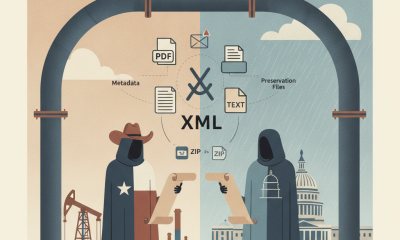
Content Files PDF XML TEXT Metadata download Descriptive Metadata (MODS) Preservation Metadata (PREMIS) All Content and Metadata files, including granules ZIP


Last updated:
Key points
- H.R. 9612 would permit developers to start construction on uranium enrichment facilities at their own financial risk before final licensing.
- The Nuclear Regulatory Commission must update enrichment regulations within 180 days while maintaining safety enforcement and public hearing rights.
- Bipartisan lawmakers sponsored the bill to cut bureaucratic delays, strengthen U.S. energy independence, and lower project financing costs.
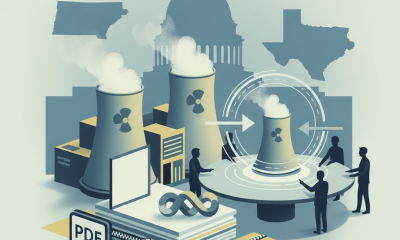
NewsWK — Federal lawmakers are pushing to strengthen American energy independence. Specifically, they want to modernize rules for domestic nuclear fuel production. The U.S. House of Representatives recently advanced new legislation. This measure streamlines regulatory hurdles for nuclear processing facilities across the country.
How Would HR 9612 Reform Uranium Enrichment Facility Licensing?
HR 9612 updates the Atomic Energy Act of 1954. Specifically, it streamlines uranium enrichment facility licensing across the United States. The measure allows nuclear developers to begin pre-license construction at their own financial risk. Consequently, companies can start building facilities during federal safety reviews. This change cuts costly administrative delays.
Representative Russell Fry, a Republican from South Carolina, introduced the measure. Furthermore, he worked alongside a bipartisan group of co-sponsors. The co-sponsors include Representatives Kim Schrier of Washington, Erin Houchin of Indiana, and Victoria Spartz of Indiana. Representatives Jake Auchincloss of Massachusetts, Mike Kennedy of Utah, and James Comer of Kentucky also joined the effort.
Under current standards, developers must wait for full licensing approval before breaking ground. Therefore, energy projects often face years of regulatory backlog before construction begins. The proposed change aligns enrichment plant rules with existing standards for other nuclear fuel facilities. Specifically, it updates Sections 53 and 63 of federal law.
However, the bill maintains vital safety oversight. The Nuclear Regulatory Commission keeps complete authority to enforce safety rules during construction. Furthermore, federal regulators retain the power to reject any license application that fails to meet technical standards. Public hearing rights under Section 189 of the law remain fully protected as well.
What Does the Russell Fry Uranium Bill Mean for Energy Security?
The Russell Fry uranium bill aims to reduce reliance on foreign fuel suppliers. Instead, it accelerates domestic energy development. For American communities hosting nuclear projects, faster licensing timelines reduce financial risk and attract private investment. As a result, regions could see expanded industrial employment, improved grid reliability, and increased local economic growth.
Modern power grids require stable baseload electricity. Because of this, domestic energy producers need steady access to nuclear fuel.
Additionally, streamlined permitting helps lower capital costs for private developers. When regulatory timelines drag on for years, project financing costs escalate dramatically. By allowing at-risk construction, private companies can order long-lead equipment and build infrastructure earlier. Consequently, taxpayers and rate-paying consumers benefit from faster deployments of clean power.
How Will Nuclear Regulatory Commission Enrichment Regulations Change? American Enrichment Deployment Act
Under the proposed law, Nuclear Regulatory Commission enrichment regulations must undergo rapid updates. Specifically, the agency faces a strict 180-day mandate to issue or revise operational rules following enactment. Thus, federal regulators must establish clear administrative guidelines. Qualified applicants can then begin preliminary site construction safely and efficiently.
requires the Nuclear Regulatory Commission to issue or revise implementing regulations Meanwhile, the Commission must keep all environmental safeguards under Title 42 of the U.S. Code intact.
Key technical aspects governed by these regulatory updates include:
- Pre-license ground preparation: Allowing early site clearing, excavation, and structural groundwork before final operational authorization.
- Financial risk allocation: Ensuring developers bear all financial risk for early construction if regulators ultimately deny safety licenses.
- Continued public oversight: Preserving traditional public hearing opportunities and safety review steps.
What Is the History Behind Domestic Fuel Reforms?
Congress originally established federal nuclear oversight under the Atomic Energy Act of 1954. Over seven decades, regulatory frameworks grew increasingly complex. Consequently, they created significant bottlenecks for new domestic fuel facilities. Recent congressional efforts reflect a broader movement to eliminate administrative red tape. Lawmakers want to restore American leadership in nuclear technology.
Lawmakers introduced the American Enrichment Deployment Act on July 9, 2026. Shortly afterward, the House Energy and Commerce Subcommittee on Energy considered the proposal. On July 14, 2026, subcommittee members forwarded the bill to the full committee by voice vote.
Later, on November 5, 2026, the full committee reported the bill with amendments. Officials then committed the measure to the Committee of the Whole House on the State of the Union. Additionally, they ordered the text printed.
Moving forward, the bill awaits further consideration by the full House of Representatives. Congress may pass the legislation, and the president could sign it into law. In that case, the bill would amend core sections of federal law. These sections include 42 U.S.C. 2011, 2073, 2243, and 4321.
By updating these legacy rules, lawmakers hope to rebuild the domestic supply chain for advanced nuclear reactors. Therefore, federal policy is aligning with free-market principles to encourage long-term infrastructure investment.
This article was produced with the assistance of AI and reviewed by our editorial team.
Sources
Related: Senate Passes MORE American Fuel Act of 2026 to Boost Domestic Energy Production
Related: House Advances Nuclear REFUEL Act to Cut Red Tape on Clean Energy
See a typo? Report it here.