
Local Business
Kalshi Utah Operations Paused as State Gambling Law Battles Escalate
Kalshi Pauses Utah Operations Amid Criminal Case, CFTC Suit After judge signals ‘steep hill’ in regulatory case, Kalshi pauses operations in Utah US judge rejects CFTC emergency bid to block New York from policing Kalshi New York judge urged Kalshi…


Key points
- Kalshi paused Utah trading on November 23, 2026, affecting over 177,000 users who can still exit positions and withdraw funds.
- Utah prosecutors filed felony criminal charges against Kalshi and its top executives for violating state prohibitions on online gambling.
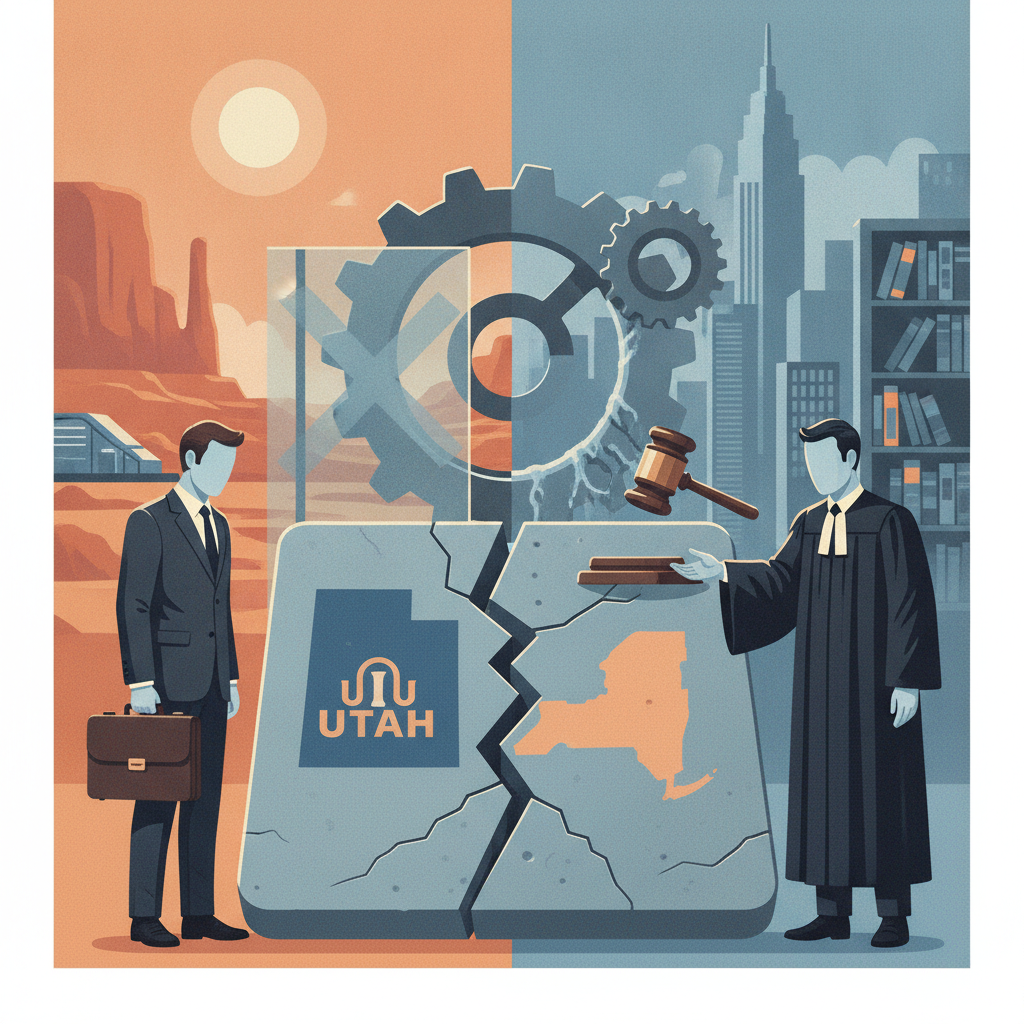
- Federal judges affirmed state police powers to regulate gambling, rejecting emergency federal efforts to stop state prosecutions in Utah and New York.
NewsWK — Prediction market platform Kalshi halted its operations across Utah this week. Meanwhile, state officials aggressively enforce local anti-gambling statutes against online event trading platforms. Consequently, this decision highlights growing legal friction. Specifically, state law enforcement authority clashes with federal agency oversight of financial derivatives markets.
What does the Utah online gambling Kalshi halt mean for local users?
The operational pause directly impacts more than 177,000 registered accounts across Utah. Consequently, local residents can no longer place new event wagers on the site. Furthermore, users cannot enter new financial prediction contracts. However, existing account holders retain full access to exit open positions and withdraw funds safely.
Kalshi spokesperson Jacki McGavick confirmed the operational pause on Monday, November 23, 2026. The exchange suspended local services After Recent Federal Court hearings. Those hearings indicated that state-level enforcement efforts would proceed uninterrupted.
Earlier in 2026, Utah lawmakers strengthened state anti-gambling laws by passing House Bill 0243. Specifically, the legislation updated state law to include proposition wagers under illegal gambling definitions. In response, Kalshi launched a federal lawsuit last February. The company argued that the federal Commodity Exchange Act preempts state gambling bans.
However, U.S. District Judge Robert J. Shelby rejected Kalshi’s argument on August 4, 2026. Instead, the judge granted summary judgment in favor of the state of Utah. Shortly after, a federal appeals panel denied Kalshi’s emergency motion. Thus, the court refused to halt state enforcement during appeal proceedings.
How did the CFTC Kalshi Utah legal battle reach criminal charges?
civil lawsuits into felony criminal charges Specifically, Utah Attorney General Derek Brown filed both civil and criminal actions against the operator. Meanwhile, the Commodity Futures Trading Commission intervened in Federal Court. The agency sought to defend its exclusive oversight over commodity derivatives.
Attorney General Derek Brown filed a civil lawsuit in State Court on October 20, 2026. In the filing, state prosecutors alleged that the platform processed hundreds of thousands of wagers daily. Additionally, officials claimed Kalshi collected tens of millions of dollars in fees from local residents.
In response, federal regulators quickly challenged the state action. On October 26, 2026, the Commodity Futures Trading Commission filed a federal suit against Utah. CFTC Chairman Michael Selig maintained that event contracts represent financial swaps under exclusive federal jurisdiction. Therefore, federal officials argued that state regulators lack the legal authority to intervene.
Despite federal opposition, Utah authorities pushed forward with criminal enforcement. On October 28, 2026, state prosecutors filed felony criminal charges against Kalshi. They also charged co-founders Tarek Mansour and Luana Lopes Lara. The indictment includes 13 counts of violating state online gambling prohibitions following an undercover investigation. Furthermore, it includes one count of profiting from illegal activity. Now, Mansour and Lara Face Formal Court arraignments in Salt Lake City on December 4, 2026.
Why is the Kalshi prediction market Utah ruling key for state sovereignty?
Federal judges have shown strong deference to traditional state police Powers During Recent Court proceedings. For instance, during a November 20 hearing, Judge Shelby expressed deep skepticism toward federal intervention. Specifically, he questioned federal attempts to block Utah’s criminal prosecution. Ultimately, his observations underscored the constitutional authority of states to enforce local moral and commercial regulations.
During the emergency hearing, Judge Shelby explicitly addressed the issue. He stated that the “regulation of gambling sits squarely within the police powers of the state.” Because the Federal Court signaled that state police powers remain paramount, Kalshi acted quickly. Consequently, the company paused local operations on November 23 while awaiting the judge’s formal written order.
How are parallel enforcement actions in New York affecting national markets?
Legal challenges against the platform are mounting Across Multiple State Court systems simultaneously. For example, New York Attorney General Letitia James launched state litigation against the exchange. Her lawsuit seeks billion-dollar financial penalties. Meanwhile, federal judges continuously refuse to block state regulators, pressuring the platform to adjust national practices.
New York Attorney General Letitia James sued Kalshi in State Court on July 31, 2026. Her office alleged that the platform operated an unlicensed gambling facility. Furthermore, state prosecutors pointed to wagers placed on local college sports as key violations. They also highlighted participation by underage users.
Subsequently, Kalshi attempted to remove the litigation to Federal Court. However, U.S. District Judge Vernon Broderick remanded the case to Manhattan State Court on November 19, 2026. The following day, U.S. District Judge Lorna Schofield also ruled against federal intervention. Specifically, she rejected a CFTC emergency motion seeking to block New York’s enforcement efforts.
On November 23, 2026, New York Supreme Court Justice Melissa Crane issued a ruling. She denied an immediate temporary restraining order that would have halted all New York operations. During the hearing, Kalshi defense attorney Grant Mainland warned the court about a broad injunction. He stated it would cause a “market emergency” and force a shutdown nationwide.
Still, Justice Crane expressed clear concern regarding users under the age of 21. Therefore, she directed Kalshi and state prosecutors to negotiate interim compliance measures by November 30, 2026. Ultimately, these measures aim to restrict younger users from accessing sports and event markets.
This article was produced with the assistance of AI and reviewed by our editorial team.
Sources
Related: Utah Sues Kalshi to Enforce State Gambling Ban on Prediction Market Platform
Related: State Lawmakers Across Nation Push Nearly 250 Bills to Limit Federal Immigration Enforcement


