
Health News
New Study Shows Black White Mortality Gap Narrowed Significantly Over Three Decades
The Mortality Gap Between Black and White Americans Is Shrinking Significant decrease in Black-white mortality gap during past 30 years Black-White mortality gap narrowed from 1993 to 2023, cross-sectional study shows Black-White Mortality Gap Shrank Dramatically Over Past Three Decades…


Last updated:
Key points
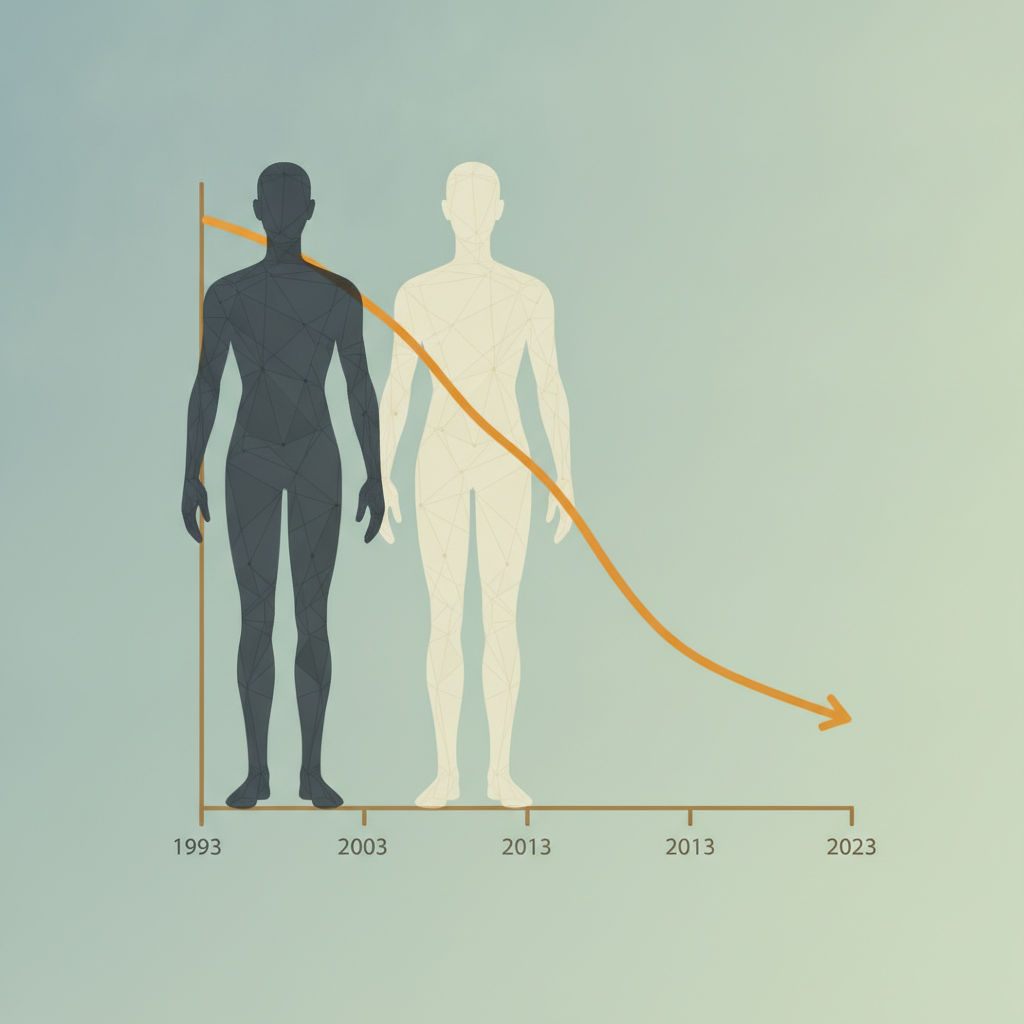
- The excess mortality gap between Black and White Americans fell by 56 percent for men and 68 percent for women between 1993 and 2023.
- Reductions in cancer, heart disease, and HIV deaths served as the primary drivers closing the statistical health gap.
- Significant disparities persist in areas such as maternal mortality, kidney disease, diabetes, and homicides.
NewsWK — Public health researchers recorded a major decline in life expectancy differences between Black and White Americans. This change occurred over the past three decades. Medical breakthroughs and reduced smoking rates drove down overall mortality differences. Specifically, the gap peaked in the early 1990s before declining steadily.
How has the Black White mortality gap changed over the last 30 years?
Data from national health databases show a major shift between 1993 and 2023. The excess mortality rate between Black and White Americans fell significantly during this period. The rate dropped by 56 percent among men. Meanwhile, it fell by 68 percent among women. These numbers demonstrate sustained progress in nationwide public health outcomes.
Researchers analyzed national mortality statistics from the National Center for Health Statistics and the U.S. Census Bureau. First, they reviewed records spanning from 1990 through 2023. The data measured all-cause mortality alongside 24 specific causes of death.
In 1993, excess mortality among Black men reached 514.8 deaths per 100,000 person-years compared to White men. By 2023, that number dropped to 226.3 deaths. Consequently, that change represents a decline of 288.5 deaths per 100,000 person-years. For Black women, excess mortality peaked at 259.3 deaths per 100,000 person-years in 1993. By 2023, that figure fell to 83.5 deaths. This shift reflects a decline of 175.8 deaths.
Still, overall mortality rate ratios remain higher for Black Americans. In 2023, the all-cause mortality rate ratio stood at 1.25 for Black men. That figure dropped from 1.45 in 1993. Meanwhile, the ratio for Black women fell to 1.13.
What drove the reduction in the US Black White health gap?
The US Black White health gap narrowed largely because specific disease death rates dropped significantly. Fewer people died from cancer, heart disease, and HIV. In addition, long-term declines in cigarette smoking helped close the gap for both sexes. Improvements in preventive clinical care also played a central role.
For men, falling cancer deaths accounted for 38.2 percent of the total gap reduction. Similarly, lower HIV mortality contributed 17.5 percent, while reduced heart disease accounted for 12.3 percent. HIV treatments drove the largest gains for men under age 65. Conversely, cancer care drove the biggest gains for men aged 65 and older.
Cancer was the single largest contributor to the mortality difference in the early 1990s. However, by 2023, cancer fell to sixth place among contributing factors for men. Among women, heart disease improvements drove 31.9 percent of the total gap reduction. Furthermore, cancer, HIV, diabetes, and stroke treatments also contributed. As a result, cancer fell from the second-leading contributor to fifth place among women.
What does the American Cancer Society health study reveal about specific diseases?
The American Cancer Society health study shows dramatic shifts in how major diseases impact national mortality figures. For instance, HIV dropped from the fourth or fifth leading contributor down to tenth place. Because treatments improved, cancer mortality also declined sharply across all age groups over the three-decade period.
Also, changes in mortality rates among White Americans influenced the overall statistical gap. For example, rising suicide rates among White individuals affected certain categories. This trend narrowed the relative mathematical distance between population groups.
How does the narrowing health gap affect local communities across America?
These findings highlight real progress in clinical treatment and preventive care for families and healthcare institutions across American cities. Better medical innovation and targeted health education help more residents survive serious conditions like cancer and heart disease. Therefore, these gains preserve family stability and lower long-term local healthcare costs.
Local clinics, municipal health departments, and hospital systems expanded screening programs over recent decades. Early detection of tumors and better blood pressure management directly improve life outcomes. As a result, community health centers can focus resources on remaining challenges. They no longer face widespread systemic surges in preventable fatalities.
What historical context surrounds this racial health disparities study?
This racial health disparities study coincided with the 40th anniversary of the landmark 1985 Heckler Report. Then-Health Secretary Margaret Heckler commissioned that initial federal study. It documented approximately 60,000 excess deaths annually among Black and minority Americans. Ultimately, the report established a historic benchmark for tracking national progress.
The Annals of Internal Medicine published the new analysis. Researchers titled it “Progress in Reducing the Black–White Mortality Gap From 1993 to 2023 in the United States.” Lead author Dr. Hyuna Sung directed the research team. She serves as scientific director of cancer surveillance research at the American Cancer Society. Together, the findings highlight four decades of clinical advancements following the original federal study.
What challenges and health disparities still persist today?
Despite overall progress, significant health gaps remain between racial groups in several critical areas. Today, Black Americans continue to face higher rates of premature death. Furthermore, specific conditions like maternal mortality, kidney disease, and homicides show stagnant or widening disparities across national data.
In 2023, Black men died an average of 10.3 years younger than White men. Likewise, Black women died an average of 8.4 years younger than White women. Still, this represents an improvement of about two years since 1993.
However, disparities worsened or stalled in specific categories. Kidney disease and accidental deaths remained persistent problems for both sexes. For women, maternal mortality and kidney disease gaps expanded. By 2023, the mortality rate ratio for maternal deaths reached 3.53. Meanwhile, kidney disease reached 2.30.
Several factors continued to drive elevated mortality rates for Black men. Specifically, these included homicides, legal interventions, senior strokes, diabetes, and unmanaged hypertension without heart disease.
This article was produced with the assistance of AI and reviewed by our editorial team.
Sources
Related: Study Examines Women on Parole Mental Health and Reentry Crises Across the US
Related: House Resolution 1499 Clears Way for Critical Votes on Mining, Higher Education, and Maritime Rules


