National News
Protecting the Rights of Organizations Fairly Act of 2026: House Lawmakers Introduce H.R. 10258
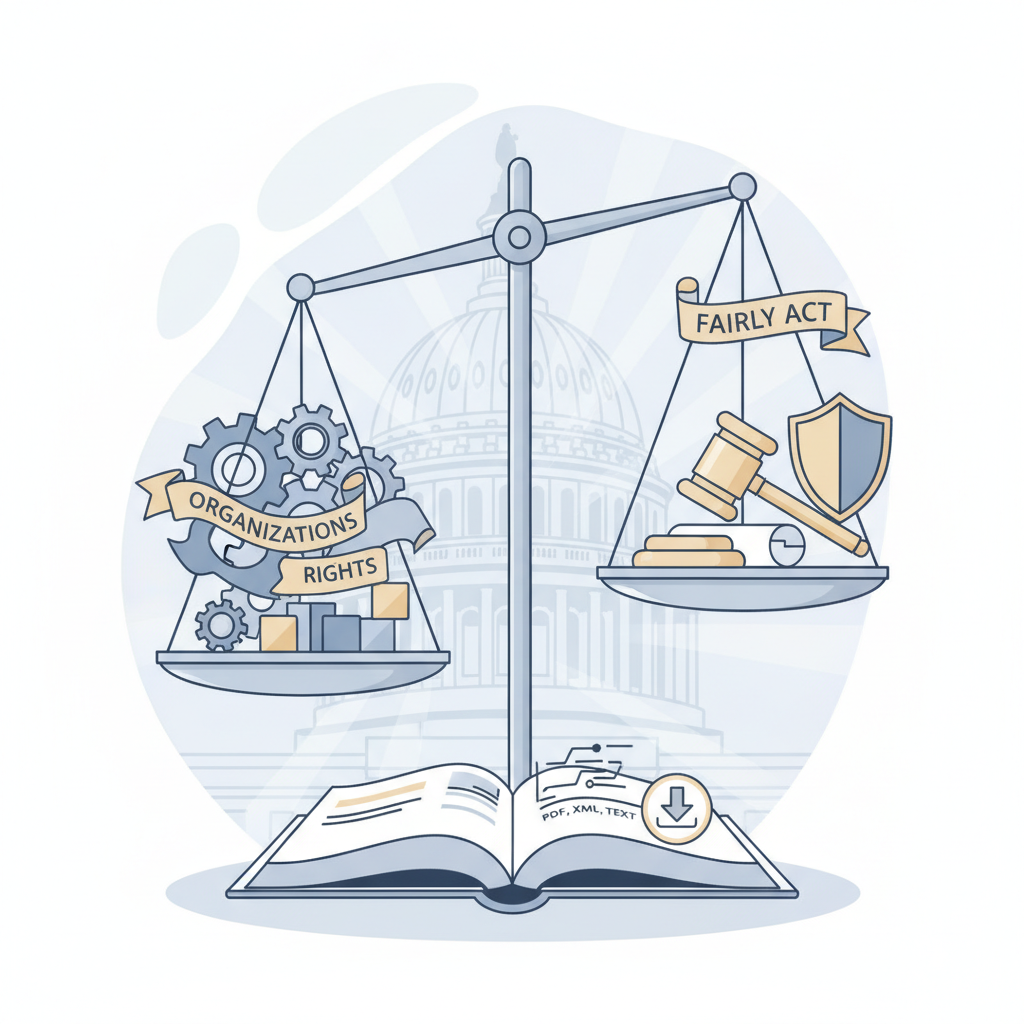
Content Files PDF XML TEXT Metadata download Descriptive Metadata (MODS) Preservation Metadata (PREMIS) All Content and Metadata files, including granules ZIP

Last updated:
Key points
- Lawmakers introduced the Protecting the Rights of Organizations Fairly Act of 2026 as H.R. 10258 in the U.S. House of Representatives.
- The legislation currently holds ‘Introduced in House’ (IH) status and awaits formal committee referral and detailed publication.
- Constituents and organizations are monitoring the measure as it begins the standard federal committee review process.
NewsWK — Federal lawmakers officially introduced a new legislative proposal in the U.S. House of Representatives. The measure carries the formal title of the Protecting the Rights of Organizations Fairly Act of 2026. Official government records list the measure as federal bill HR 10258.
The measure entered the official congressional record under the introduced status. Meanwhile, congressional staff released the primary legislative metadata through official federal publishing repositories. Lawmakers now prepare for the next steps in the committee review process. Citizens and industry observers across the nation follow these early legislative filings closely.
Why it matters
Congressional bills can reshape federal regulatory mandates, economic rules, and organizational governance across the country. When lawmakers introduce measures affecting organizations and businesses, the outcomes often touch employer operations, regulatory compliance, and community jobs. Therefore, tracking early legislative introductions gives taxpayers and community leaders crucial foresight before floor debates occur.
Federal policy directly impacts local economies in every state. For example, federal compliance costs frequently trickle down to local job creators and non-profit groups. Moreover, legal standards established on Capitol Hill establish nationwide benchmarks. These rules guide governance, accountability, and organizational freedoms across the country.
Consequently, local leaders watch federal filings to assess potential impacts on local commerce. Clear federal rules ensure predictability for small firms and civic institutions alike. However, heavy federal mandates can sometimes strain local payrolls. Furthermore, these mandates can limit institutional autonomy.
What is federal bill HR 10258?
Federal bill HR 10258 is newly introduced House legislation titled the Protecting the Rights of Organizations Fairly Act of 2026. Currently, the measure holds introduced status in the House of Representatives. Official repositories provide the initial metadata. Meanwhile, detailed statutory text undergoes standard government publication processing before committee evaluation begins.
Congressional records classify the document under the “IH” designation. In federal legislative parlance, this designation stands for “Introduced in House.” Thus, the bill sits at the initial starting gate of the federal legislative process. Key procedural steps for this measure include:
- Formal assignment of the bill number by House clerks.
- Referral to the appropriate House standing committee with jurisdictional oversight.
- Technical review and digital formatting by the Government Publishing Office.
- Potential committee hearings, markups, and amendment negotiations.
Each step provides lawmakers an opportunity to evaluate statutory language. Additionally, committee members can debate the exact scope of the proposal during upcoming work sessions.
How does the legislative process advance HR 10258 legislation?
The legislative process advances HR 10258 legislation through committee assignment, technical review, and eventual markup sessions. Once leaders refer the measure to a House committee, lawmakers can examine its specific statutory details. Consequently, the bill requires formal committee approval before reaching the full House chamber for floor debate and consideration.
Initial bill introductions allow sponsors to place policy proposals into the federal record. Then, committee chairs determine whether to schedule investigative hearings on the subject. Furthermore, committee members review how new proposals fit alongside existing federal statutes.
Still, many bills undergo extensive revisions during committee proceedings. Lawmakers often insert clarifying amendments to address practical concerns from constituents and legal analysts. Therefore, the language in an initial bill often evolves substantially before final passage.
What should organizations know about the Protecting the Rights of Organizations Fairly Act?
Organizations should know that the Protecting the Rights of Organizations Fairly Act remains in its introductory phase. While detailed statutory sections undergo standard publishing workflows, leaders should monitor formal committee referrals. Early attention allows groups to voice their perspectives before committees conduct legislative markups or vote on amendments.
Across the United States, civic institutions, trade groups, and small businesses face complex federal guidelines. Regulatory stability remains a core priority for community employers who value clear, balanced standards. When federal bills address organizational rights, policy experts carefully study the balance between government oversight and private-sector freedom.
In addition, conservative legal scholars regularly emphasize organizational autonomy against excessive bureaucratic overreach. Clear statutory definitions protect employers and non-profit entities from sudden shifts in administrative policy. Thus, policy analysts will watch the emerging text of H.R. 10258 for regulatory balance, administrative accountability, and institutional protections.
What happens next for the measure?
In the coming weeks, House officials will assign H.R. 10258 to one or more committees of jurisdiction. Then, committee staff will analyze its potential budgetary and legal consequences. Meanwhile, lawmakers will determine whether to hold public hearings to review the proposal and collect expert testimony.
For now, citizens and organizational leaders can follow the measure’s legislative progression through official congressional records. As Congress proceeds with its legislative calendar, additional details regarding the bill’s sponsors, co-sponsors, and specific provisions will become publicly accessible.
This article was produced with the assistance of AI and reviewed by our editorial team.
Sources
Related: Sanctuary Policies Block Federal Jail Transfers as ICE Ramps Up Enforcement Across U.S. Communities
Related: Congress Receives New Legislation Aimed at Local Health Care Protection
See a typo? Report it here.