National News
What to Know About the HR 4523 Title 49 Technical Amendments Passed by the House
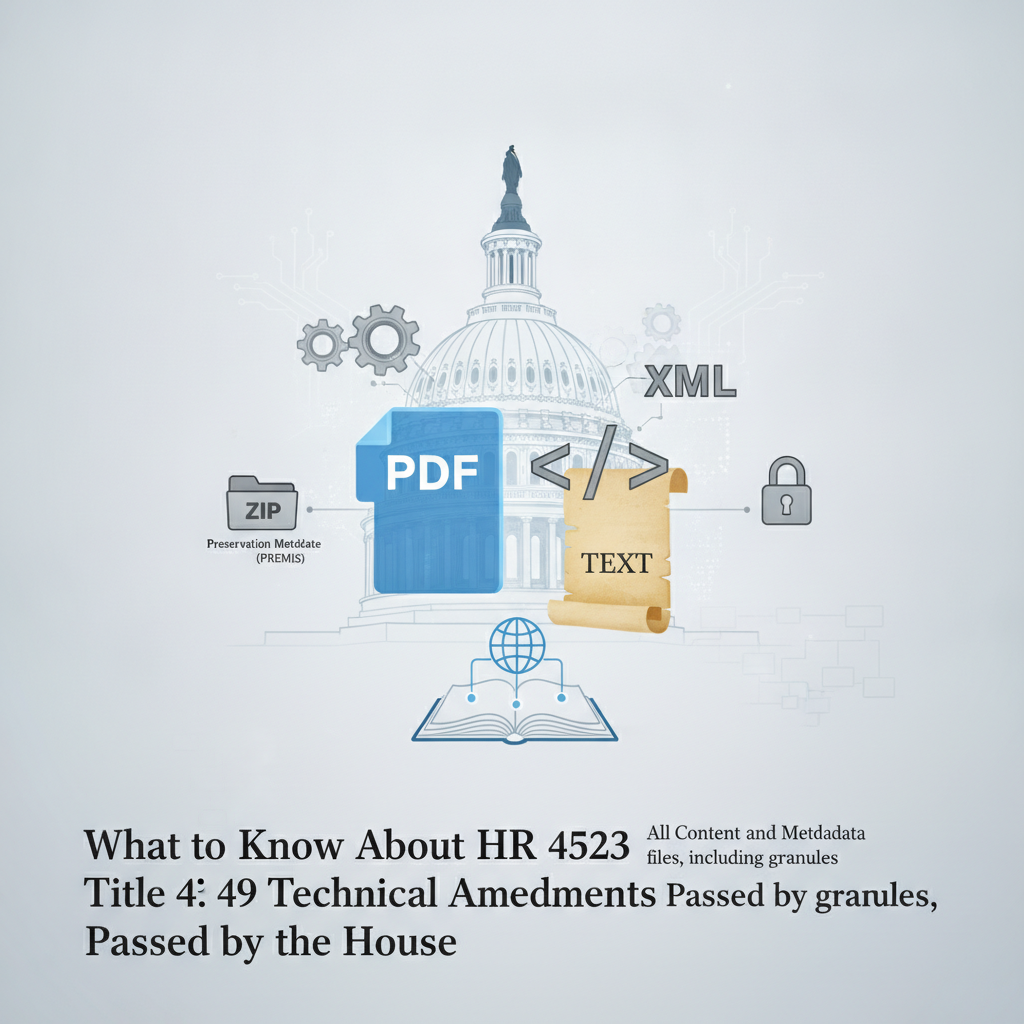
Content Files PDF XML TEXT Metadata download Descriptive Metadata (MODS) Preservation Metadata (PREMIS) All Content and Metadata files, including granules ZIP

Last updated:
Key points
- The U.S. House passed H.R. 4523 to make necessary technical amendments to Title 49 of the United States Code.
- The measure fixes clerical errors, corrects statutory cross-references, and removes obsolete language without altering substantive transportation policy.
- The engrossed legislation now heads to the U.S. Senate for further consideration.
NewsWK — The U.S. House of Representatives recently passed House Bill 4523 to update federal transportation law. This measure corrects drafting oversights, clerical errors, and structural inconsistencies in existing statutes. Title 49 of the United States Code serves as the legal foundation for national infrastructure. It covers highways, commercial aviation, railways, and pipelines. Therefore, maintaining clear statutory language remains essential for American businesses, regulators, and travelers.
Why does statutory clarity matter in federal transportation law?
Statutory clarity matters because federal transportation laws govern interstate commerce and national transit operations. When legal language becomes murky or outdated, it sparks costly courtroom disputes and regulatory confusion. Consequently, precise phrasing protects supply chains from needless administrative friction and shields taxpayers from avoidable legal waste. Clear laws ensure that transit systems run safely and predictably.
Furthermore, ambiguous statutory language burdens commercial freight operators and regional logistics providers. Clear phrasing protects businesses from regulatory uncertainty and government overreach. By routinely codifying and cleaning up the federal legal code, Congress maintains an orderly, transparent, and accountable statutory system.
What are the federal transportation code amendments in HR 4523?
The HR 4523 amendments update and harmonize statutory language codified in Title 49. Specifically, the bill fixes faulty cross-references, rectifies typos, corrects numbering errors, and repeals obsolete provisions. These targeted revisions ensure that federal transportation statutes remain clear and enforceable. As such, they assist courts, regulatory agencies, and commercial carriers nationwide.
In fact, federal transportation law expands every time Congress passes major infrastructure or funding packages. Over decades, lawmakers amend individual sections, renumber paragraphs, and repeal expired programs. However, repeated revisions inevitably create conflicting cross-references and outdated citations throughout the federal code.
To fix these defects, the Office of the Law Revision Counsel drafts technical correction legislation. Importantly, these codification bills are strictly non-substantive. They do not create new mandates, alter existing transportation policies, or raise taxes. Instead, they make necessary editorial adjustments that preserve the integrity of the United States Code.
Key areas addressed through this routine maintenance include:
- Correcting obsolete references: Removing outdated citations to dissolved government agencies, expired statutory programs, and repealed provisions.
- Fixing mechanical drafting errors: Resolving mistakes in capitalization, punctuation, spelling, and paragraph numbering across statutory sections.
- Harmonizing statutory terminology: Standardizing legal phrasing and definitions across provisions governing aviation, maritime commerce, railway transit, and motor carriers.
- Ensuring accurate cross-citations: Updating and verifying legal references connecting Title 49 with other titles across the broader United States Code.
How does House Bill 4523 clarify Title 49 of the United States Code?
House Bill 4523 clarifies Title 49 by removing accumulated statutory inconsistencies across decades of transportation legislation. This routine housekeeping upholds the rule of law by aligning legal references across transit, aviation, pipeline, and highway statutes. As a result, the measure gives courts and regulators a clear, unified framework for enforcing transportation standards.
When statutes contain clerical defects, regulatory agencies struggle to enforce safety standards efficiently. Meanwhile, private transportation companies must spend valuable time and legal resources interpreting contradictory rules. Precise statutory language provides crucial certainty for airlines, freight carriers, and state transit departments. Moreover, sound legislative drafting ensures that judges interpret statutes according to congressional intent.
When will the legislation take effect?
The legislation will take effect after the U.S. Senate passes it and the president signs it into law. Because technical amendment bills make no substantive policy changes, they typically advance through Congress with strong bipartisan support. Once enacted, the updated text immediately becomes the official codified language for federal courts, agencies, and transportation operators.
Advancing these housekeeping measures remains a vital congressional duty. Ultimately, both commercial shippers and daily commuters benefit when federal transportation laws stay clear, consistent, and dependable.
This article was produced with the assistance of AI and reviewed by our editorial team.
Sources
Related: Sanctuary Policies Block Federal Jail Transfers as ICE Ramps Up Enforcement Across U.S. Communities
Related: Congress Receives New Legislation Aimed at Local Health Care Protection
See a typo? Report it here.