Alaska
2026 Midterm Governor Races: How State Leadership Battles Could Reshape America
While much of the national attention on today’s midterm elections has focused on control of Congress, voters across the country will also choose which party controls the levers of state power. Across the states, more than 6,000 legislative seats are…

Last updated:
Key points
- Voters across 36 states are electing governors in 2026, with independent analysts rating 12 contests as competitive.
- More than 6,000 state legislative seats are up for election, directly impacting state policy and congressional redistricting.
- Partisan shifts in state capitols will influence local tax policies, regulatory enforcement, and legislative veto power.
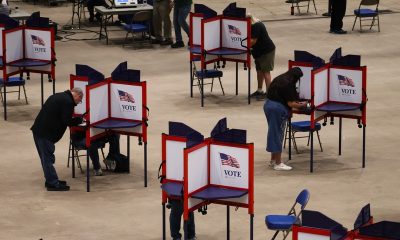
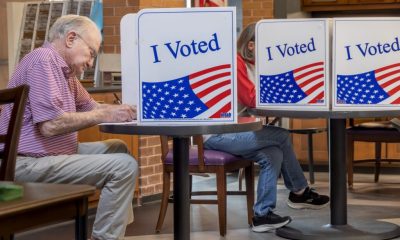
NewsWK — Voters across the nation are casting ballots today. They will decide executive leadership and legislative power in state capitals. Federal elections draw significant attention. However, state-level decisions directly shape local taxes, public safety, and regulatory environments. This cycle features 36 gubernatorial contests alongside thousands of legislative races. Consequently, state leaders will face fundamental choices regarding policy direction. They must also manage government spending over the coming years.
What is at stake in 2026 competitive gubernatorial elections?
Voters in 36 states will elect executive leaders this year. Independent political analysts rate 12 of those contests as highly competitive. Republicans currently hold a narrow 26-24 advantage in statehouses nationwide. However, shifts in key battlegrounds could alter the balance of state executive power for years to come.
State executive contests represent some of the most critical decisions on the ballot. Currently, Republicans hold 26 governorships, while Democrats hold 24. Analysts at the nonpartisan Cook Political Report identified 12 competitive executive contests this cycle. These battlegrounds include Alaska, Florida, Georgia, Iowa, Kansas, and Michigan. In addition, voters face tight races in Nebraska, Nevada, Ohio, Oregon, Texas, and Wisconsin.
In recent weeks, nonpartisan rating services updated their outlooks for major southern battlegrounds. For example, analysts shifted ratings for Florida and Texas from Likely Republican to Lean Republican. Republican candidates still maintain advantages in both states. Yet, analysts cite challenging political conditions nationwide. Meanwhile, national trends often create friction for the White House party during midterm cycles.
Katy Owens Hubler directs elections and redistricting at the National Conference of State Legislatures. Recently, she evaluated the overall political environment. “For the most part the Republicans are kind of playing defense more than offense,” Hubler stated.
How do governor election predictions shape key battlegrounds?
Analysts evaluate governor election predictions by tracking polling trends, fundraising totals, and historical midterm patterns. Shifts in ratings indicate narrowing margins in traditional conservative strongholds. Therefore, both major political parties are concentrating resources on close contests. They aim to secure crucial executive veto power and administrative oversight.
Executive leadership carries significant weight in states with split party control. For instance, Republican Nevada Governor Joe Lombardo vetoed over 160 bills during his tenure. The Democratic-led legislature had passed all of those measures. If political control shifts in Nevada, state legislative agendas could advance without executive resistance.
Conversely, Democratic victories in Georgia, Texas, or Florida would impact conservative states. Specifically, these wins would create immediate checks on Republican legislative majorities. A governor holds significant administrative power over state agencies, judicial appointments, and budget proposals. Thus, executive outcomes directly determine whether state governments experience unified party governance or divided power.
How will midterm election state leadership impact local governance and taxes?
Local communities feel the immediate economic impacts of state elections faster than federal legislation.
State executive branches administer substantial budgets funded by taxpayer dollars. When state leaders change, policy priorities often shift dramatically. For example, conservative governors frequently emphasize fiscal discipline, regulatory reductions, and public safety enforcement. In contrast, progressive executives often push for expanded state spending and increased regulatory oversight.
Local governments rely heavily on state funding for roads, emergency services, and municipal infrastructure. Therefore, municipal leaders closely monitor executive elections. Furthermore, governor vetoes serve as a vital safeguard against overreach by state legislatures. A single gubernatorial election can determine whether state tax rates remain stable. Alternatively, taxes could increase to fund new state programs.
Why does party control of state legislatures matter for national policy?
Gaining party control of state legislatures gives lawmakers direct authority over state statutory laws and spending. They also control congressional district boundaries. Currently, Republicans control 28 state legislatures, Democrats control 18, and three states have divided chambers. Because state lawmakers draw congressional maps, legislative outcomes directly influence federal elections for the next decade.
Beyond gubernatorial races, voters will decide more than 6,000 state legislative seats nationwide. In recent elections, legislative seats flipped in Iowa, Florida, Pennsylvania, and Texas. Both national parties recognize that legislative majorities hold immense power. Specifically, they control state policy and federal redistricting.
Recently, 10 states completed mid-decade redistricting cycles. This unusual movement underscores the massive federal stakes connected to statehouse elections. Ultimately, lawmakers elected this year will determine legislative and congressional district boundaries.
Edith Jorge-Tuñón serves as president of the Republican State Leadership Committee. She highlighted the strategic importance of state legislative campaigns. “We know Democrats and their national allies will continue to pour millions into state legislative races because they understand what’s at stake: the legislators elected in 2026 will shape redistricting and the balance of power for years to come,” Jorge-Tuñón said.
Here is a breakdown of current partisan control across state legislatures nationwide:
- Republican-controlled state legislatures: 28 states
- Democratic-controlled state legislatures: 18 states
- Divided control between chambers: 3 states
As election results arrive, state leaders nationwide will prepare for upcoming legislative sessions. The balance of power established today will dictate economic policy and taxpayer protection. Finally, these outcomes will shape public governance across America.
This article was produced with the assistance of AI and reviewed by our editorial team.
Sources
Related: Could a Democrats Governor Majority Become Reality in the Upcoming Midterm Elections?
Related: Democrats aim to emulate Republicans in building state power
See a typo? Report it here.