
Florida
How Trump Tariffs Cost of Living Virginia Families and Shape Key Midterm Races
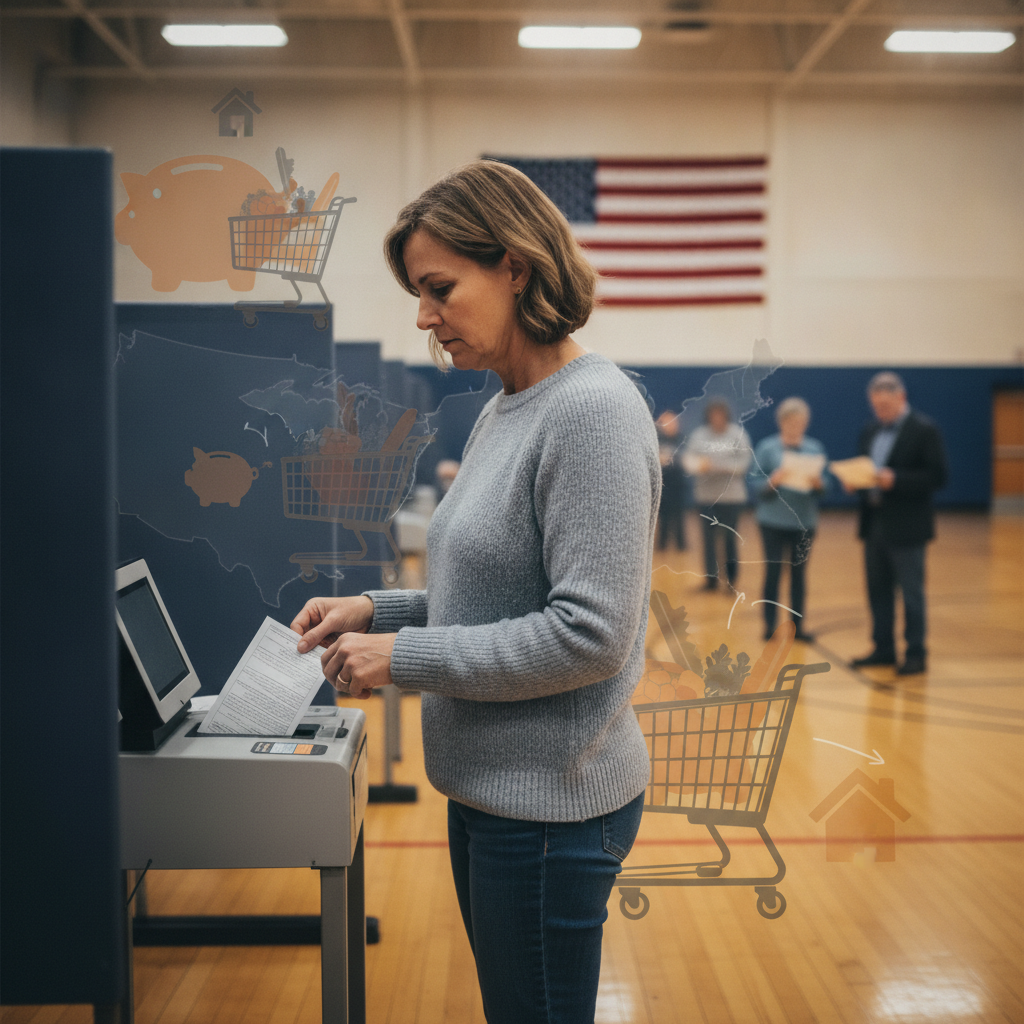
WASHINGTON — Rebecca Myers lives in one of the nation’s most hotly contested congressional districts, and tariffs were on her mind as she voted early and in-person in Suffolk, Virginia in late September. The 44-year-old trained social worker said she…

Last updated:
Key points
- Voters in key swing districts, including Virginia’s 2nd Congressional District, are citing rising costs of living as a primary concern ahead of midterm elections.
- Economic analyses estimate that import taxes will cost the average American household between $820 and over $1,000 annually.
- While the administration defends tariffs as a tool to protect domestic industries, public polls indicate growing bipartisan frustration over their impact on retail prices.
WASHINGTON NewsWK — Voters across Virginia are heading to the polls with household budgets on their minds. Many residents are feeling the squeeze of rising prices on everyday items. Consequently, federal trade policy has suddenly become a major issue in local campaigns.
How will the Virginia 2nd Congressional District election turn on household expenses?
The Virginia 2nd Congressional District election serves as a critical test on household expenses. Voters in Suffolk and Chesapeake directly connect federal trade policies to their daily budgets. In response, many families are making tough financial sacrifices. For example, some residents are canceling family vacations As Import Duties Drive up retail prices.
In this competitive coastal district, voters are already casting early ballots. For example, Rebecca Myers, a social worker living in Suffolk, cast her ballot early. Her husband recently retired after 25 years of service in the U.S. Navy. Together, they are raising two young children at home. Myers noted that her family had to cancel a vacation to save money.
All I can say is I know my family’s finances very well and I know everything we spend money on has gone up in price.
Myers attributed part of those rising costs directly to federal trade policies. Because of these financial concerns, she voted for Democrat Elaine Luria. Luria is challenging incumbent Republican Representative Jen Kiggans in the Suffolk midterm elections. Meanwhile, Kiggans has supported the administration’s broader trade agenda, including import taxes. Additionally, advocacy groups are holding events like “tariff-proof” cooking classes in nearby Chesapeake. These classes teach residents how to swap ingredients to avoid higher prices.
Why do some voters believe Trump tariffs cost of living Virginia families too much?
Many voters argue that Trump tariffs cost Virginia families thousands of dollars. They believe these import taxes artificially inflate the prices of basic goods. Since January 2025, Virginia business owners have paid over $6.2 billion in tariffs. Furthermore, economists warn that businesses pass these taxes directly to consumers, raising average household expenses by hundreds of dollars annually.
Virginia ranks 18th nationwide in total tariff impacts, but the burden remains heavy. Nationwide, the Tax Foundation estimates that these policies will cost the average household $820 in 2026. Furthermore, some economic analyses put the annual household burden even higher, exceeding $1,000.
These import taxes apply to hundreds of categories of goods. For instance, businesses pay duties on heavy industrial machinery and basic food ingredients. The administration argued that foreign countries pay these taxes. However, economists clarify that American importers actually pay them. Consequently, local business owners must either absorb the extra costs or pass them to consumers.
How Do Import Taxes Drive up the cost of daily items and fuel Trump tariffs inflation?
Import taxes directly fuel Trump tariffs inflation by raising the cost of imported raw materials and finished goods. When businesses face higher import costs, they typically raise retail prices. This mechanism directly explains how tariffs affect grocery prices. As a result, families must alter their weekly shopping lists to afford essentials.
Economists from the Peterson Institute of International Economics analyzed academic studies from 2025 and 2026. They found that import taxes add between 0.5 and 1 percentage point to national inflation. Although that percentage seems small, it represents a significant dollar amount for working families.
Furthermore, the administration’s trade policy has changed more than 50 times since January 2025. This constant shifting creates immense uncertainty for local business owners. Many companies initially try to absorb the tax increases. However, they eventually raise retail prices once their profit margins shrink.
How are these trade policies affecting other states across the country?
Trade policies impact states differently depending on their primary local industries and manufacturing bases. A state-by-state analysis shows that populated manufacturing hubs face the largest financial burdens. For example, states with large automotive and agricultural sectors are seeing billions of dollars in added import costs.
An analysis by the National Taxpayers Union Foundation identified the top ten states most affected by these import taxes. The hardest-hit states include:
- California
- Texas
- Michigan
- Georgia
- Illinois
- New York
- New Jersey
- Florida
- Ohio
- Tennessee
In Michigan, businesses paid an extra $23 billion on imports, primarily affecting automotive manufacturing. Meanwhile, Florida importers paid $11 billion in extra duties. In that state, the food and beverage sector took the largest hit.
How does the administration defend its economic and trade agenda?
The White House defends its trade actions as essential tools to protect American jobs and industries. Officials state that import taxes level the playing field for domestic manufacturers against unfair foreign competition. Additionally, the administration maintains that foreign exporters will ultimately bear the financial burden of these policies.
White House spokesperson Taylor Rogers emphasized the administration’s broader economic achievements. In particular, Rogers pointed to major tax cuts, lower prescription drug costs, and job growth as key successes.
The President skillfully used tariffs to renegotiate almost 20 trade deals and level the playing field for American workers and businesses.
Despite these assurances, public opinion polls show growing voter frustration over living costs. For instance, an Associated Press-NORC poll found that 69% of adults view the administration as failing on living costs. Additionally, a Cato Institute survey revealed that 74% of voters blame import taxes for high retail prices. As a result, several candidates in key swing states are centering their campaigns on rolling back these trade policies.
This article was produced with the assistance of AI and reviewed by our editorial team.
Sources
Related: Sanctuary Policies Block Federal Jail Transfers as ICE Ramps Up Enforcement Across U.S. Communities
Related: Trump Canada Trade War Midterms: Tariff Dispute Hits Battleground States
See a typo? Report it here.