
Kansas
Why Are Gen Z Politicians in Kansas Walking Away From the Statehouse?
Editor’s Note: This story is part of Gen Z at the Ballot Box, a collaboration between States Newsroom and The 19th. TOPEKA, Kan. — After state Rep. Angel Roeser defied her fellow Republicans and voted against their plan to ask…

Last updated:
Key points
- Kansas State Representative Angel Roeser, the state’s youngest lawmaker, decided not to seek reelection after facing party backlash for independent votes.
- Financial hurdles, including low part-time legislative salaries, remain a major barrier for young working-class candidates trying to serve in public office.
- Gen Z political candidates are increasingly driven by practical local issues like housing costs and technology regulations rather than strict party alignment.
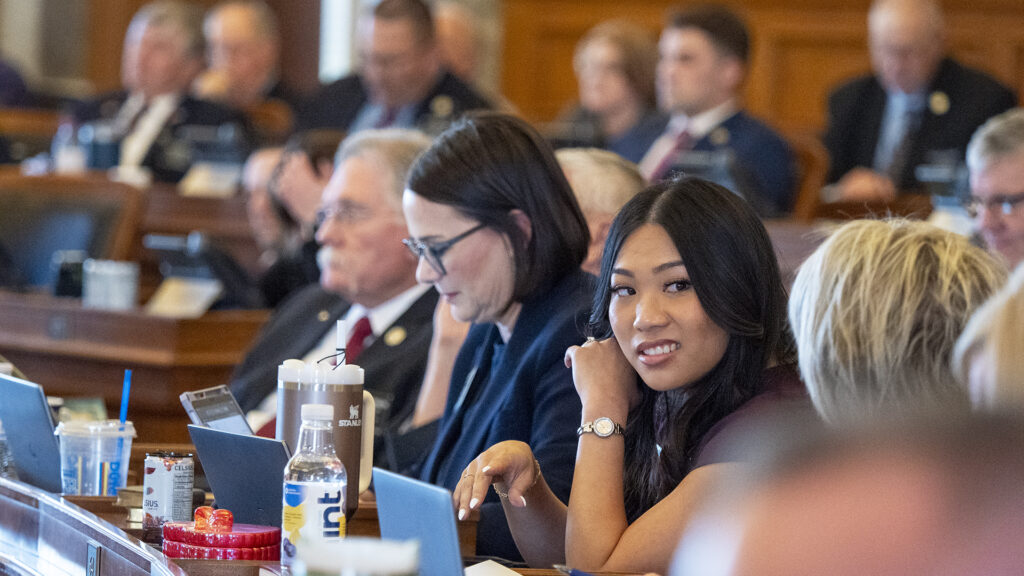
NewsWK — Kansas is seeing a shift in its legislative halls. Young leaders continue to navigate a demanding political landscape. State Representative Angel Roeser Kansas, a 25-year-old Republican from Manhattan, decided not to run again this year. Her departure highlights a complex path for young Kansas lawmakers. In particular, they must balance party expectations with local representation.
What challenges do Gen Z politicians in Kansas face?
Young lawmakers in the Sunflower State face steep hurdles, including intense party pressure and low legislative pay. In addition, these challenges have led some young leaders to step aside after just one term. Consequently, observers question whether state political institutions are truly ready for a new generation of leadership.
Roeser entered the legislature in 2024 at just 23 years old. At the time, she was the youngest lawmaker in the state. However, she quickly encountered the friction of party politics. During her term, she voted against a Republican-backed proposal to change judicial selection. The plan sought to change how Kansas Selects Supreme Court justices. After her vote, party members circulated a graphic labeling her an “obstructionist.”
Specifically, the proposal aimed to replace the state’s merit-based judicial selection system with direct elections. Roeser stood by her vote, noting that her constituents favored the existing system. In August, Kansas voters resoundingly rejected the proposed constitutional amendment. Statewide, 61% of voters opposed the change. Furthermore, 72% of voters in Riley County voted against it.
Still, the political fallout took a toll. Roeser reported difficulty securing meetings with House leadership after her independent votes. Meanwhile, House Speaker Dan Hawkins maintained that he has an open-door policy. Nevertheless, Roeser decided that one term was enough.
How do Gen Z politicians in Kansas handle party pressure?
Conservative Gen Z lawmakers often balance party loyalty with the local interests of younger constituents. This tension frequently leads to public friction with party leadership. For example, sharp disagreements surface during high-profile legislative battles over judicial reform and state policy.
Roeser described the heavy expectations placed on her when she first arrived in Topeka. “I was labeled before I even had a chance to legislate. And when I did not live up to the hype, my own party turned on me,” she said. This experience reflects a broader trend among Kansas Gen Z Republicans. Many young conservatives want to focus on practical local issues rather than strict party orthodoxy. Consequently, they sometimes clash with older, more established party leaders.
How does the departure of young lawmakers in Kansas affect local representation?
When young representatives leave office, local communities lose direct advocacy on key issues like affordable housing and modern technology. As a result, older lawmakers make decisions for rapidly changing demographics in cities like Manhattan and Overland Park, even if they do not share the same immediate economic struggles.
The average age of Kansas legislators during the 2025 session was 59 years old. Meanwhile, state leaders like Governor Laura Kelly are in their 70s. Therefore, this age gap can lead to a disconnect on key issues. For instance, young Kansans face a very different housing market than older generations.
Reed Krewson Kansas, a 24-year-old Democrat running unopposed in Overland Park, spent two years searching for an affordable condo. He noted that older lawmakers often do not understand these modern financial pressures. Similarly, technology policy remains a major concern for younger residents. Roeser pointed out that Kansas lacks robust regulations on artificial intelligence. In fact, she believes opponents used her likeness in an AI-generated attack graphic. That experience illustrated an urgent need for updated digital laws. Thus, without young voices in office, these modern challenges may go unaddressed.
What is driving Generation Z in Kansas politics to run for office?
Many young Kansans run for office because they believe the current political system fails to address modern realities. Candidates seek to bring practical lived experience to the legislative process. Specifically, they focus on rising housing costs and fast technological changes like artificial intelligence.
Despite the challenges, young people continue to seek public office. Alberto Medina, a spokesperson for Tufts University’s youth civics research organization, explained this motivation. “Young people get involved because they think the system is not working and want to change it,” Medina said. According to national data, nearly 50 million Americans aged 18 to 29 are eligible to vote. Furthermore, many of these young voters do not align with either major political party. Instead, specific local issues and Economic Realities Drive their civic engagement.
Financial barriers also play a significant role in keeping young people out of office. Serving in the legislature is technically a part-time job. Historically, legislative salaries ranged between $40,000 and $60,000. For young professionals with student loans, this low pay makes public service difficult. To address this issue, Kansas lawmakers recently approved a legislative pay raise. Proponents, including departing young Representative Lindsay Vaughn, argued the raise is necessary. In particular, it allows everyday citizens, rather than just wealthy or retired individuals, to serve. As Krewson prepares to enter the House, he hopes to build on this foundation. Ultimately, he wants to bring fresh solutions to Topeka.
This article was produced with the assistance of AI and reviewed by our editorial team.
Sources
Related: House Resolution 1499 Clears Way for Critical Votes on Mining, Higher Education, and Maritime Rules
Related: Study Examines Women on Parole Mental Health and Reentry Crises Across the US
See a typo? Report it here.