Local Business
Federal Authorities Plan Student Loan Default Collections as Unpaid Debts Reach $234 Billion
A long-postponed reckoning could be coming soon for millions of student loan borrowers who are now faced with garnished wages and seized tax refunds as soon as next year. Since pandemic forbearance finally expired last year, more than 9 million…

Last updated:
Key points
- Federal authorities are preparing to resume active collection efforts on over $234 billion in delinquent student loan debt.
- More than 9 million borrowers face potential wage garnishments and tax refund offsets starting next year.
- Default rates exceed 25 percent in states like Mississippi, Louisiana, and New Mexico following the end of pandemic-era payment pauses.
NewsWK — Federal officials are preparing to reinstate aggressive enforcement actions against millions of delinquent student loan borrowers across the United States. Following years of temporary pauses, federal collection activities will soon target individuals who failed to resume payments. Consequently, millions of Americans now face reduced paychecks and seized tax refunds. Ultimately, the government is working to recover unpaid taxpayer funds.
What Are the Financial Risks as Federal Student Loan Default Collections Resume?
Federal collection measures will soon restart for millions of delinquent borrowers across the country. Currently, outstanding balances total $234 billion across more than 9 million individuals. Therefore, defaulting taxpayers face severe enforcement procedures next year, including direct pay deductions and offset tax refunds. Public officials now seek to resolve years of paused enforcement.
The return of student loan default collections marks a major shift in federal fiscal policy. During the pandemic, the federal government suspended mandatory payments and halted collection efforts. However, that grace period ended. As a result, millions of borrowers fell behind on their monthly obligations. Federal data indicates that over 9 million individuals are now in formal default.
When borrowers fail to repay their debts, public funds remain unrecovered. Consequently, federal authorities plan to resume involuntary enforcement mechanisms to recapture billions in outstanding loans.
How Will Student Loan Wage Garnishment Impact Working Families and Local Communities?
Resuming involuntary debt recovery directly reduces take-home pay for struggling households. Furthermore, this shift impacts local retail spending and community economic stability. When federal agencies collect past-due balances through payroll deductions, families often struggle to cover basic living expenses. Consequently, municipal economies feel the secondary ripple effects of reduced consumer purchasing power.
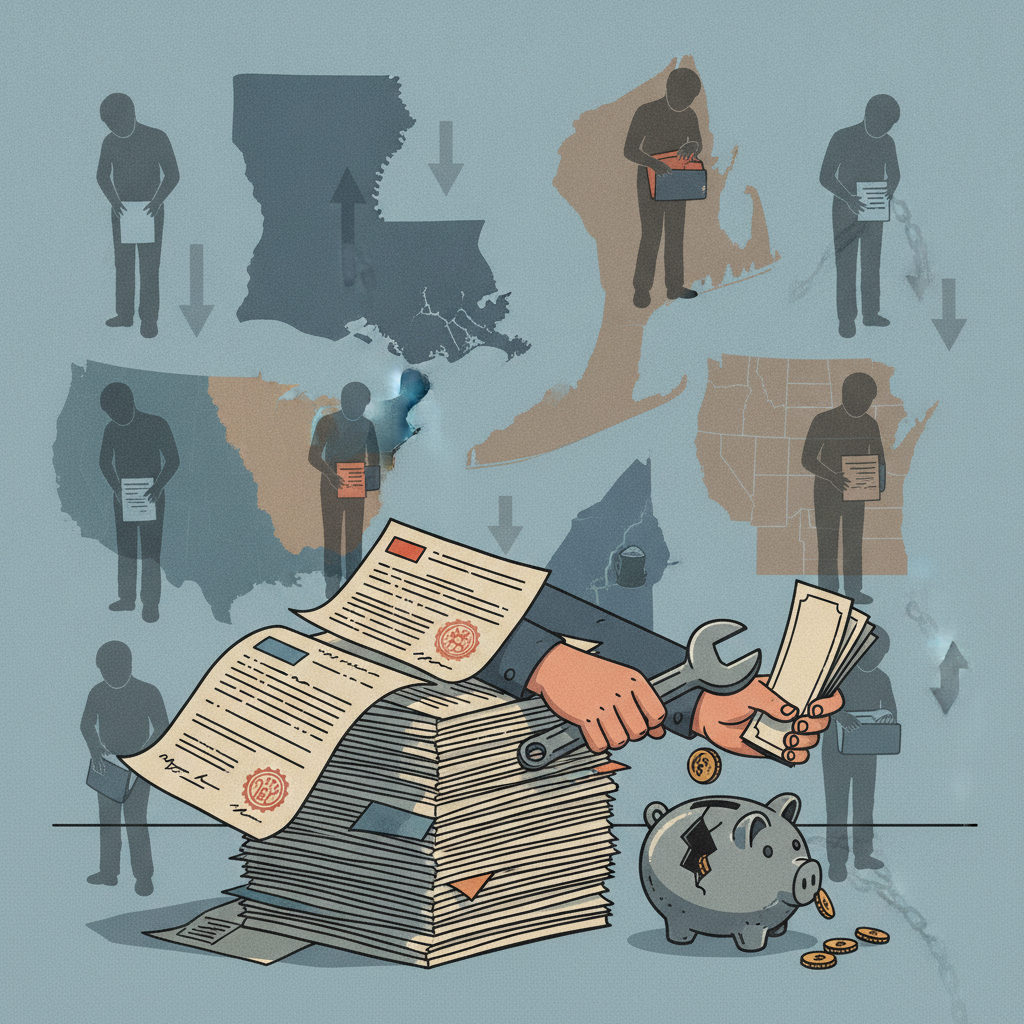
The impact of student loan wage garnishment will vary significantly across different states and regions. Data reveals that Southern states face the highest delinquency rates in the country. For example, more than 25 percent of borrowers in Mississippi, Louisiana, and New Mexico are currently in default. Meanwhile, states like Massachusetts, Utah, and Wisconsin maintain lower default rates near 15 percent.
Local businesses in high-default areas may experience declining sales as household budgets tighten. When this happens, discretionary spending drops quickly. Therefore, families must prioritize essential costs like rent, groceries, and utilities over local dining or retail purchases.
Individual career choices also influence debt outcomes. For instance, Taylor Lewis of Atlanta earned a degree in media and entertainment from Kennesaw State University. However, she could not secure a job in her field. Instead, she works as a manager for a logistics company. Meanwhile, she is attempting to resolve a $29,000 default balance.
What Are the Full Consequences of Federal Student Loan Default for Borrowers?
A federal student loan default triggers immediate credit score damage, loss of repayment flexibility, and total balance acceleration. Once default occurs, borrowers cannot easily access standard income-driven repayment options. Furthermore, government collection agencies can seize federal income tax refunds through automated offset programs until borrowers fully satisfy their debts.
Understanding student loan default consequences is vital for anyone holding delinquent federal debt. At that point, the entire unpaid loan balance becomes due immediately. Furthermore, default severely damages credit scores. Consequently, workers struggle to secure home mortgages or auto loans.
In addition to payroll deductions, borrowers face student loan tax refund seizure during the upcoming tax filing season. The Treasury Department automatically intercepts federal tax refunds. Then, officials apply those funds directly to outstanding balances. For many low-income households, losing an annual tax refund creates unexpected financial distress.
What Caused the Rapid Growth in Delinquent Loans After Pandemic Pauses?
Repeated federal policy changes and extended payment pauses created confusion for millions of debt holders nationwide. As a result, many borrowers miscalculated their financial obligations when temporary relief policies expired. Meanwhile, post-secondary programs with weak employment returns left thousands of graduates carrying significant debt. Ultimately, these workers lacked higher earnings to cover their balances.
The federal government extended the pandemic payment pause multiple times over several years. However, policy analysts argue that these repeated delays created widespread confusion among borrowers. Many people did not know when payments were actually due.
“The government did not do a very good job of communicating the fact that repayment was starting again for real,” said Preston Cooper, a senior fellow at the American Enterprise Institute. “There were a lot of false starts.”
Additionally, policy experts emphasize the need for higher education institutions to deliver measurable economic value for students. Many trade programs and liberal arts degrees result in low earnings. Consequently, graduates cannot manage their balance debt. Furthermore, high interest rates can cause unpaid balances to balloon over time. For example, Timothy Varro is a bank attorney in New York City. Compounded interest caused his original $120,000 student loan balance to grow to $375,000.
Meanwhile, some state leaders advocate for stronger financial literacy education. This training helps students avoid debt traps before enrolling in college. In Maine, state agencies actively counsel high school students and working adults regarding loan terms and repayment responsibilities.
“Some of it is as simple as the mentality here in Maine, that you do what it takes to repay your debts,” noted Mila Tappan, education affordability training manager at the Finance Authority of Maine.
Now, federal enforcement is resuming across the nation. Consequently, policy makers face growing calls to hold colleges accountable for student outcomes. At the same time, officials must ensure that borrowers fulfill their financial obligations to American taxpayers.
This article was produced with the assistance of AI and reviewed by our editorial team.
Sources
Related: Sanctuary Policies Block Federal Jail Transfers as ICE Ramps Up Enforcement Across U.S. Communities
Related: Streamlining Income-driven Manageable Payments on Loans for Education Act Introduced in Congress
See a typo? Report it here.