Arkansas
How Black Voter Turnout Southern Senate Races Reshaped the Midterm Landscape
As new details emerge about a Black midterm voting surge in Southern states, missed opportunities for Democrats are coming under more scrutiny, such as close U.S. Senate races in Florida and Louisiana that might have added to the party’s advantage…


Last updated:
Key points
- High Black voter turnout narrowed margins in several Southern midterm races, leading to a historic victory in Mississippi.
- Democratic strategists point to significant fundraising deficits in Florida and Louisiana as key factors in close Senate losses.
- Regional gains in North Carolina, Georgia, South Carolina, and Arkansas highlight evolving political competition across the South.
NewsWK — Recent midterm election results across the American South highlighted key political shifts. Specifically, high turnout among Black voters generated close contests in several traditional conservative strongholds. However, national strategic decisions and campaign spending allocations left several competitive seats in Republican hands.
Party leaders now analyze these narrow margins across key states. In particular, political observers point to missed funding opportunities in Florida and Louisiana. Meanwhile, a landmark victory in Mississippi proved that competitive races remain viable in the Deep South.
How Did Southern Black Voter Turnout Impact Recent Elections?
High turnout among Black voters significantly narrowed margins across several Deep South contests during the recent midterm cycle. While Republicans held key seats in Florida and Louisiana, boosted participation pushed Democrats to a landmark victory in Mississippi. Furthermore, this surge reshaped competition levels throughout the broader region.
Data from precinct analyses revealed strong participation in heavily populated minority districts. For instance, precincts with high Black populations experienced noticeable turnout gains compared to previous cycles. In Mississippi, voters elected Scott Colom to the U.S. Senate. This result marked the state’s first popularly elected Black senator. Additionally, Colom became the first Democratic senator from Mississippi since 1982.
However, turnout levels varied across state lines. Precincts in Mississippi reached nearly 100 percent of presidential-year turnout figures. By contrast, heavily Black precincts in Louisiana reached roughly 80 percent of previous presidential election levels. Consequently, political strategists are studying how voter motivation differed between these neighboring states.
What Role Did Democratic Senate Campaign Funding Play in Close Losses? Black Voter Turnout Southern Senate Races
Financial disparities between candidates heavily influenced the final outcomes in contested Southern states. Specifically, national party committees directed limited resources to candidates in Florida and Louisiana. This decision left state-level campaigns underfunded against well-capitalized Republican opponents. Meanwhile, those opponents maintained significant advertising and infrastructure advantages throughout the election.
Campaign finance records show significant fundraising gaps in several key Southern contests. U.S. House member In contrast, Democratic candidate Jamie Davis raised less than $130,000 in super PAC support. Despite this massive funding deficit, Davis lost the open Senate seat by just 1.8 percentage points. That margin equals about 25,000 votes.
Consequently, local leaders voiced frustration regarding national resource decisions. Florida Democratic Party Chair Nikki Fried criticized national party leadership for withholding early investments. “It is not about spending in Florida,” Fried stated during a post-election press conference. “It is about investing early in Florida the infrastructure that is necessary to win the third-largest state.”
Similarly, political analysts noted that additional television advertising and field operations could have altered the outcome. In Florida, Republican U.S. Senator Ashley Moody defeated her Democratic challenger by 2.9 percentage points. Therefore, observers argue that earlier Democratic Senate campaign funding might have pushed both states into victory territory.
What Does the Louisiana Senate Race Jamie Davis Outcome Mean for Voters?
The narrow margin in Louisiana demonstrates shifting political competitiveness across rural and suburban districts. Consequently, residents may see increased national political attention, local campaign infrastructure investments, and legislative posturing. Meanwhile, both major political parties evaluate strategies for upcoming gubernatorial and congressional contests in the state.
Jamie Davis served as a municipal official in Rural Tensas Parish before running for statewide office. Because Davis lacked statewide name recognition, political analysts expected an easy victory for Republicans. However, strong participation among Southern Black voter turnout networks kept the final margin surprisingly tight.
This unexpected result alters the political forecast for upcoming state elections. Today, party strategists view Louisiana as a state where competitive races can occur. Local voters may experience increased turnout efforts, early advertising campaigns, and expanded field offices during future election cycles. Furthermore, Davis is evaluating a potential bid for governor next year. This move could draw renewed political focus to rural parishes.
How Did Florida Senate Race Angie Nixon Mobilize Local Communities?
High turnout among urban and suburban minority voters narrowed the final margin in the Florida contest. Specifically, local voter mobilization efforts energized civic participation across key counties. This surge demonstrated strong grassroots engagement despite limited national funding support for state party infrastructure during the election campaign.
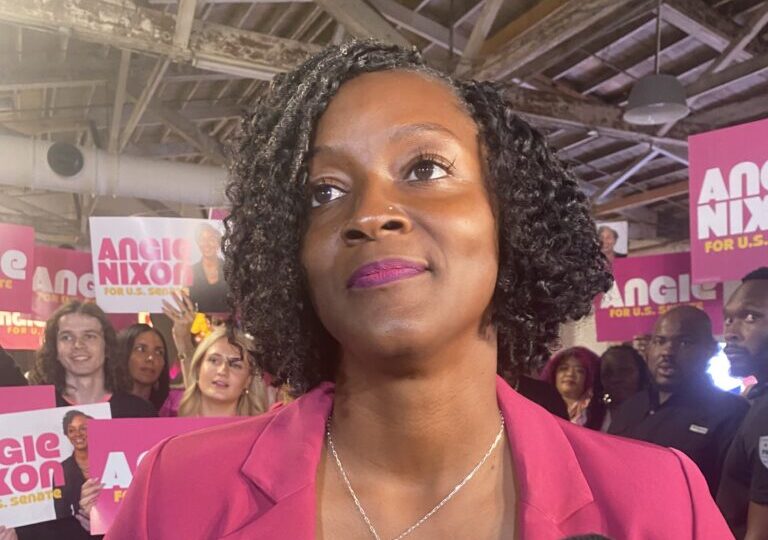
Exit poll data underscored deep engagement among specific voter demographics in Florida. In the Florida Senate race, Angie Nixon earned support from 94 percent of Black female voters. Additionally, she won 77 percent of Black male voters. Voters in Leon County and other major population centers also expressed strong motivation at the polls.
Local resident Saretta Weston emphasized the historical importance of participating in the election. “As a Black woman, I will stand for my vote,” Weston said after casting her ballot. “There’s been a lot of oppression in the past. As of right now we have the opportunity to do that, what many before us could not do.”
How Did Regional Election Trends Shift Across the South?
Midterm results across neighboring Southern states revealed broader competitive trends outside of statewide Senate contests. For example, Democratic candidates secured congressional flips and state legislative gains in multiple states. These outcomes indicate that changing demographic patterns and targeted organizing efforts are altering regional political dynamics.
Indeed, the political impact of the midterm elections extended well beyond Senate races. Several Southern states recorded significant shifts in legislative and congressional representation:
- North Carolina: Democrats won 11 out of 14 U.S. House seats, picking up seven flipped districts across the state.
- Georgia: Voters elected Keisha Lance Bottoms, making her the state’s first Black and first female governor.
- South Carolina: Democrats flipped a key U.S. Senate seat during the midterm cycle.
- Arkansas: Democrats flipped 10 state House seats, breaking a long-standing Republican supermajority.
Ultimately, these combined results suggest that political dynamics in the Deep South are evolving. While fundraising disparities prevented flips in Louisiana and Florida, high voter engagement established a new baseline for future election cycles. Therefore, national party committees now face growing pressure to re-evaluate their long-term funding strategies across Southern states.
This article was produced with the assistance of AI and reviewed by our editorial team.
Sources
Related: Study Examines Women on Parole Mental Health and Reentry Crises Across the US
Related: House Resolution 1499 Clears Way for Critical Votes on Mining, Higher Education, and Maritime Rules
Related: Black politicians win newfound power across state, federal governments