
Health News
Surge in Cyclosporiasis Cases Across the U.S. Raises Concerns
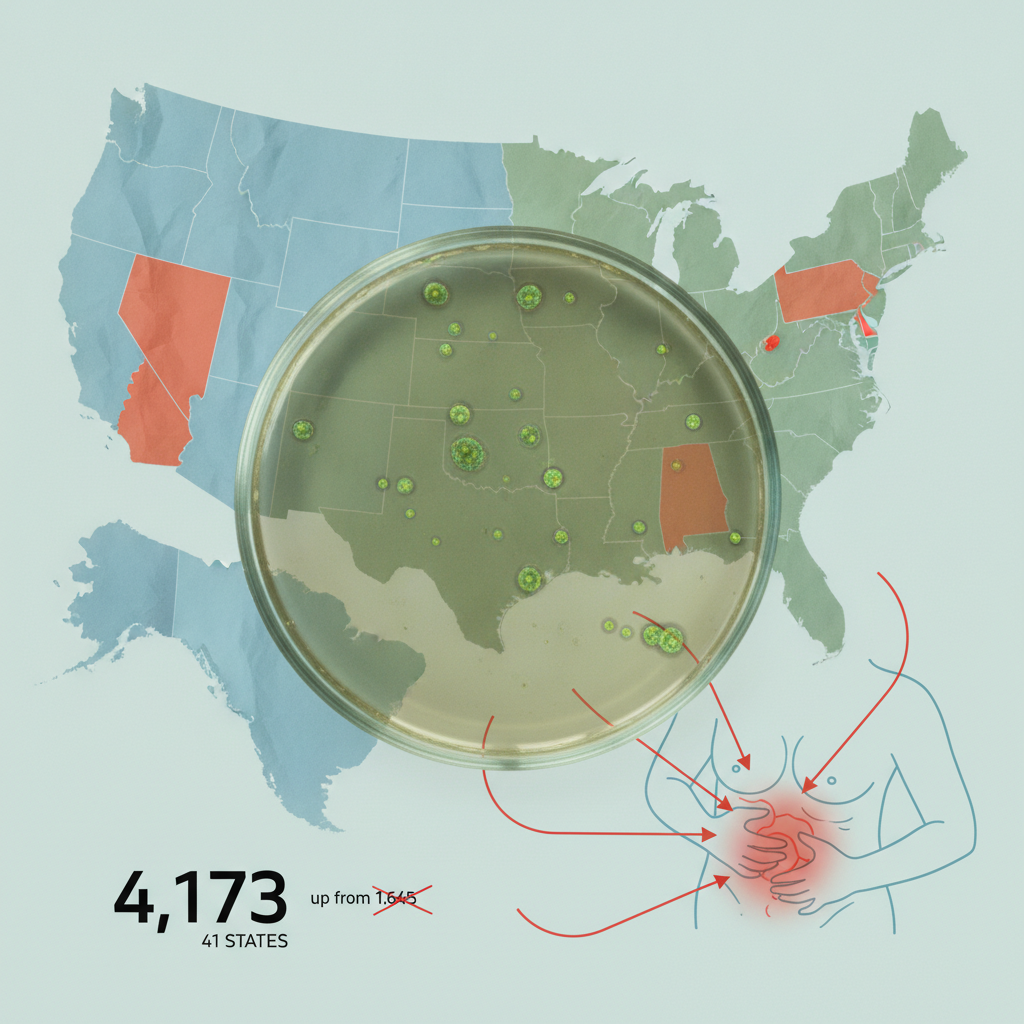
The number of cases of cyclosporiasis — a parasitic infection linked to contaminated water or food that causes severe intestinal issues — has more than doubled to over 4,173 cases across 41 states this week, up from the 1,645 confirmed…

Last updated:
Key points
Surge in Cyclosporiasis Cases Across the U.S
- Confirmed cases of cyclosporiasis in the U.S. have surged to over 4,173, more than double from last week.
- The outbreak has been linked to shredded iceberg lettuce from central Mexico, affecting multiple states.
- Health officials face challenges in tracing the outbreak due to the complexity of the parasite.
NewsWK — The Centers for Disease Control and Prevention (CDC) has reported a significant increase in confirmed cases of cyclosporiasis, a parasitic infection linked to contaminated food and water. As of this week, over 4,173 cases have been confirmed across 41 states, a sharp rise from 1,645 cases in 34 states reported just a week prior.
Cyclosporiasis is known to cause severe gastrointestinal symptoms including watery diarrhea, nausea, and stomach cramps. The current surge has made 2026 the worst year recorded for this infection, with CDC estimates suggesting more than 7,400 additional cases may still be unreported. Although there have been no reported fatalities, hospitalizations have increased to 308, more than double the previous week’s count of 141.
Investigations have pinpointed at least 1,644 cases in several states including Indiana, Kentucky, Michigan, Ohio, and West Virginia, linked to shredded iceberg lettuce sourced from central Mexico and distributed by Taylor Farms. Michigan has reported the highest case count with 7,171 cases and 102 hospitalizations as of mid-July.
Tracking the outbreak poses challenges for health officials, as the cyclospora parasite is more complex than the bacteria that typically cause foodborne illnesses. As such, investigators must often sift through restaurant and grocery records to establish connections. Heather Tomlinson and Courtney Anderson from the Association of State and Territorial Health Officials highlighted the burden this places on local public health systems, noting, “Case interviews and traceback investigations are often time intensive, creating a burden on state and local public health infrastructure.”
North Carolina has reported over 560 confirmed cases as of July 20, with the state relying on its 86 local health departments for tracking efforts. Dr. Carl Williams, a public health veterinarian with the North Carolina Department of Health and Human Services, remarked on the collaborative efforts with the CDC, stating, “The CDC has been very responsive to us and the other states.”
Based on reporting by Shalina Chatlani originally published by Stateline. Read the original story.
Surge in Cyclosporiasis Cases Across the U.S coverage on NewsWK includes background, context, and related reporting for readers following this story.
NewsWK publishes local and national news with clear headlines, source context, and follow-up when developments change. This article is part of ongoing coverage intended to help readers stay informed.
For more on Surge in Cyclosporiasis Cases Across the U.S, browse related NewsWK stories and check back for updates as new information becomes available.
Our editors review developing stories and update articles when material facts change, so readers can rely on NewsWK for clear, timely reporting.
See a typo? Report it here.