
California
Push for Parental Accountability Grows as States Enforce Penalties for Juvenile Crime
When young children and teenagers get into trouble, the question often comes quickly: Where were their parents? That question is again shaping public policy in communities across the country, as state and local lawmakers and prosecutors increasingly look for ways…

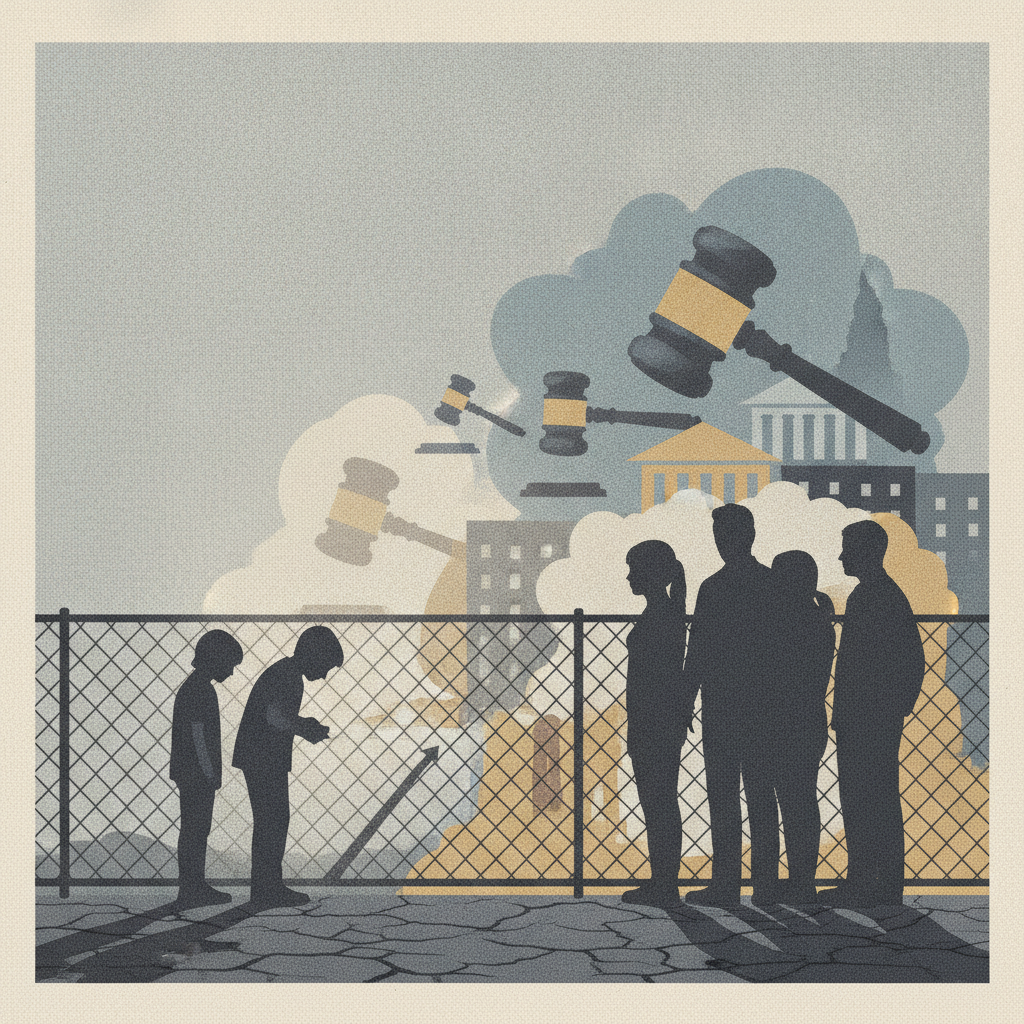
Key points
- State and local governments are advancing laws that penalize parents with fines or jail time for their children’s crimes and public disorder.
- New statutes in states like Louisiana and New Jersey specifically penalize parents over school threats and brawls causing property damage.
- The legal measures reflect a growing focus on family accountability and proactive supervision to curb juvenile delinquency.
NewsWK — Communities nationwide are confronting a persistent challenge in juvenile justice: how to maintain public order and hold households accountable when young people commit crimes. As reports of disruptive youth gatherings, property damage, and violent offenses draw public concern across American cities and towns, lawmakers and law enforcement officials are increasingly turning their attention toward parents and guardians.
From state capitols to local city councils, policymakers are strengthening measures that levy fines, mandate community service, or even impose jail sentences on parents who fail to supervise their children or knowingly permit unlawful behavior. The movement reflects a broader effort to reinforce personal responsibility and family accountability within the criminal justice system.
Why it matters here
For neighborhoods, business owners, and families across the country, juvenile disorder impacts daily safety, commerce, and quality of life. When unsupervised teenagers engage in store thefts, street fights, or property destruction, local taxpayers and small businesses bear the immediate financial burden. At the same time, school districts face significant disruptions when dealing with safety threats.
Enforcing parental responsibility aims to restore deterrence and encourage proactive supervision before juvenile misconduct escalates into violent felony behavior. By establishing clear legal and financial consequences for negligence, proponents seek to protect public spaces and ensure parents remain actively engaged in their children’s conduct.
State and Local Measures Take Effect
Several jurisdictions have recently instituted statutory penalties targeting parental neglect in connection with youth offenses:
- Louisiana: State law now permits courts to impose fines of up to $5,000 on parents or guardians if a minor aged 14 or older is convicted of making a threat against a school. The state also maintains statutes permitting penalties of up to 10 years in prison when a minor under 17 is involved in a violent felony, alongside an ongoing legislative review into the relationship between domestic discipline and juvenile delinquency.
- New Jersey: Recent legislation holds parents liable when a child incites a public brawl resulting in property destruction. For the most serious violations, parents can face up to six months in jail and a $1,000 fine.
- Covington, Georgia: Municipal leaders adopted an ordinance penalizing parents whose children commit infractions including shoplifting, curfew violations, disorderly conduct, and vandalism. Violations carry possible fines of up to $2,000 or up to 30 days in jail.
- Washington, D.C.: Federal prosecutors have signaled an aggressive posture regarding large-scale youth disturbances. U.S. Attorney Jeanine Pirro announced that parents could face up to six months in jail if they knowingly permit their children to commit offenses, emphasizing that guardians must be held accountable for ongoing neighborhood upheaval.
Law Enforcement Strategies and Legal Precedents
In South Carolina, Richland County Sheriff Leon Lott initiated a targeted Parental Accountability Initiative, resulting in criminal charges against 12 parents linked to their children’s offenses over a recent multi-month period. Law enforcement leaders emphasize that legal sanctions serve primarily as a catalyst for active parenting rather than arbitrary detention.
“The goal of this initiative is not to lock up parents. It is to get parents to be a parent,” Lott said in describing the operational focus of the initiative.
The push for parental accountability intersects with high-profile criminal cases where gross negligence led to severe violence. In Georgia, Colin Gray received a 15-year prison sentence after prosecutors established he provided a firearm to his son, who subsequently carried out a deadly mass shooting at Apalachee High School. Similarly, in Michigan, Jennifer and James Crumbley were convicted of involuntary manslaughter for failing to act on severe warning signs before their son’s fatal 2021 school shooting.
Beyond firearm access, civil and legal questions arise in broader contexts of supervision. In Oakland, California, an incident in which two children, ages 7 and 4, took their sleeping parents’ vehicle and critically injured a pedestrian sparked intense scrutiny regarding negligence standards.
Background and Policy Considerations
Statutory parental liability is not an entirely new concept in American jurisprudence. During the mid-1990s, more than 40 states enacted parental responsibility statutes addressing juvenile delinquency through fines, mandatory counseling, or restitution. Today, all 50 states maintain some form of parental liability statutes on the books, though the scope of application varies substantially.
While supporters argue that clear legal boundaries encourage parents to monitor their households and enforce discipline, policy analysts note that enforcement requires careful balance. Legal scholars point out that statutes must distinguish between willful negligence or criminal facilitation and ordinary parental challenges. In response to concerns regarding overregulation of family life, at least 13 states—including Florida, Utah, and Montana—have enacted protections ensuring parents are not penalized for allowing children to engage in reasonable, age-appropriate independence.
As communities from Chicago and Columbus to smaller municipalities evaluate curfew enforcement and restitution ordinances, the national debate underscores a shared objective: restoring order to public streets while upholding the foundational role of family oversight in crime prevention.
This article was produced with the assistance of AI and reviewed by our editorial team.