
Washington
Congress Weighs Data Centers on Prime Farmland Bill to Guard Agricultural Land and Public Funds
Content Files PDF XML TEXT Metadata download Descriptive Metadata (MODS) Preservation Metadata (PREMIS) All Content and Metadata files, including granules ZIP

Last updated:
Key points
- H.R. 10169 would prohibit federal financial benefits for constructing or expanding data centers on prime farmland.
- The measure aims to safeguard fertile domestic soil and prevent federal tax dollars from subsidizing agricultural loss.
- The bill now awaits committee review in the U.S. House of Representatives.
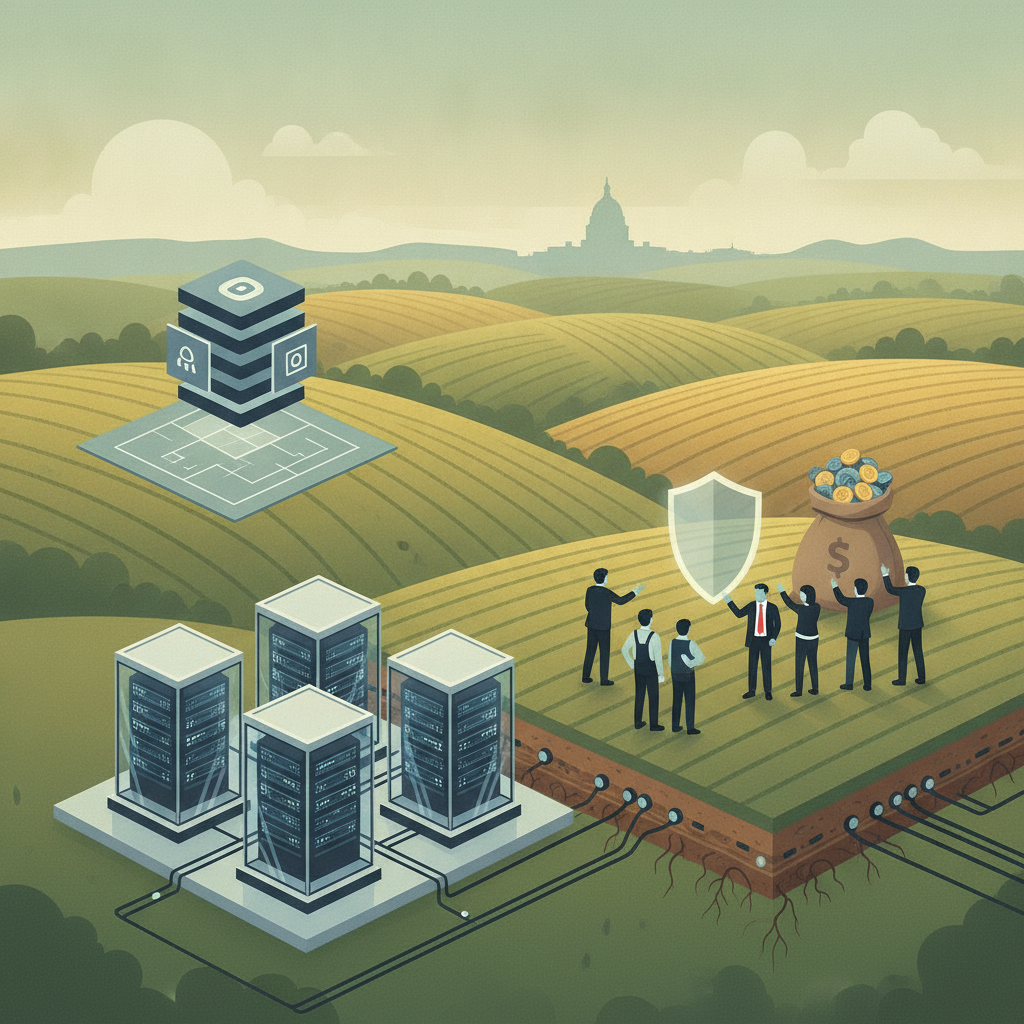
NewsWK — Lawmakers in Washington are moving to protect fertile American agricultural soil from rapid industrial development. A new legislative proposal aims to curb federal incentives that fuel tech development on top-tier crop ground. The measure specifically bars federal dollars from backing tech complexes built over productive agricultural soil.
Why it matters
Agricultural communities nationwide face rapid encroachment from utility-scale tech campuses. Prime farmland represents the most resilient and productive ground for growing domestic food crops. Restricting federal incentives ensures taxpayers do not underwrite the conversion of irreplaceable acreage into industrial computing hubs.
What Does HR 10169 Data Centers Legislation Propose?
The measure known as H.R. 10169 prohibits federal financial benefits from supporting facilities built on top agricultural soil. The restriction covers the construction, expansion, and substantial rehabilitation of computing facilities on designated agricultural tracts across the United States. Consequently, developers must rely entirely on private financing if they build over prime acreage.
Federal classifications define prime farmland by its soil quality, growing season, and moisture supply. These lands sustain high crop yields with minimal energy and water requirements. Yet developers frequently target these flat, cleared parcels because they reduce initial site grading costs. The legislation establishes a national standard to withhold public backing from projects that remove these soils from agricultural use.
How Would Federal Funding Data Centers Farmland Bans Work?
Under the proposed rule, any facility sited on protected soil loses access to federal loans, grants, and public financial benefits. The federal funding data centers farmland ban creates a strict fiscal boundary for tech developers. Therefore, companies cannot leverage public programs to subsidize heavy physical development on valuable farm acreage.
Fiscal conservatives have consistently argued that private industry should not rely on federal support to pave over productive farmland. When commercial enterprises build sprawling server facilities, they demand heavy local resources. Furthermore, federal financing programs were designed to strengthen rural economies, not displace farming operations. By cutting off federal funding, lawmakers aim to steer tech infrastructure toward previously developed industrial corridors and brownfields.
Balancing Technology Growth and Agricultural Integrity
The explosion of artificial intelligence and cloud computing requires vast physical infrastructure. Technology operators require massive parcels of land, extensive water for cooling, and direct access to heavy power lines. However, rural residents continue to raise concerns about the long-term impact on local resources and local tax bases.
Does data center construction farmland development threaten local food supplies?
Converting fertile agricultural soil into heavy industrial complexes removes high-yield acreage from the food supply permanently. Concrete slabs, heavy substations, and underground conduits disrupt delicate soil profiles and local drainage systems. For this reason, prime farmland protection data centers policies focus on preserving strategic domestic crop acreage for future generations.
Local communities face several shared challenges when tech parks replace family farms:
- Permanent destruction of naturally fertile topsoil classifications.
- Increased competition for regional electrical capacity and municipal water supplies.
- Higher utility infrastructure costs for surrounding residential ratepayers.
- Misalignment of taxpayer funds to subsidize multinational tech ventures.
Meanwhile, advocates of the bill stress that agricultural soil remains a finite national asset. Paving over fertile ground undermines national food security over time. While private property rights permit landowners to sell to developers, the bill ensures the federal government does not sweeten the deal with public funds.
Next Steps in the Legislative Process
The measure now awaits formal committee review in the House of Representatives. Lawmakers must examine the specific definitions of qualifying facilities and designated soils. Then, congressional leaders will determine whether to advance the bill toward floor debate. For now, rural communities and agricultural producers will track the proposal closely as technology development continues to push into traditional farming territory.
This article was produced with the assistance of AI and reviewed by our editorial team.
Sources
Related: House Resolution 1499 Clears Way for Critical Votes on Mining, Higher Education, and Maritime Rules
Related: Study Examines Women on Parole Mental Health and Reentry Crises Across the US
See a typo? Report it here.