
Idaho
Foreign-Born Workers Leaving US Labor Force as Enforcement Surges
Economists, policymakers and journalists have been puzzling over why so many workers between 25 and 54 have been leaving the labor force over the past two years. An Ohio data analyst has identified one cause that could be a warning…

Last updated:
Key points
- An estimated 2.1 million working-age, foreign-born men have left the United States, with 88% working prior to departure.
- Critical industries such as agriculture, construction, and facility maintenance face sharp drops in available personnel.
- Native-born labor participation has not risen to fill vacated manual positions, creating supply challenges for small businesses.
NewsWK — American employers face tightening payrolls across key industrial sectors this season. Recent workforce data shows millions of working-age men have departed the domestic labor market. Meanwhile, stepped-up border security and immigration enforcement deliver on longstanding rule-of-law commitments. However, the rapid shift presents immediate operational hurdles for small businesses, farms, and builders nationwide.
Why it matters here
American communities depend heavily on stable labor pipelines to maintain food supplies, build houses, and manage construction costs. When critical manual positions go unfilled, family balance sheets absorb the impact. Consequently, local enterprises must choose between scaling back essential projects or raising prices on everyday goods and services.
Moreover, local economies across the nation feel these disruptions directly in daily transactions. For instance, small contractors struggle to complete projects on schedule. Meanwhile, regional agriculture operations work to secure seasonal crews before harvest seasons end. In turn, basic consumer expenses face upward pressure as payroll expenses climb.
Why are workers leaving the labor force across key industries?
Federal employment numbers indicate that millions of foreign-born laborers exited domestic rosters over the past two years. Many departures coincide directly with accelerated federal immigration enforcement and deportations. At the same time, native-born participation numbers remain subdued. As a result, heavy industrial and agricultural positions remain open across various regions.
Data analyst Eric Pachman reviewed public federal datasets through his platform, Data 4 the People. He found that roughly 2.1 million foreign-born, working-age men departed the country recently. Importantly, about 88% of those individuals held active employment before their departure. In 2025 alone, roughly 1.2 million foreign-born men left the nation. Another 919,000 departed during the subsequent tracking period. By comparison, during the 2020 pandemic lockdowns, only 336,000 foreign-born men departed.
In addition, official federal metrics show substantial monthly removals. Federal agencies reported as many as 10,000 deportations in a single month. Therefore, enforcement accounts for a notable share of the departures. Interestingly, the data did not reveal a comparable exit rate among foreign-born women. This discrepancy suggests enforcement actions have primarily impacted working-age male laborers.
How does foreign-born men labor force decline impact main street employers?
The sudden drop in available manual labor forces small business owners to adapt rapidly. In fact, many domestic firms rely on steady labor to manage operating overhead and meet project deadlines. Therefore, sudden personnel drops create unexpected bottlenecks in supply chains, commercial building, and consumer food production.
Specifically, analyst figures detail where foreign-born men concentrated most heavily across the domestic economy:
- Agriculture and forestry: Foreign-born men comprise 42% of the workforce in farming, fishing, and timber harvesting.
- Construction trades: Immigrant men represent 34% of extraction and building teams.
- Grounds and facility upkeep: Foreign-born personnel fill 30% of maintenance and building service jobs.
- Healthcare support: Non-native workers make up 27% of vital support positions.
- Food services and transport: Immigrant workers account for 25% of kitchen staff and 25% of transport crews.
Can domestic hiring counter deportations and US labor shortage trends?
Traditional economic theories suggested native-born workers would quickly fill roles vacated by departing foreign personnel. Nevertheless, current labor participation rates show domestic workers have not stepped into these specific openings in large numbers. Consequently, employers face ongoing vacancies in physically demanding trades across the country.
Pachman noted that the transition has not played out as many anticipated. “If this displacement theory does not hold, then we’re playing with fire with the economy,” Pachman said. “All that is going to do is lead to certain vacancies in the economy for certain types of jobs that were more likely to be done by the foreign-born. If they go unfilled, then all this does is lead to more inflation.”
Indeed, broader employment metrics show widespread labor contraction. Between May and June alone, roughly 720,000 workers nationwide stopped looking for jobs altogether. Similarly, state-level figures reflect this pattern. In Ohio, researchers noted that 74,000 fewer residents sought work compared to the prior year. Still, native-born labor force participation continues to drift downward rather than rising to fill vacant trade positions.
What is the path forward for American enterprise amid labor shortages?
Securing the border and enforcing federal statutes remain central priorities for national sovereignty and public safety. However, abruptly removing that workforce without domestic replacements creates friction across the broader economy. For decades, uneven enforcement allowed businesses in certain sectors to rely heavily on unauthorized labor pools.
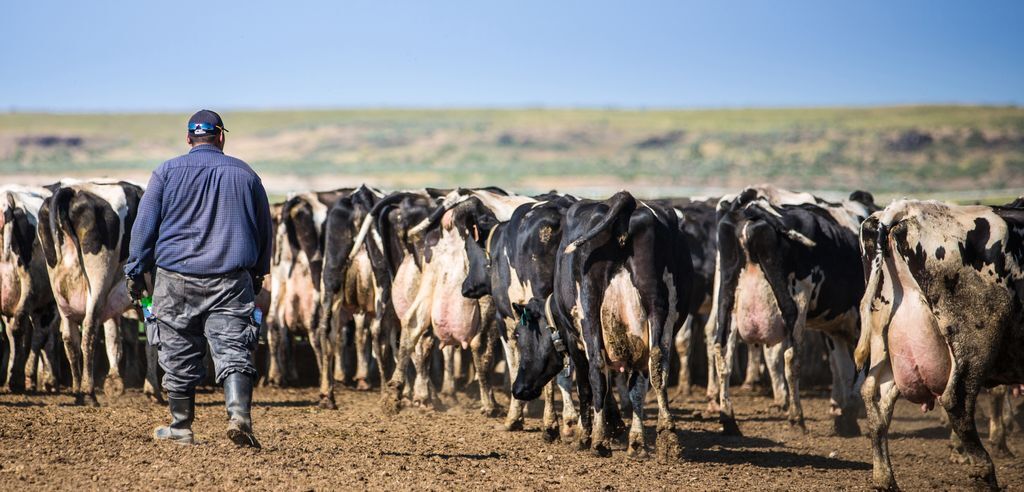
Furthermore, policy discussions now center on how to balance strict border security with legal, orderly guest worker programs. For example, farm advocates in states like Idaho have long raised this point. They emphasize that local dairies need reliable, documented legal avenues to maintain livestock operations. Without reliable legal channels or increased domestic workforce recruitment, critical production tasks remain delayed.
Therefore, policymakers face the dual task of protecting the rule of law while supporting the small business economy. Strong borders protect national stability. At the same time, expanding targeted legal worker certifications could provide employers with verifiable legal labor. Until domestic participation rises or legal work programs adjust, communities across the country will navigate these evolving labor market realities.
This article was produced with the assistance of AI and reviewed by our editorial team.
Sources
Related: Sanctuary Policies Block Federal Jail Transfers as ICE Ramps Up Enforcement Across U.S. Communities
Related: Congress Receives New Legislation Aimed at Local Health Care Protection
Related: Emerging Labor Shortage Could Fuel Wage Growth and Housing Affordability for Future U.S. Workers
Related: How the National Skilled Trade Worker Shortage is Delaying Key Infrastructure Projects
See a typo? Report it here.