Georgia
How a New Manufactured Home Chassis Federal Law Unlocks Lower Cost Housing
For decades, manufactured home builders have been working to shed the old image of boxy trailer homes reserved for the outskirts of cities and suburbia. Now, a small change in federal regulations could open the door for architecture welcomed in…

Last updated:
Key points
- The 21st Century ROAD to Housing Act removed a 1974 federal requirement mandating nonremovable steel chassis on manufactured homes.
- Eliminating the steel frame requirement reduces construction costs by $5,000 to $10,000 per unit and allows developers to stack units into multi-family housing.
- More than 30 states must now update their statutory housing definitions by 2027 to align with federal standards and expand local housing supplies.
NewsWK — Federal lawmakers recently eliminated a decades-old mandate. Previously, this rule forced factory-built houses onto heavy steel frames. Under the 21st Century ROAD to Housing Act, builders no longer need a permanent chassis underneath every home. Because of this deregulation, developers can now construct modern, multi-story residences. Furthermore, they can build them at a fraction of traditional construction costs.
What is changing under the new manufactured home chassis federal law?
The new federal rule removes a 1974 mandate. Previously, that law required all factory-built structures to retain a permanent steel frame underneath. Now, this legislative update allows home builders to remove heavy chassis materials and cut production expenses. Additionally, developers can stack units into multi-family housing configurations cleanly across the nation.
For over fifty years, federal guidelines required every manufactured home to sit permanently on heavy steel beams. However, this requirement increased construction costs without adding structural benefits for modern home placement. Consequently, factory-built housing remained largely limited to single-story, single-family designs on sprawling lots.
Industry experts report that removing the chassis cuts building costs by $5,000 to $10,000 per unit. Furthermore, factory-built construction already costs roughly 50% less per square foot than traditional site-built structures. By dropping expensive steel framing, manufacturers can pass additional savings directly to working families.
“First of all, you were putting a very heavy, expensive thing on the bottom of these homes that is not needed and it is not used, and it’s made out of steel,” said Stephanie Hawke. She serves as associate research director at the Terner Center for Housing Innovation at UC Berkeley. In addition, she noted that heavy steel frames made stacking modular units far more difficult for developers.
What does removing the steel frame mean for local housing affordability?
Removing mandatory steel frames lowers production costs. Moreover, it helps community operators expand housing capacity without acquiring additional land. Local developers can now place multi-story structures or duplexes on existing lots. As a result, this change increases rental inventory in high-demand residential areas.
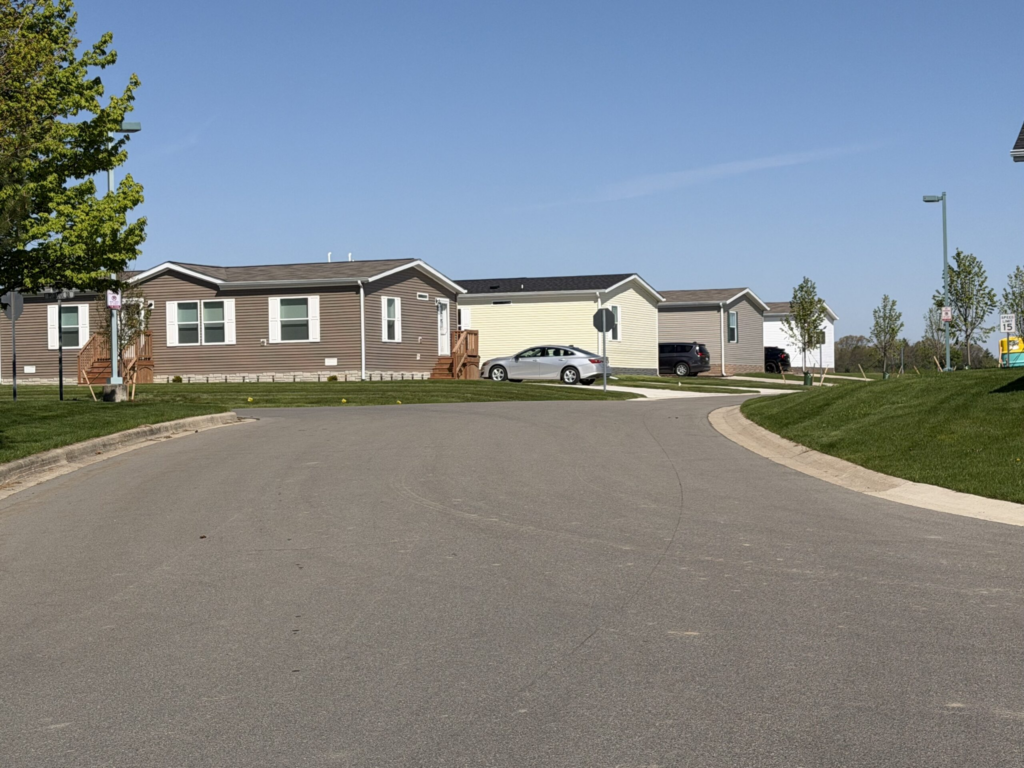
In manufactured home communities across the country, lot space often limits growth. However, eliminating heavy structural chassis allows builders to stack units safely. For instance, Burkhart Ridge in Howell Township, Michigan exemplifies this potential. Such sites can host expanded, high-quality neighborhoods under updated standards.
Real estate developers actively prepare for these new designs. For example, UMH Properties plans to introduce two-story factory-built homes on established community lots. Eugene Landy, founder and chairman of UMH Properties, praised the regulatory relief during an earnings call.
“This is a change that’s gonna help every manufactured home community out in the country,” Landy said during the call.
Furthermore, modern factory-built homes use the same drywall, shingles, and window framing as standard site-built houses. Therefore, removing elevated steel frames allows these structures to integrate seamlessly into suburban subdivisions.
How do state manufactured housing regulations hinder development?
State laws frequently mandate outdated definitions. Specifically, these rules force factory-built homes to retain permanent steel chassis. To comply with federal policy, states must update their regulatory codes before July 2027. Otherwise, local builders cannot legally utilize cheaper, multi-story factory designs.
Research from The Pew Charitable Trusts highlights this issue. In fact, over 30 states still maintain obsolete chassis requirements in their legal statutes. These states include Virginia, Maine, New York, Missouri, South Carolina, Washington, Nevada, and Maryland. Until state legislatures update these statutes, local builders face regulatory confusion.
could expand under the new law Manufactured Home Chassis Federal Law
Multi-family factory-built structures offer private developers an efficient solution to local housing shortages. Notably, they achieve this without relying on massive taxpayer subsidies. By combining multi-story designs with lower production costs, builders can deliver affordable market-rate rentals quickly.
However, federal compliance timelines require swift action from state lawmakers. First, states must certify equal legal treatment for chassis-free units by July 11, 2027. Meanwhile, states with biennial legislative sessions have until 2028 to pass necessary updates.
So far, a few forward-thinking states have streamlined their building codes:
- North Carolina updated its definitions by referencing official federal HUD codes directly.
- Tennessee modernized state building definitions to mirror federal standards automatically.
- Texas updated its housing laws to eliminate local regulatory conflicts.
- Kentucky banned restrictive local ordinances that limited where factory-built homes could sit.
What legal hurdles remain for affordable manufactured homes?
Outdated municipal zoning codes and personal property titling rules still create barriers. Consequently, these regulations artificially inflate housing costs for working families. Local government restrictions often block factory-built housing altogether. Meanwhile, personal property classification prevents buyers from securing low-cost traditional mortgages.
Municipal zoning boards often restrict factory-built housing options based on outdated stereotypes. For example, Pennsylvania State Rep. Dan Moul owns a manufactured housing park in Adams County. Recently, he reported that local officials blocked his community expansion due to restrictive zoning designations.
Financing barriers also impose financial burdens on buyers. Specifically, many states classify factory-built homes as personal property rather than real estate. Because of this, buyers cannot obtain standard mortgages. Instead, buyers must take out high-interest home-only loans.
According to data from Pew, financing methods matter greatly. Securing a standard $100,000 mortgage instead of a chattel loan saves a homeowner roughly $49,000 over the loan’s life. Fortunately, states like Georgia, Maine, and New York recently simplified their rules. They made converting factory-built structures into real property much easier.
This article was produced with the assistance of AI and reviewed by our editorial team.
Sources
Related: Democrats aim to emulate Republicans in building state power
Related: States Boost In-Home Caregiver Pay as Senior Demographics Surge and Workforce Strains Mount
See a typo? Report it here.