Minnesota
Immigrant Workers Economic Impact: How Labor Supplies Shape Key US Sectors
On an average day in the United States, more than 30 million immigrants work around the clock to power our economy. Immigrants carry out thousands of essential services daily that keep America’s cities running, our families fed and our loved…


Last updated:
Key points
- Foreign-born workers represent 1 in 6 U.S. employees, including 68% of agricultural labor and nearly 30% of construction and care workers.
- Over 1,700 business leaders in the American Business Immigration Coalition advocate for dependable legal labor pathways to fill key economic gaps.
- Workforce shortages in homebuilding and dairy production threaten to increase consumer costs for housing and everyday groceries.
NewsWK — Across American farms, construction sites, and health facilities, business owners face persistent workforce shortages. Consequently, employers increasingly rely on foreign-born labor to maintain operations and prevent severe consumer price increases. Today, more than 30 million foreign-born workers participate in the national economy. They represent roughly one out of every six employees nationwide.
What is the immigrant workers economic impact on critical domestic supply chains?
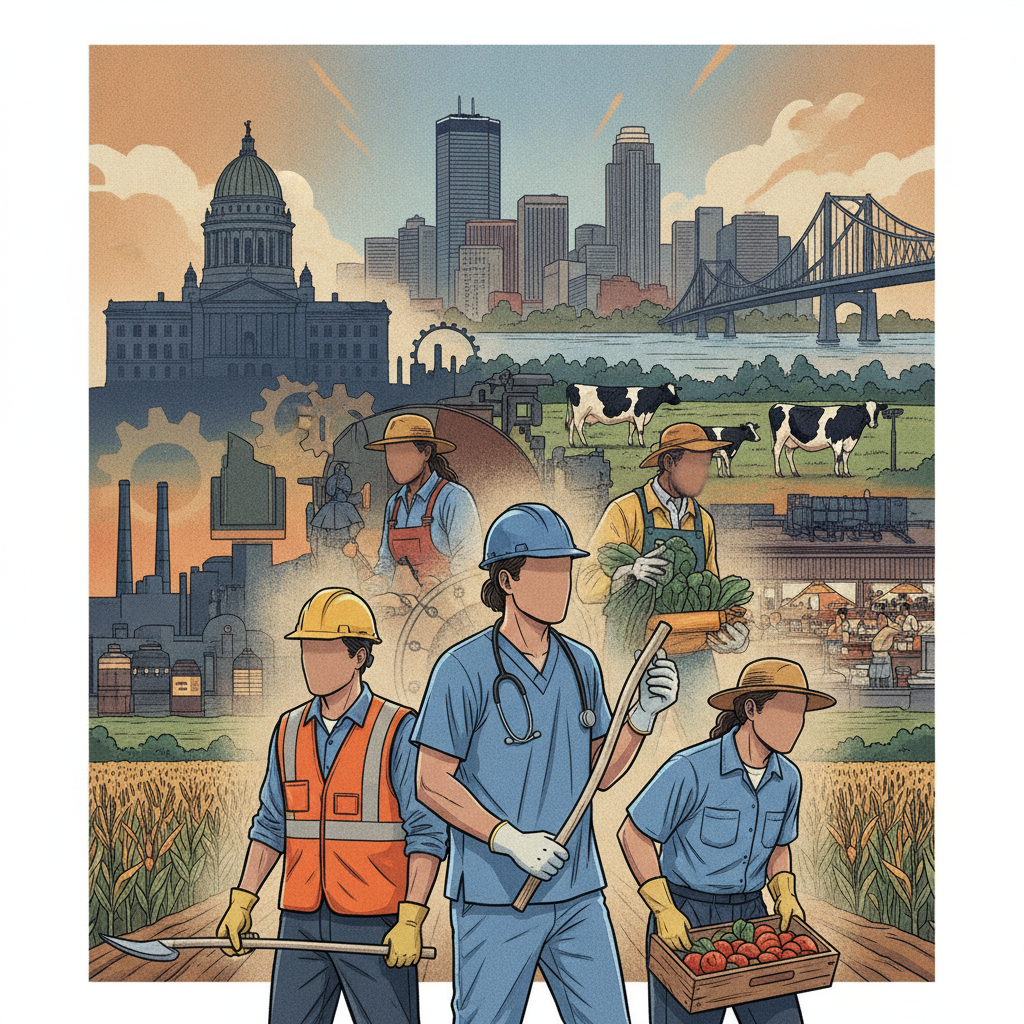
Immigrant participation remains heavily concentrated in vital foundation sectors that keep supply chains moving and basic consumer goods affordable. For instance, foreign-born labor represents nearly 30% of construction and direct care workers nationwide. Furthermore, in the agricultural sector, immigrant workers comprise 68% of the total labor pool powering American food production.
These employment statistics carry direct consumer consequences. For example, industry estimates indicate that milk prices could double without the foreign-born agricultural workforce. Currently, these workers produce 79% of the nation’s milk supply. In addition, construction firms rely heavily on these workers to maintain basic build schedules and keep project budgets manageable.
How does an immigration labor shortage affect consumer costs and housing availability?
A severe labor constraint in homebuilding directly delays structural development and inflates housing costs for American families. Currently, foreign-born workers constitute nearly one-third of the residential construction workforce. Therefore, any reduction in available crews exacerbates the nationwide deficit of 1.5 million homes.
Similarly, demographic shifts are accelerating labor demands in senior care. By 2030, older adults will outnumber children in the United States for the first time in national history. Consequently, health analysts project the country will require 9.3 million direct care workers to support the aging population. Without sufficient staffing, family members often must reduce their own work hours to manage caregiving duties. As a result, this shift contracts overall productivity in the broader economy.
How do business owners assess the economic value of immigrant labor?
Main Street employers across the country argue that legal labor access is essential for maintaining business operations and expanding employment. More than 1,700 executives and business owners formed the American Business Immigration Coalition. Together, they advocate for clear legal immigration pathways that meet actual market demand.
Coalition members include leaders from agriculture, manufacturing, residential construction, and healthcare. These business leaders emphasize that filling essential roles helps companies expand operations. For instance, in the hospitality sector, back-of-house kitchen staff enable restaurants to stay open. Consequently, they help maintain front-of-house jobs like managers, hosts, and servers.
Rebecca Shi, chief executive officer of the coalition, highlighted the wage dynamics in essential roles. “We have found that even when employers post wages that are three times higher than the local minimum wage, there aren’t many American-born workers waiting in line to perform this labor,” Shi stated. “Those who remain in these jobs are almost always immigrants.”
In St. Paul, Minnesota, restaurant owner Karyn Tomlinson noted that agricultural stability directly dictates restaurant operations. “You can’t reschedule a harvest, so you need dependable, respected workers,” Tomlinson noted regarding the local supply chain.
What legal policy frameworks surround immigrants in American workforce roles?
Regulatory frameworks governing foreign-born labor have evolved slowly over recent decades. Consequently, this slow pace often creates operational uncertainty for employers and workers alike. Many foreign-born workers possess legal work authorization. However, federal wage and labor protections historically applied unevenly across domestic and agricultural sectors.
For example, federal minimum wage and overtime protections reached home care workers in 2013. In contrast, other industries enjoyed those guarantees starting in 1938. Meanwhile, shift work in private caregiving or rural agriculture often leaves workers vulnerable to wage disputes and irregular scheduling without adequate administrative oversight.
Meanwhile, business groups urge lawmakers to align legal visa channels with actual economic demands. Ultimately, securing clear legal framework rules ensures businesses maintain steady operational capacity while protecting baseline workforce standards across American industries.
This article was produced with the assistance of AI and reviewed by our editorial team.
Sources
Related: Foreign-Born Workers Leaving US Labor Force as Enforcement Surges
Related: Voice for Farm Workers Act Introduced in U.S. Senate as Lawmakers Debate Agricultural Labor Policy