Arizona
New World Screwworm Southwest Outbreak Triggers Livestock Restrictions
A deadly flesh-eating parasite that can plague livestock, wildlife and pets continues to spread across the American Southwest. Officials detected the arrival of the New World screwworm in June — the first time in decades the pest had been seen…


Last updated:
Key points
- Federal and state agriculture officials confirmed 139 screwworm cases across Texas, New Mexico, and Arizona since June.
- State agencies introduced strict animal movement rules and pet travel restrictions to prevent the parasite from spreading.
- The USDA is investing $750 million in a new Texas facility to produce sterile flies and eradicate the pest population.
NewsWK — Federal and state agricultural authorities are expanding emergency measures across the Sun Belt. Currently, a persistent pest threatens livestock, wildlife, and domestic pets. Officials first detected the parasite in June, marking its return after decades of absence. Recently, case numbers surged, creating serious challenges for livestock producers and pet owners.
How severe is the New World screwworm Southwest infestation?
Agricultural inspectors have confirmed 139 total cases across Texas, New Mexico, and Arizona since June. Initially, late summer remained quiet with fewer than ten monthly detections. This sudden spike forced state veterinarians to establish restricted zones and intensify field surveillance.
Texas A&M University extension economist David Anderson highlighted the sudden increase in local infections. “We got a bunch more cases all of a sudden,” Anderson noted during a recent review of livestock conditions. Therefore, the rapid rise in cases has put ranchers on high alert during fall roundups.
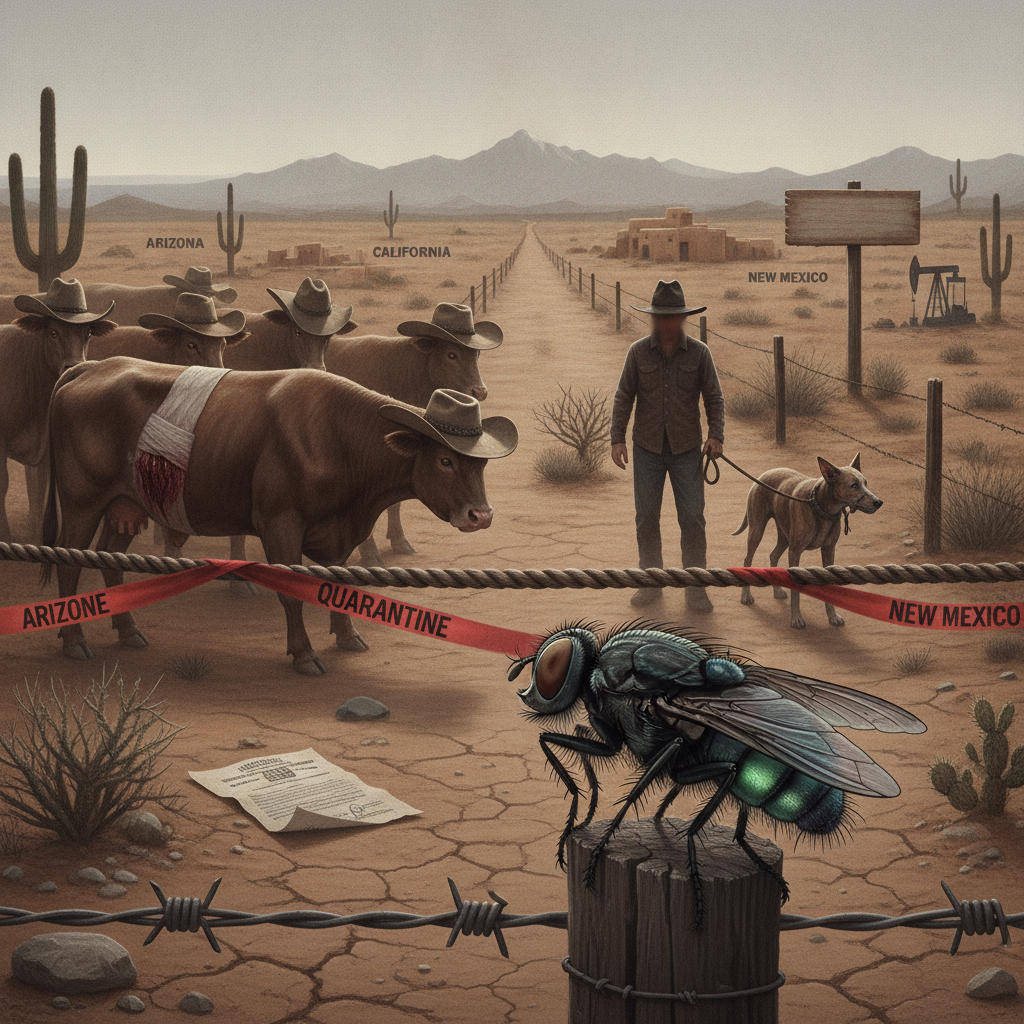
Specifically, the fly lays eggs near open animal wounds, tick bites, or natural body openings. Maggots then burrow into living tissue as they feed. This feeding behavior can cause severe illness or death in untreated animals. Consequently, cattle producers must inspect herds daily for signs of infestation.
How are New World screwworm livestock restrictions impacting ranchers and pet owners?
State agriculture departments have imposed strict movement controls to stop the pest from entering uninfected regions. For instance, officials restricted animal transport across 31 Texas counties after locating 77 infested sites. Meanwhile, California requires veterinary permits, inspections, and health certifications for warm-blooded animals entering from designated infestation zones.
Overall, these emergency rules affect cattle operations, animal shelters, and family pets. For example, Texas shelters paused thousands of cat and dog adoptions earlier this year due to multi-state transport bans. Additionally, state rules require specific actions for animal owners in affected zones:
- Obtain official veterinary inspection certificates prior to animal travel.
- Secure state permits before transporting cattle out of designated containment zones.
- Delay non-essential livestock branding or tagging that creates open wounds.
What caused the screwworm outbreak Southwestern states face today?
Recently, border region cases prompted agricultural authorities to implement temporary import bans before resuming regulated cross-border inspections.
Now, ranchers face operational changes to safeguard their animals against infestation. Specifically, operations like calf branding, ear tagging, and castrating create fresh skin wounds that attract adult flies. Therefore, producers must apply protective treatments.
Ultimately, these safeguards add operational labor and veterinary costs for producers. However, protecting meat safety and herd integrity remains vital for maintaining consumer supplies. The parasite does not contaminate processed meat. Even so, reduced Cattle Herds Can Drive up retail beef prices for families across the nation.
How will officials eradicate the flesh eating screwworm parasite?
Federal agriculture officials plan to eliminate the fly population by breeding and releasing billions of sterile male insects. When sterile males mate with wild female flies, the females lay unfertilized eggs that never hatch. Because female flies mate only once, this biological control method systematically collapses the wild population.
Furthermore, Agriculture Secretary Brooke Rollins emphasized the strategic importance of this biological suppression strategy. “Protecting U.S. livestock and wildlife from New World Screwworm is a national security priority, and this new facility will drastically boost the availability of sterile flies,” Rollins stated.
How does the New World screwworm Texas facility work?
The U.S. Department of Agriculture is constructing a $750 million sterile fly production plant in Southern Texas. Once operational next year, the facility will produce up to 300 million sterile flies per week. Meanwhile, the federal government recently began hiring 228 specialized workers to staff the new production complex.
Additionally, the USDA supports sterile fly production facilities in Mexico and Panama to create a permanent buffer zone. Meanwhile, federal officials have carefully reopened select southern ports to controlled cattle imports from Mexico. Consequently, this monitored trade policy helps rebuild domestic livestock numbers while maintaining strict biosecurity protocols.
This article was produced with the assistance of AI and reviewed by our editorial team.
Sources
Related: What you need to know about the New World screwworm in Texas
Related: Study Examines Women on Parole Mental Health and Reentry Crises Across the US