Indiana
Federal Enforcement at Schools Sparks Debate Over Jurisdiction, Safety, and Judicial Warrants
On June 11, ICE agents trailed a car into the parking lot of Commodore John Rodgers Elementary/Middle School in Baltimore. For the family riding in that car, an everyday school drop off quickly devolved into chaos. ICE agents pulled Jesus Acevedo Sanchez…


Last updated:
Key points
Federal Enforcement at Schools Sparks Debate Over
- Federal immigration enforcement near schools has sparked ongoing jurisdictional debates between state, local, and federal authorities across the nation.
- DHS maintains that immigration enforcement is a constitutional federal duty aimed at public safety, while several local districts require judicial warrants to enter campus property.
- State responses vary widely, with states like Indiana mandating local cooperation while others restrict municipal assistance with federal civil enforcement.
NewsWK — The intersection of federal immigration enforcement and local school operations has emerged as a central legal and operational debate across American communities. As federal agents execute enforcement actions targeting illegal immigration, local school officials, municipal leaders, and state lawmakers are grappling with the legal boundaries of campus access, local jurisdiction, and public safety.
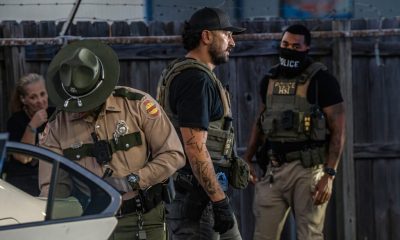
A prominent example occurred in Baltimore, Maryland, when federal immigration agents followed a vehicle into the parking lot of Commodore John Rodgers Elementary/Middle School during morning drop-off hours. Officers with U.S. Immigration and Customs Enforcement (ICE) detained Jesus Acevedo Sanchez on grounds of unlawful presence in the United States. According to statements from the Department of Homeland Security, Acevedo Sanchez refused lawful instructions, forcefully resisted arrest, and dragged an ICE officer while attempting to flee in his vehicle. His spouse was briefly handcuffed during the encounter while their children remained in the vehicle.
The arrest subsequently underwent federal judicial review. U.S. District Judge Julie Rubin ordered Acevedo Sanchez released from federal custody, concluding that agents lacked sufficient probable cause at the time of the stop and criticizing the procedural handling of the arrest. The high-profile encounter highlighted the friction between federal law enforcement operations and local campus procedures, drawing public attention to how federal authorities and local municipalities navigate competing jurisdictional priorities.
Why it matters here
For school administrators, families, and local law enforcement agencies across the country, federal immigration enforcement on or near school property raises complex questions regarding administrative protocol, public safety, and statutory authority. Public schools operate under strict security guidelines to protect students and manage campus access, while federal law enforcement officers carry constitutional mandates to enforce federal immigration laws nationwide.
When enforcement operations occur during school hours or on school property, local districts often find themselves caught between federal authority and municipal directives. School administrators face practical operational challenges, including ensuring student safety during drop-off and pick-up routines, managing administrative responses, and maintaining clear communication with local law enforcement partners during unexpected federal actions.
From a fiscal and administrative standpoint, school board policies regarding law enforcement entry require clear legal frameworks to prevent potential litigation, operational disruption, or jurisdictional conflict between local police departments and federal authorities.
Federal Supremacy and Campus Access Policies
The broader debate gained momentum following the federal government’s decision to rescind a 2011 administrative directive that previously categorized schools, places of worship, and medical facilities as “sensitive locations” where immigration enforcement actions were generally restricted. Following the policy shift, data compiled by education research group K-12 Dive recorded at least 17 instances of ICE enforcement activity on or adjacent to school grounds nationwide.
Federal officials emphasize that immigration enforcement falls squarely under federal constitutional jurisdiction and that law enforcement agents must retain the ability to apprehend individuals suspected of criminal conduct or unlawful presence. Department of Homeland Security spokesperson Katherine Currie underscored the agency’s primary mission, stating:
“ICE is not going to schools to arrest children — we are protecting children. Criminals are no longer able to hide in America’s schools to avoid arrest.”
Federal officials maintain that targeted actions near educational facilities are executed when necessary to protect public safety or prevent suspects from evading law enforcement.
In response to increased federal enforcement, more than a dozen states and numerous municipalities have instituted policy guidelines aimed at limiting local government assistance with federal immigration enforcement. Legal experts note that these measures do not challenge federal supremacy under the U.S. Constitution. Instead, most state and local rules establish administrative protocols governing local employee cooperation, typically requiring federal agents to present a signed judicial warrant—issued by a judge rather than an administrative agency—before accessing non-public areas of school property.
State Legislative Approaches and Legal Standards
State legislatures across the country have adopted contrasting legal strategies regarding federal immigration cooperation:
- Pro-Cooperation Statutes: States such as Indiana have enacted legislation explicitly prohibiting local government entities, school districts, and public universities from adopting policies that restrict cooperation with federal immigration authorities. Indiana Attorney General Todd Rokita initiated legal action against Indianapolis Public Schools to compel full compliance with state cooperation mandates.
- Local Board Policies: In states without comprehensive statewide legislation, such as Ohio, individual school districts rely on board-level visitor policies. Superintendents and district leaders have established centralized protocols requiring administrators to verify judicial warrants before granting law enforcement personnel access to school facilities outside emergency situations.
- Sanctuary and Property Restrictions: Other states and municipalities have passed statutory restrictions barring local personnel from utilizing school resources, facilities, or personnel to assist in non-emergency federal civil enforcement.
The regulatory landscape faces further developments following federal policy shifts regarding Temporary Protected Status (TPS). The announced termination of TPS designations for over 330,000 Haitian nationals nationwide—including approximately 30,000 individuals residing in Ohio—is anticipated to expand the scope of federal enforcement actions, prompting school boards and local authorities to review their legal compliance and campus access protocols ahead of upcoming academic terms.
This article was produced with the assistance of AI and reviewed by our editorial team.
Sources
Related: FCC Weighs E-Rate Program Changes as Officials Scrutinize Federal Broadband Dollars
Related: How Will the Immigration Warrants Reform Act of 2026 Impact Law Enforcement and Public Safety?
See a typo? Report it here.